
You’ve found the perfect mirror for your space, but now comes the tricky part: hanging it safely. The question “how heavy is a mirror” isn’t just about numbers. It determines what hardware you need, whether your wall can support it, and whether you need professional help. Mirror weights range from just a few pounds for small decorative pieces to over 100 pounds for large wall-mounted designs. Understanding these weights helps you avoid dangerous falls and costly wall damage.
This guide covers everything you need to know about mirror weight calculation, common weight ranges by type, safe hanging practices, and when to call in a professional. You’ll learn exactly how to determine weight before you buy or mount any mirror.
Calculate Mirror Weight Using Glass Density

Apply the Standard Glass Weight Formula
Mirror weight depends almost entirely on the glass itself. The reflective coating adds less than 1% weight, so you can calculate accurately using standard glass density. The formula is straightforward: multiply length by width by thickness by 0.025 pounds per cubic inch. Always use inches for all measurements to get the correct result.
For example, a 24-inch by 36-inch mirror with 1/4-inch glass yields: 24 times 36 equals 864 square inches, multiplied by 0.25 thickness equals 216 cubic inches, multiplied by 0.025 equals 5.4 pounds per square foot. Since this mirror covers 6 square feet, the total glass weight is approximately 32.4 pounds.
Reference Weight Per Square Foot by Thickness
Using weight-per-square-foot estimates is faster than calculating volume each time. Here are the standard weights for common glass thicknesses used in mirrors.
• 1/8 inch (3.2 mm): 1.6 pounds per square foot
• 1/4 inch (6.4 mm): 3.1 pounds per square foot
• 3/8 inch (9.5 mm): 4.7 pounds per square foot
• 1/2 inch (12.7 mm): 6.2 pounds per square foot
• 3/4 inch (19.1 mm): 9.4 pounds per square foot
• 1 inch (25.4 mm): 12.5 pounds per square foot
A 10-square-foot mirror made from 3/8-inch glass weighs approximately 47 pounds before adding any frame. This quick reference helps you estimate weight while shopping without doing calculations on your phone.
Typical Mirror Weights by Category
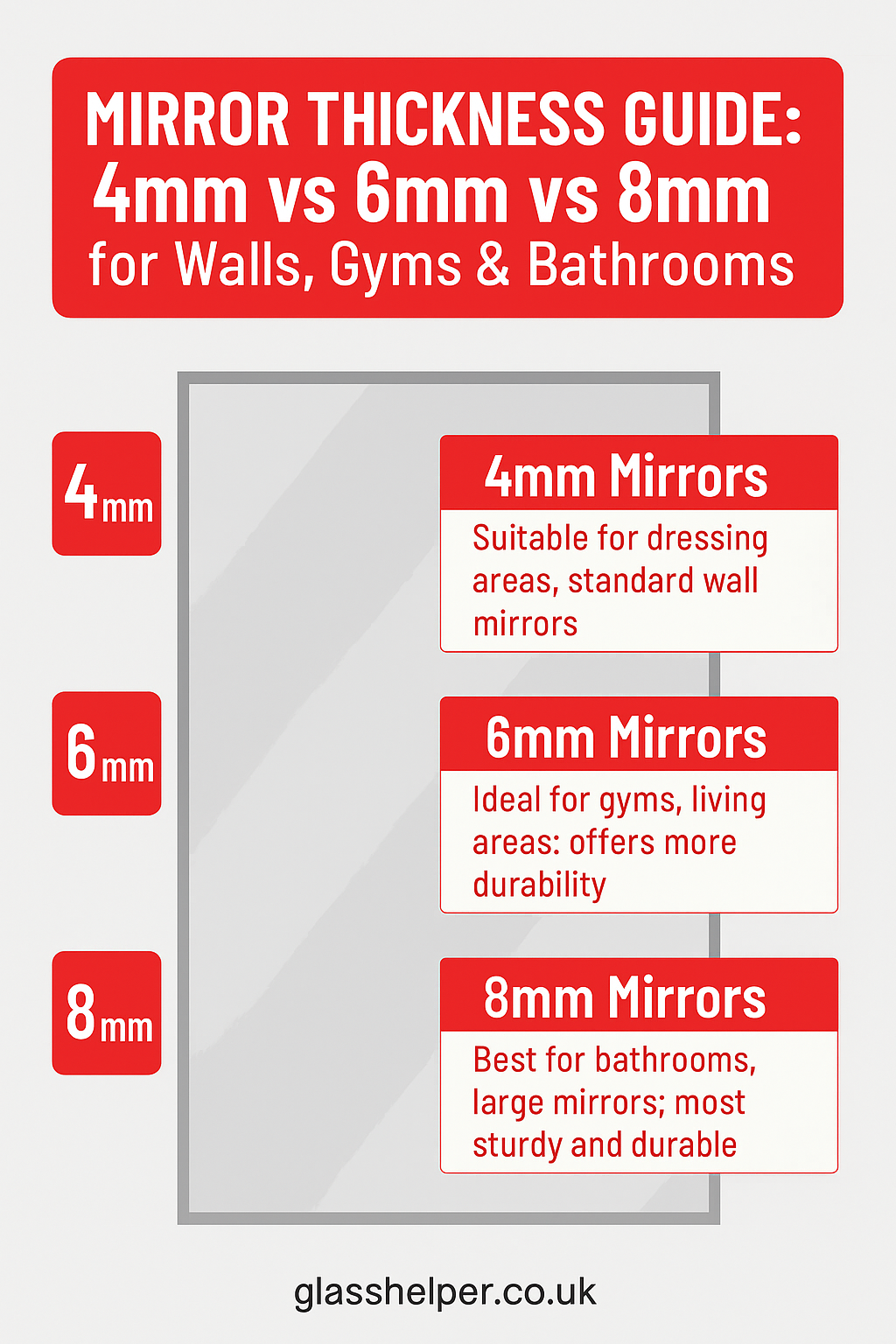
Small Decorative Mirrors Under 20 Inches
Small mirrors typically feature 1/8-inch glass and lightweight frames. A 16-inch by 20-inch mirror covers about 2.2 square feet. The glass weighs roughly 3.5 pounds, and a plastic or thin metal frame adds 1 to 3 pounds. These mirrors total between 4.5 and 6.5 pounds, making them safe for simple picture hooks or adhesive mounting strips.
Standard Framed Bathroom Mirrors
The most common residential mirror size is 24 inches by 36 inches with 1/4-inch glass. The glass alone weighs about 18.6 pounds. A hardwood or metal frame adds 8 to 10 pounds, bringing the total to approximately 26 to 28 pounds. This weight range is where many homeowners get into trouble because drywall anchors alone often cannot handle this load safely.
Large Wall Mirrors Over 36 Inches
Large unframed mirrors commonly use 3/8-inch glass for added strength. A 36-inch by 48-inch mirror covers 12 square feet and weighs approximately 56 pounds. At 36 inches by 60 inches, the mirror covers 15 square feet and weighs roughly 71 pounds. These weights exceed safe limits for drywall anchors, requiring stud mounting or heavy-duty toggle bolts.
Ornate Gold-Framed Mirrors
Gold-framed mirrors often feature brass-based frames that add significant weight despite their elegant appearance. A 30-inch by 40-inch mirror with 1/4-inch glass weighs about 26 pounds for the glass alone. A wide brass-based frame can add 12 pounds or more, bringing the total to approximately 38 pounds. The dense brass construction makes these heavier than aluminum or pine frames of identical dimensions.
How Frame Materials Affect Total Weight

Frame Weight Comparison
Frames can increase mirror weight by 5% to over 50% depending on the material chosen. Understanding these differences helps you select appropriate mounting hardware.
• Plastic or composite frames: add 1 to 4 pounds
• Aluminum frames: add 2 to 5 pounds
• Steel frames: add 3 to 8 pounds
• Pine or softwood frames: add 4 to 10 pounds
• Oak or walnut hardwood frames: add 8 to 20 pounds
• Gold-plated brass frames: add 5 to 15 pounds
A gold-framed mirror often weighs more than an aluminum or pine-framed mirror of the same size. This happens because brass is approximately three times denser than aluminum, not because of the gold plating itself.
Safe Hanging Limits by Wall Type
Weight Capacity by Wall Material
Different wall types support different maximum weights safely. Exceeding these limits risks mirror falls and wall damage.
• Wood stud mounting: 100+ pounds with lag screws
• Concrete or brick: 100+ pounds with masonry anchors
• Drywall with stud access: 100+ pounds when screwed into studs
• Drywall without studs: 22 to 30 pounds maximum with toggle bolts
• Plaster walls: 20 to 30 pounds with snap toggles or molly bolts
The critical rule is to double the mirror’s weight when selecting hardware. A 30-pound mirror requires hardware rated for at least 60 pounds to account for dynamic forces like bumps, vibrations, and settling over time.
Choose the Right Mounting Hardware
Anchors and Hardware Options
Selecting proper hardware depends on your wall type and mirror weight. Using inadequate anchors is the most common cause of mirror failures.
Toggle bolts, also called snap or wing bolts, are rated for 50 to 100 pounds and work well for heavy mirrors on drywall. They require drilling a larger hole but expand behind the wall for strong support. Molly bolts suit medium-weight mirrors with ratings of 25 to 50 pounds. They are easier to install than toggles but provide less holding power. 3M Claw drywall hangers support up to 30 pounds per pair without drilling. They work only on drywall and work best when studs are inaccessible for mirrors under 30 pounds.
Recommended Systems for Heavy Mirrors
For mirrors exceeding 30 pounds, use mounting systems designed for serious weight distribution. French cleats consist of two interlocking strips, one mounted on the wall and one on the mirror back. They distribute weight evenly and prevent forward tilt or lateral movement. Z-bar mounting uses hidden brackets that support full weight while allowing the mirror to hang flush against the wall. This system is common in commercial installations. Picture wire between two D-rings on the mirror back connects to two wall-mounted points, reducing stress on single hanger points. Use braided steel wire rated for at least double the mirror’s weight.
Mount into studs whenever possible. Use a stud finder to locate wooden or metal studs, which are typically 16 inches apart. For mirrors over 20 pounds, screws into studs provide the most secure attachment. Use #10 or #12 coarse-thread screws at least 1.5 inches long for proper holding power.
Common Mistakes That Cause Mirror Falls
Avoid These Installation Errors
Many mirror failures result from preventable mistakes during installation. Learning what to avoid keeps your mirrors safely mounted.
Relying on factory hanging hardware is dangerous. Many mirrors come with epoxy-mounted D-rings or cleats that can fail under sustained weight or impact. The bond between epoxy and the mirror back often breaks before the wall anchor fails. Always reinforce factory hangers with backing plates or add secondary wire support.
Using drywall anchors beyond their capacity is another frequent error. Plastic anchors rated for 10 to 15 pounds cannot support a 30-pound mirror, even if they seem secure initially. Dynamic forces from door bumps and wall vibrations gradually weaken underweight anchors until failure occurs.
Ignoring lateral forces creates hidden risks. A mirror mounted with only a single hook can dislodge from a sideways bump. Wide cleats or Z-bars resist side movement and keep mirrors secure despite accidental contact.
When to Hire a Professional Installer
Signs You Need Expert Help
Certain situations call for professional installation rather than DIY approaches. Mirrors over 30 to 40 pounds should generally be installed by experienced professionals, especially on plaster or hollow walls. Large or awkwardly shaped mirrors, including arched and full-length designs, benefit from professional handling. High-risk locations like above beds or in busy hallways warrant expert installation to prevent serious injury if failure occurs.
Professionals bring laser levels for perfect alignment, install structural mounting systems like French cleats or Z-bars, assess wall integrity and load-bearing capacity, and work with two-person teams for safe handling of heavy pieces.
Protect Your Mounted Mirrors Long-Term
Maintenance and Safety Practices
Even properly installed mirrors need periodic inspection to maintain safety. Check all screws and anchors every 6 to 12 months. Look for cracks in the wall, loose hardware, or any tilting that indicates shifting. Retighten any loose components immediately.
Keep mirrors away from high-impact zones including swinging doors, hallway corners, and children’s play areas. Apply clear shatter-resistant film to the back of large mirrors, especially in bathrooms. This film holds glass together if broken and prevents dangerous shards from scattering.
Frequently Asked Questions About Mirror Weight
How Do I Calculate Mirror Weight Before Buying?
Multiply the mirror’s length by width by thickness by 0.025 pounds per cubic inch using inch measurements. Alternatively, multiply the square footage by the weight per square foot for your chosen glass thickness. Add the frame weight estimate based on material if applicable.
Does the Reflective Coating Add Significant Weight?
No. The silver or aluminum backing on mirror glass adds less than 1% to the total weight. You can treat mirror weight as identical to clear glass of the same dimensions.
What’s the Safest Way to Hang a Heavy Mirror?
Mount into wall studs whenever possible using #10 or #12 screws at least 1.5 inches long. For mirrors over 40 pounds, use a French cleat or Z-bar mounting system. Always double the mirror’s weight when selecting hardware ratings.
Can Drywall Anchors Hold a 30-Pound Mirror?
Standard drywall anchors cannot safely hold a 30-pound mirror. Use heavy-duty toggle bolts rated for at least 60 pounds, or better yet, mount into studs. Drywall anchors work only for mirrors under 22 to 30 pounds, and only with high-quality toggle-style anchors.
How Much Does a Standard Bathroom Mirror Weigh?
A typical 24-inch by 36-inch framed bathroom mirror with 1/4-inch glass weighs 26 to 28 pounds. The glass contributes about 18.6 pounds, and the frame adds 8 to 10 pounds depending on material.
Key Takeaways for Safe Mirror Hanging
Mirror weight varies dramatically based on glass thickness, size, and frame material. Small decorative mirrors weigh 4 to 6 pounds, standard bathroom mirrors weigh 15 to 35 pounds, and large wall mirrors can exceed 100 pounds. Always calculate weight before purchasing mounting hardware. Use the weight-per-square-foot tables or the volume formula to get accurate estimates.
Double your mirror’s weight when selecting anchors and hardware. A 30-pound mirror needs 60-pound-rated hardware to handle dynamic forces safely. Mount into studs for any mirror over 20 pounds, and use French cleats or Z-bar systems for mirrors exceeding 40 pounds. Never rely on factory-installed hanging hardware without reinforcement for heavy mirrors.
For mirrors over 30 to 40 pounds, on plaster walls, or in high-risk locations above beds and seating areas, hire a professional installer. Professional mounting ensures structural assessment, proper hardware selection, and secure attachment that protects your investment and your family.