You’ve just bought a sleek full-length mirror and are ready to install it, only to pause and wonder: how high should this actually go? Get it wrong, and you’ll either be craning your neck to see the top of your head or staring at your shoes while missing your outfit entirely. The ideal height isn’t one-size-fits-all. It’s a balance of ergonomics, room design, and user needs.
Below, you’ll find precise guidelines, room-specific tips, and pro installation steps to ensure your mirror works perfectly for everyone who uses it.
Match Height to Primary User
Your own stature should dictate where the mirror goes, not generic advice from home blogs. A mirror hung for a 6-foot adult will frustrate someone 5’4″, and vice versa.
Center Mirror at Eye Level Plus 2 Inches
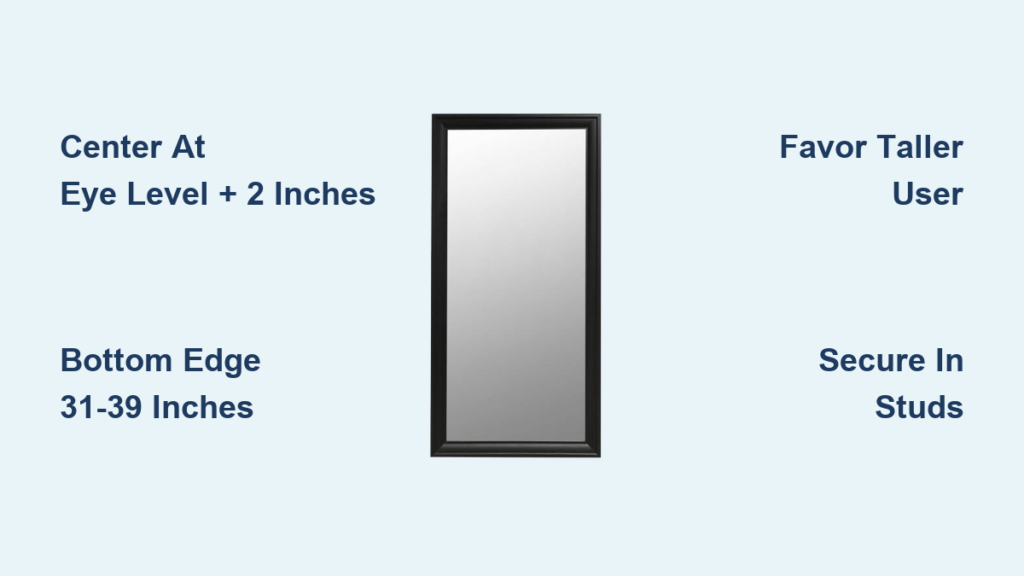
Use this formula for accurate placement. The center of the mirror equals the primary user’s eye level plus 2 inches. Why add 2 inches? Most people naturally look slightly downward when checking their appearance. This small lift ensures the reflection includes both the top of the head and the feet, even if the mirror isn’t floor-to-ceiling.
Example calculations:
- If your eyes are 63 inches from the floor, center the mirror at 65 inches
- For a 60-inch-tall mirror, half is 30 inches. Bottom edge equals 65 minus 30, which equals 35 inches from the floor
This method beats outdated rules like “hang it 60 inches from the floor” because it adapts to real people.
Prioritize the Taller User
In shared spaces, favor the tallest person. A 6’5″ partner can’t duck low enough to see their hairline if the mirror is too high, but a 5’6″ user can lift a foot or adjust footwear to check shoes.
If both users must be accommodated:
- Hang the mirror for the taller person
- Add a small step or stool for shorter users when needed
- Consider a slightly tilted or adjustable mount, especially in closets or dressing areas
Adjust for Children or Visitors
If children or frequent guests use the space, mark multiple heights with tape before drilling. Or install the mirror slightly lower than ideal for adults, accepting a minor compromise for inclusivity.
Set Bottom Edge by Height Range

While the center-of-mirror rule is most accurate, a quick reference based on the bottom edge helps during layout.
Bottom Edge Guidelines
| User Height | Bottom of Mirror |
|---|---|
| Under 5’3″ | 29 inches |
| 5’3″ to 5’9″ | 31 to 35 inches |
| Over 5’9″ | 35 to 39 inches |
These ranges assume a standard 60 to 66 inch tall mirror. Shorter mirrors, 50 to 54 inches, may require higher mounting to avoid cropping the head.
Pro Tip: Tape a cardboard cutout of your mirror to the wall at different heights. Step back and take a photo. What looks balanced in real life may surprise you.
Optimize for Room Type

Where the mirror lives changes how high it should hang. Furniture, architecture, and traffic flow all influence placement.
Entryway: Leave Space Below
Bottom edge should be 10 to 14 inches from the floor. This clears room for a console table, shoe rack, or baskets underneath. A floating mirror creates visual lightness and avoids crowding the entry.
- Align the mirror’s vertical center with the table’s surface or artwork nearby
- Avoid blocking coat hooks or umbrella stands
Bedroom: Frame Between Windows or Furniture
Bottom edge should be 12 to 20 inches from the floor. Hanging between windows? Match the mirror’s height to the window sill or baseboard line for symmetry.
- If mounted on a closet door, ensure it clears baseboards and swings freely
- Use soft-close hinges if it’s a pivot mirror
Closet or Hallway: Maximize Clearance
Bottom edge should be 2 to 4 inches from the floor. In tight spaces, low mounting maximizes usable wall area and keeps the mirror out of the way.
- Ensure at least 2 to 3 feet of front clearance so users can step back
- Avoid placing where it interferes with door swings or closet rods
Fitting Room: Adjustable Is Best
Bottom edge should be at least 8 inches with a tiltable mount. Commercial or home dressing rooms benefit from mirrors that can tilt 6 to 10 degrees forward.
- This elongates the leg line in reflection, a flattering trick used in retail
- Use heavy-duty brackets that allow micro-adjustments
Install Wall-Mounted vs. Floor-Standing Differently
The mounting style changes how height is calculated and secured.
Wall-Mounted: Anchor to Studs
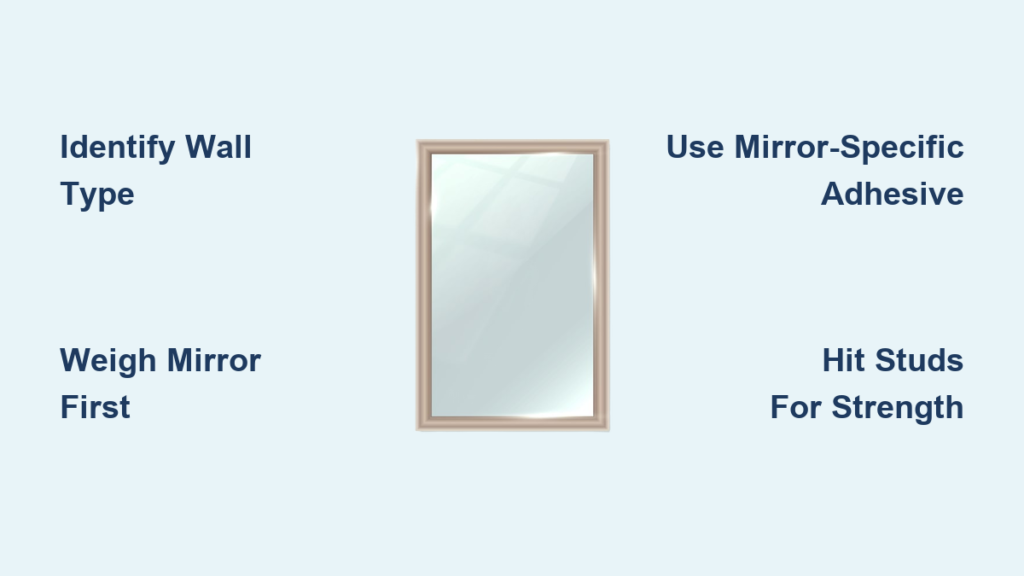
Always mount into wall studs or use heavy-duty drywall anchors rated for the mirror’s weight. Use a laser level to ensure perfect horizontal alignment. For thick baseboards over 5/8 inch, install a thin wooden cleat or use spacer washers so the mirror sits flush.
Warning: A falling mirror is dangerous. A 60 by 24 inch mirror can weigh 50 pounds or more. Use hardware that matches your wall type:
- Drywall: toggle or butterfly anchors, 33 pounds or less per anchor
- Wood stud: 1/4 inch screw, 55 to 65 pounds capacity
- Concrete or brick: 1/4 inch masonry anchor, 65 pounds or more
Floor-Standing: Slight Gap and Forward Tilt
Let the mirror rest on the floor or leave a 3/4 to 1 inch gap behind the base. Tilt forward 6 to 10 degrees for a longer leg illusion. Secure the top to the wall with a safety strap or bracket to prevent tipping, especially in homes with kids or pets.
Avoid Common Hanging Mistakes
Even small errors ruin usability and safety. Watch for these frequent missteps.
Hanging Too High
Symptom: You see your face but not your shoes. Fix: Lower the mirror so the bottom edge is at least 31 inches for average adults. Consequence: cuts off lower body and makes the room feel shorter.
Hanging Too Low
Symptom: You see your feet but not the top of your head. Fix: Raise so the center aligns with eye level plus 2 inches. Consequence: forces downward gaze and makes ceilings feel lower.
Ignoring Lighting and Glare
- Avoid direct sunlight on the mirror because it creates blinding glare
- Place the mirror perpendicular to windows for soft, even light
- Add sconces or LED strips on either side for shadow-free facial lighting
Blocking Walkways
Ensure 3 feet of clearance in front. Never install where a door swings into it or furniture blocks access.
Follow Step-by-Step Installation
Skip guesswork with a clear, tested process.
Gather Tools
- Stud finder
- Measuring tape
- Level
- Pencil
- Drill
- Screws and anchors, match to wall type
- Mounting brackets, included or purchased separately
1. Measure and Mark
Measure the primary user’s eye level. Apply eye level plus 2 inches equals mirror center. Calculate top and bottom edges using mirror height.
2. Find Studs
Scan the wall with a stud finder. Mark stud locations. Most mirrors need at least two anchor points into studs.
3. Mark Mounting Holes
Hold the mirror or a paper template in place. Use a level to ensure it’s straight. Mark screw positions.
4. Install Anchors or Screws
For studs: drive screws directly in. For drywall: install toggle anchors rated for the mirror’s weight.
5. Mount and Test
Lift and secure the mirror. Double-check level and stability. Step back 2 to 3 feet and check full-body view. Take a photo to assess framing. Adjust if needed.
Pro Tip: Tape a full-size paper outline to the wall for 24 hours. Live with it. Adjust. Then drill.
Adapt for Special Needs
Standard heights don’t work for everyone. Customize for accessibility and room constraints.
For Wheelchair Users
Mount lower than usual, bottom edge at 2 to 6 inches from floor. Ensure 36-inch front clearance for wheelchair access. Use a tilted or adjustable mirror to improve sightlines. Reflective surface should extend up to at least 60 inches for full upper-body view.
In Low-Ceiling Rooms
Avoid mirrors taller than 6 feet in 8-foot rooms. Mounting too high crowds the wall and makes ceilings feel lower. Consider a slightly shorter mirror, 54 to 60 inches, hung at ideal user height.
With Thick Baseboards
Baseboards over 5/8 inch thick prevent floor-standing mirrors from sitting flush. Solution: install a 1/2-inch wooden cleat screwed into studs, then mount the mirror on top to maintain vertical alignment.
Frequently Asked Questions About Hanging a Full-Length Mirror
What is the best formula for determining mirror height?
The most accurate method is to center the mirror at the primary user’s eye level plus 2 inches. This accounts for natural downward gaze and ensures both head and feet are visible in the reflection.
How high should a full-length mirror be hung for an average adult?
For most adults between 5’3″ and 5’9″, the bottom edge of the mirror should sit 31 to 35 inches from the floor, assuming a standard 60 to 66 inch tall mirror.
Should I hang the mirror for the taller or shorter person in a household?
Favor the taller person. Shorter users can easily lift slightly or adjust their position to see shoes, but taller individuals cannot duck low enough if the mirror is mounted too low.
Can I install a full-length mirror in an entryway?
Yes. For entryways, mount the mirror with the bottom edge 10 to 14 inches from the floor to leave space for console tables, shoe racks, or decorative baskets underneath.
What height is best for wheelchair accessible mirrors?
Mount the mirror with the bottom edge 2 to 6 inches from the floor, ensuring at least 36 inches of clearance in front for wheelchair access. Use a tilted or adjustable mount if possible.
How do I prevent glare on my full-length mirror?
Place the mirror perpendicular to windows rather than directly opposite them. Avoid positioning mirror where direct sunlight hits it, and add side lighting like sconces or LED strips for shadow-free illumination.
Key Takeaways for Hanging Your Mirror
There’s no universal height for a full-length mirror. Your body, room, and habits decide the exact placement, but these rules work every time.
- Best formula: center of mirror at eye level plus 2 inches
- Bottom edge: 31 to 39 inches for most adults
- Multiple users: favor the taller person
- Entryway: 10 to 14 inches up to clear furniture
- Closet: 2 to 4 inches from floor in tight spaces
- Always mount securely, into studs or rated anchors
- Test with tape first to avoid regrets after drilling
When done right, your full-length mirror becomes more than a reflection. It enhances space, light, and your daily routine. Hang it with precision, and you’ll see the difference every time you walk by.