Hanging a round mirror on the wall can instantly elevate your space, adding light, depth, and style. But if you have ever held a heavy mirror against the wall, unsure how to secure it safely, you are not alone. The right method depends on your mirror’s weight, backing type, and wall material. Whether it is a lightweight decorative piece or a chunky framed statement mirror, choosing the correct mounting system is key to both safety and aesthetics.
This guide walks you through every step, from selecting the best hardware to ensuring perfect alignment. You will learn how to hang a round mirror securely on drywall, avoid common mistakes, and choose between visible brackets or invisible mounting solutions.
Select the Correct Mounting Hardware for Your Mirror Weight

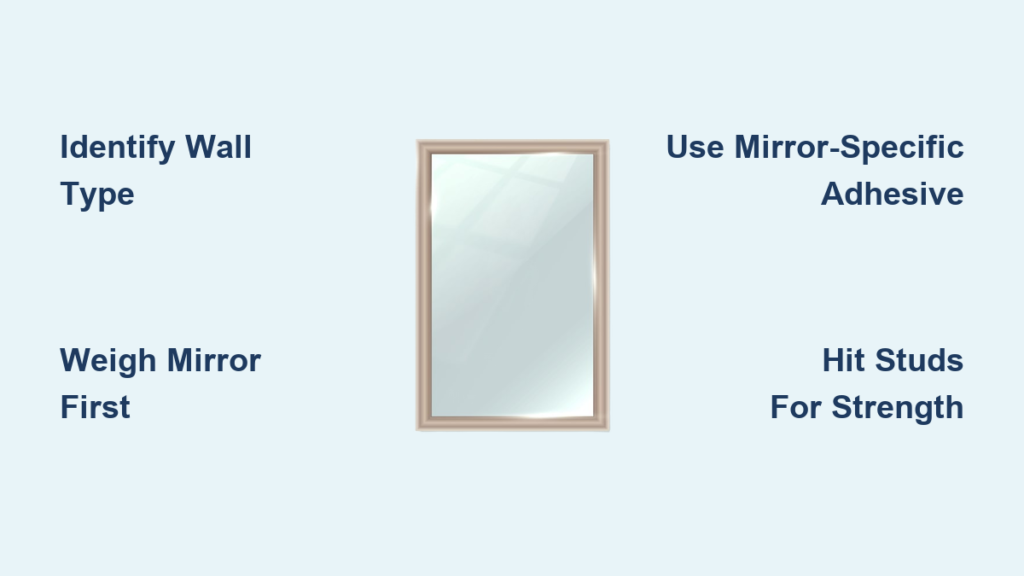
The first step in hanging any round mirror is assessing its weight. Light mirrors under 5 pounds can use removable strips like Command Strips. Medium-weight mirrors between 5 and 15 pounds work with VELCRO Extreme Outdoor Fasteners or 3M VHB tape. Anything over 15 pounds requires mechanical fasteners, including drywall anchors, Gorilla Hooks, or mounting directly into studs.
Always check manufacturer ratings and derate capacity by 25 to 50 percent to account for movement or accidental bumps. For example, a 10 kilogram mirror should only be hung with hardware rated well above that threshold. Using under-rated hardware risks sudden failure and potential injury.
Match Hardware to Your Wall Type
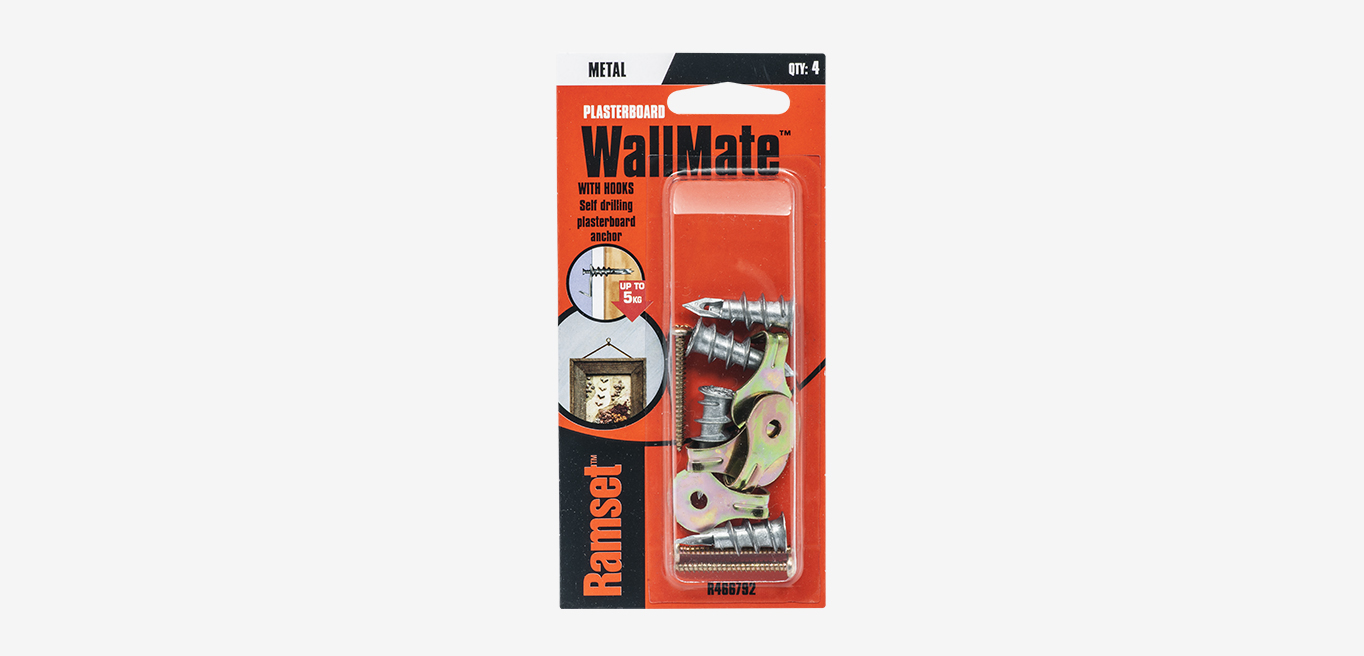
Most interior walls are drywall, which cannot support weight alone. If your desired spot does not align with a stud, use rated drywall anchors such as Ramset Nylon WallMate, rated at 10 kilograms each, or toggle bolts for heavier loads. In bathrooms or humid areas, avoid standard adhesives unless they are specifically rated for moisture.
For concrete or brick walls, use masonry anchors and a hammer drill. But for typical home installations, drywall-compatible methods are most relevant and readily available at hardware stores.
Prepare Essential Tools and Mounting Materials
Before starting, collect these tools to ensure a smooth installation:
- Tape measure for accurate spacing and height
- Pencil to mark drill points and level lines
- Stud finder to locate wooden framing behind drywall
- Drill with drill bits to create pilot holes for anchors
- Screwdriver to drive screws into anchors or studs
- Level to ensure mirror hangs straight
- Painter’s tape to prevent wall chipping during drilling
Having everything ready saves time and prevents mid-installation delays. Running to the hardware store mid-project creates unnecessary frustration and can lead to improper measurements if you leave and return.
Recommended Mounting Hardware by Weight Capacity
Choose from these reliable options based on your mirror type:
| Hardware | Max Load | Best For |
|---|---|---|
| Ramset Nylon WallMate Anchor | 10 kg (22 lb) | Medium-heavy mirrors on drywall |
| OOK Gorilla Hook | 50 lb (22.7 kg) | Heavy mirrors, minimal wall damage |
| 3M CLAW Hanger | 45 lb | Drywall, includes alignment markers |
| 3M VHB Tape | Up to 15+ lb | Semi-permanent, no visible hardware |
| Command Strips | 0.5–8 lb | Lightweight, renter-friendly |
| Selleys Liquid Nails Mirror Adhesive | Heavy-duty | Frameless or full-back adhesion |
Pro Tip: Use painter’s tape over drilling points to reduce paint flaking, a small trick that keeps walls looking clean and undamaged.
Measure and Mark the Perfect Mirror Placement
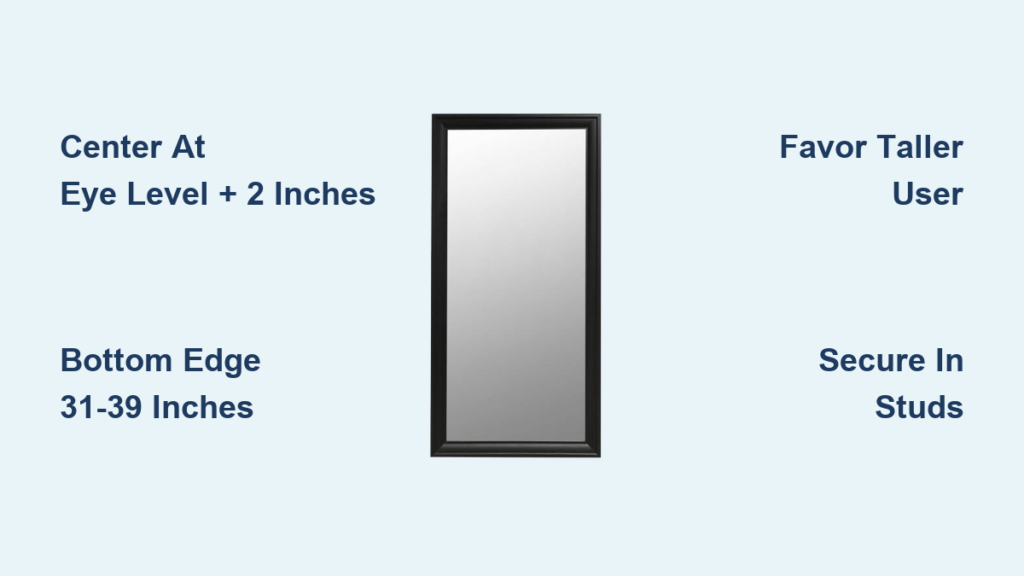
Position the center of the mirror 57 to 60 inches from the floor. This aligns with average eye level and ensures usability. In bathrooms, leave about 3 inches above the vanity or tile edge to prevent water splashes and allow visual breathing room. Avoiding hanging too high creates a practical mirror that lets you see your full face.
Align the mirror with key features such as above bathroom vanities, over fireplaces, or centered on entryway consoles or sofas. Use a tape measure to ensure equal spacing from adjacent walls or fixtures. A well-placed mirror becomes a focal point that ties the room together.
Install Drywall Anchors for Heavy Round Mirrors
If your mirror has keyhole slots or pre-drilled holes, transfer that spacing to the wall accurately. Measure the distance between mounting points on the back of the mirror. Mark corresponding spots on the wall using a pencil and level. Double-check with a ruler before drilling, as misalignment by even one-eighth inch can prevent the mirror from seating properly.
Drill pilot holes slightly smaller than the anchor diameter at each marked point. Tap drywall anchors like Ramset WallMate flush with the wall surface. Insert screws, leaving one-half inch exposed for the mirror to slide down onto. This method provides excellent support for heavier round mirrors.
User Feedback: Konnor from Bunnings Workshop successfully mounted a 10 kilogram mirror using two Ramset anchors rated at 10 kilograms each, proving that dual-anchor setups are effective when properly installed.
Use Adhesive Methods for Lightweight or Frameless Mirrors
Adhesives fail when surfaces are not clean. Wipe both the wall and mirror back with isopropyl alcohol and let dry completely. Dust, grease, or moisture will compromise the bond and cause the mirror to fall.
For 3M VHB tape, cut strips to fit corners or edges. Press firmly for 30 seconds per spot and wait 24 hours before applying full load. For Selleys Liquid Nails Mirror Adhesive, apply dots or zigzags across the back, press mirror into place, and support temporarily with tape until cured.
Warning: Never use standard glue or untested adhesives. Only use products designed for mirrors or glass-to-wall bonding. Using improper adhesives can damage the mirror backing and create safety hazards.
Even with strong adhesives, add VELCRO at the bottom or small corner clips to prevent shifting. Reddit user Marina Ryabikin uses Velcro under her 30-pound mirror for extra stability, a smart hybrid approach that combines adhesive strength with mechanical backup.
Mount with Invisible Hardware for a Clean Look

For a modern, seamless appearance, use spring-loaded mirror clips mounted directly into studs or with heavy-duty anchors. Position one at the top and one at the bottom to cradle the mirror edge. These work well on round mirrors with flat edges and provide a floating effect.
For very large or heavy round mirrors, try French cleats. One cleat attaches to the wall into studs, and a matching piece mounts to the mirror frame. The interlocking design hides hardware and distributes weight evenly. This method is more complex but offers unmatched stability and a completely seamless appearance.
Handle Single-Point Mounting Challenges
Some mirrors appear to have only one hanging point, which may mean missing D-ring or wire, intended for adhesive use, or requires user-installed bracket. Check packaging or manufacturer instructions. If unsure, reinforce with secondary support.
When relying on a single screw or adhesive patch, install a small bottom support clip. Use VELCRO or 3M CLAW at the base to prevent rotation or tipping from minor impacts. Reddit user qwertyzeke suggests gluing brackets to frameless mirrors with construction adhesive before hanging, an expert workaround for tricky installations.
Prevent Common Mirror Hanging Mistakes
Always use a stud finder rather than guessing stud locations. Mounting directly into wood studs provides the strongest hold. If no stud aligns with your marks, use Gorilla Hooks or toggle bolts instead of standard anchors.
Never exceed hardware limits. Even if a mirror feels secure, exceeding rated weight risks sudden failure. A 50-pound-rated Gorilla Hook should not carry a 48-pound mirror with no margin. Stay within 75 percent of max capacity for safety.
Avoid hammering two nails at an angle like traditional picture hanging. Round mirrors with keyholes need vertical screws to slide down securely. Angled nails can bend or pull out under weight.
Verify Safety and Stability After Installation
After hanging, gently tug downward to test grip. Shake slightly to check for wobbling. Adjust if screws feel loose or mirror shifts. If movement occurs, recheck anchors or add secondary supports.
Wait 24 hours if using adhesives. Watch for gradual sagging, screw pulling through drywall, or adhesive separation. Early detection prevents accidents and allows for quick corrections before the mirror falls.
Style Your Space with a Properly Hung Round Mirror
For mirrors with lighting or smart features, route cords behind the wall or use cord covers. Use paint-matched brackets or clips. Choose gold, black, or white hardware to blend with decor.
Round mirrors soften angular spaces. Pair them with rectangular tiles or furniture. Use warm-toned frames like gold or brass to contrast cool bathrooms. Hang in groups for artistic impact, ensuring secure mounting for each piece.
Design Tip: A single large round mirror creates a focal point, while multiple smaller ones add rhythm and light to any room.
Frequently Asked Questions About Hanging Round Mirrors
What is the best way to hang a heavy round mirror on drywall?
For heavy round mirrors over 15 pounds, use drywall anchors like Ramset Nylon WallMate or OOK Gorilla Hooks. Mount into studs when possible for maximum security. Two anchors rated at 10 kilograms each can safely support mirrors up to 20 pounds with proper installation.
Can I use Command strips for a round mirror?
Command strips work for lightweight mirrors under 8 pounds. They are removable and renter-friendly, causing minimal wall damage upon removal. For heavier round mirrors, use more robust mounting solutions like anchors or adhesive tapes rated for higher weights.
How high should I hang a round mirror?
Hang the center of the mirror at 57 to 60 inches from the floor, which aligns with average eye level. In bathrooms, leave 3 inches above the vanity or tile edge. This positioning ensures practical use while maintaining aesthetic appeal.
What adhesive is safe for hanging a mirror?
Use mirror-specific adhesives like Selleys Liquid Nails Mirror, Metal and Glass Adhesive or 3M VHB tape. These products are designed to bond glass to walls without damaging the mirror backing. Never use standard construction glue, as it can corrode the mirror surface.
How do I find a stud behind drywall for mirror mounting?
Use a stud finder to locate wooden framing behind the drywall. Move the device across the wall until it signals stud presence. Mark the edges and center for accurate drilling. Mounting into studs provides the strongest support for heavy mirrors.
Can I hang a round mirror with only one mounting point?
Some round mirrors come with single mounting points. In these cases, add secondary support like a bottom clip or VELCRO strip to prevent rotation or tipping. This backup ensures the mirror stays secure even with uneven weight distribution.
Key Takeaways for Hanging Your Round Mirror
Hanging a round mirror safely and beautifully comes down to matching the mounting method to the mirror weight and wall type. Use rated drywall anchors or stud mounting for heavy pieces exceeding 15 pounds. Choose adhesives like 3M VHB tape or mirror-specific liquid nails for lightweight or frameless designs. Always verify placement with measurements before drilling, and test stability after installation.
With the right tools and techniques, your mirror will look great and stay secure for years. Take time to assess your mirror’s weight, prepare your wall properly, and choose hardware rated above your actual load for a safe, stylish result.