
Nothing ruins a beautiful floral arrangement faster than a cloudy, grimy vase. Over time, glass vases accumulate sticky organic residue from flower stems, mineral deposits from hard water, and stubborn stains that dull their shine. If you have ever struggled to clean the inside of a narrow-necked vase, you are not alone. Many people toss these vases rather than tackle the grime, but the right techniques make even the most stubborn buildup removable.
Cleaning glass vases is not just about appearance. Bacteria-laden vases shorten flower life and create unpleasant odors. The good news? You do not need harsh chemicals or specialized tools. This guide reveals the most effective, tested methods for cleaning any glass vase, from wide-mouth to tulip-shaped, including crystal and narrow-neck designs. You will learn exactly how to restore clarity and shine quickly and affordably.
Diagnose the Problem Before Choosing a Method
Before selecting a cleaning technique, identify what type of buildup you are dealing with. Different stains require different solutions, and matching the right method saves time and prevents damage.
Identify the Stain Type
- Organic Slime: Sticky, smelly gunk from old flower water. Best treated with abrasives and disinfectants.
- Cloudy Film: White, foggy layer caused by hard water minerals. Requires acidic cleaners like vinegar.
- Stuck-on Sediment: Dried plant matter at the bottom. Needs mechanical scrubbing with rice, gravel, or salt.
- Dull Crystal: Loss of shine due to residue absorption or improper cleaning. Use gentle, non-abrasive methods.
Using only vinegar on thick gunk will not work. Combine it with physical agitation for best results.
Rice and Soda Water Shake

This top-rated method is ideal for narrow vases with stubborn organic residue and was ranked highest for performance and speed in testing.
Shake Away Stuck-on Gunk
- Add a handful of dry, uncooked rice to the empty vase.
- Pour in soda water until the vase is three-quarters full.
- Cover the opening securely with your hand.
- Shake vigorously in circular motions for 1–2 minutes.
- Dump out the mixture.
- Fill with warm water, swirl, and dump again to rinse.
The rice acts as a gentle abrasive, scrubbing the interior while the carbonation loosens grime. This method excels where brushes cannot reach, especially in curved bottoms and narrow necks.
Pro Tip: If soda water is unavailable, use warm water with a drop of dish soap. Carbonation boosts cleaning power, but this version still works well.
Warning: Always strain the sink when dumping rice to avoid clogging pipes, especially if you lack a garbage disposal.
Salt-Based Cleaning Methods
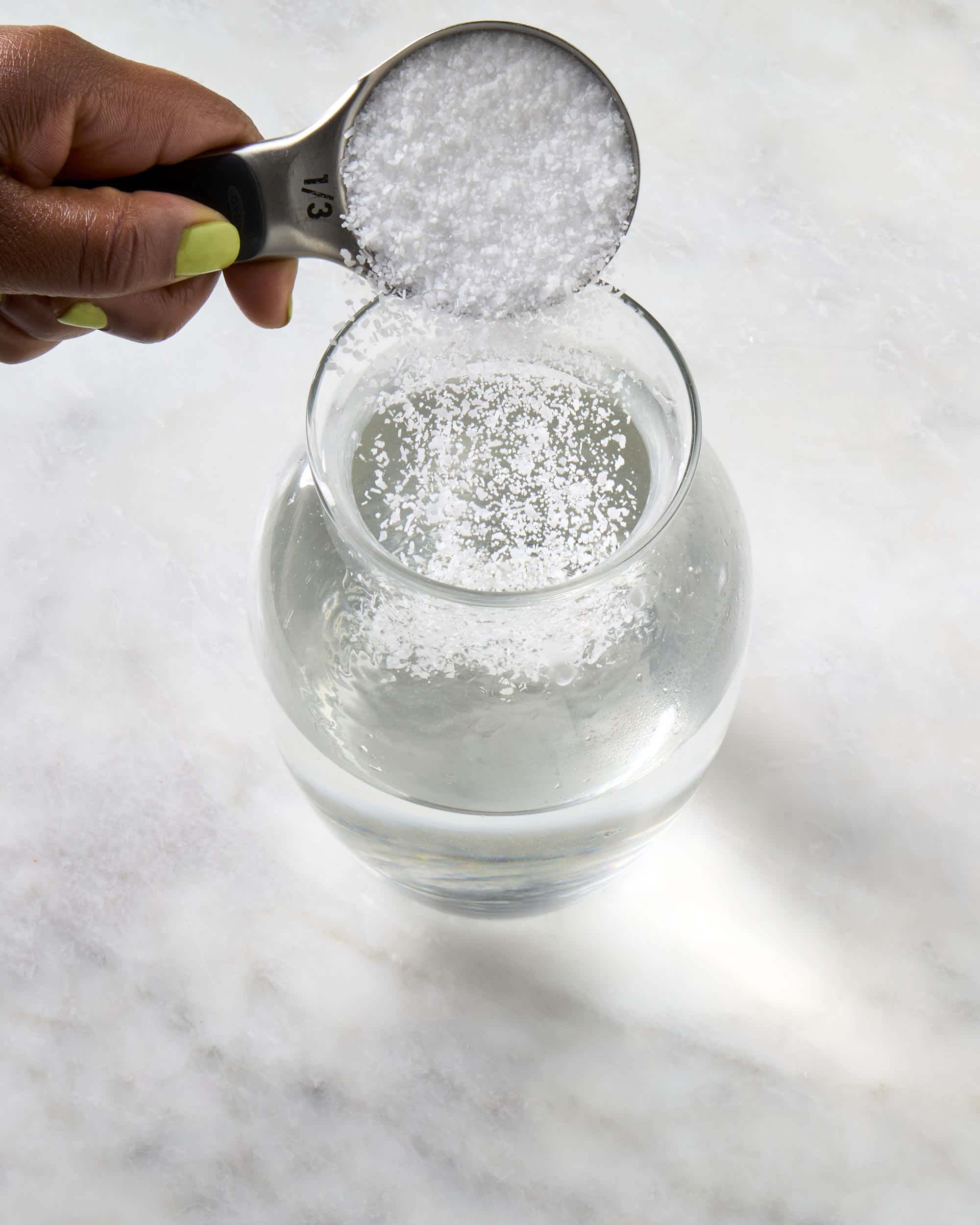
Salt is a natural, safe abrasive that enhances scrubbing without scratching most glass types.
Use Salt and Warm Water
For moderate grime and quick cleaning:
- Fill the vase with warm water.
- Add 1/3 cup table salt.
- Let sit for 5 minutes.
- Cover the opening and swirl vigorously.
- Rinse thoroughly.
This method is fast and highly effective for daily maintenance or light residue.
Try Coarse Salt or Sand Shake
For tougher buildup in narrow vases:
- Add 1 tablespoon coarse salt or sand.
- Fill with water (add dish soap if desired).
- Shake in a circular motion for 1–2 minutes.
- Rinse well.
The coarse texture scrubs away dried-on material. Sand offers more abrasion than salt, making it ideal for heavy sediment.
Apply Salt and Vinegar Paste
For white mineral stains:
- Mix 1 tablespoon salt and 1 tablespoon white vinegar into a paste.
- Apply to stained areas with a cloth or brush.
- Let sit 30 minutes.
- Scrub lightly and rinse.
The acid dissolves minerals while salt provides scrubbing action, perfect for restoring clarity.
Effervescent Tablet Soaks

These hands-off methods use fizzing action to lift stains, especially in hard-to-reach areas.
Soak with Denture Tablets
Best for narrow necks and mineral stains:
- Fill vase with warm water.
- Drop in 1–2 denture tablets (break if needed to fit narrow openings).
- Let sit 15 minutes for light cleaning or overnight for heavy staining.
- Shake well to dislodge final residue.
- Pour out and rinse thoroughly.
Denture tablets cost pennies and work gently but effectively. They are excellent for regular maintenance and crystal vases.
Try Alka-Seltzer
For small or oddly shaped vases:
- Fill with hot water.
- Drop in 1–2 Alka-Seltzer tablets.
- Soak 2–4 hours.
- Rinse well.
The fizz helps loosen grime without scrubbing, making this ideal when time is not an issue.
Avoid Dishwasher Tablets
Despite their cleaning power, dishwasher tablets are not recommended:
- Messy to open due to plastic pods
- Harsh detergents may irritate skin
- Expensive for single-item use
- Long soak needed for mediocre results
Stick to pantry staples. They are cheaper, safer, and often more effective.
Baking Soda and Vinegar Combos
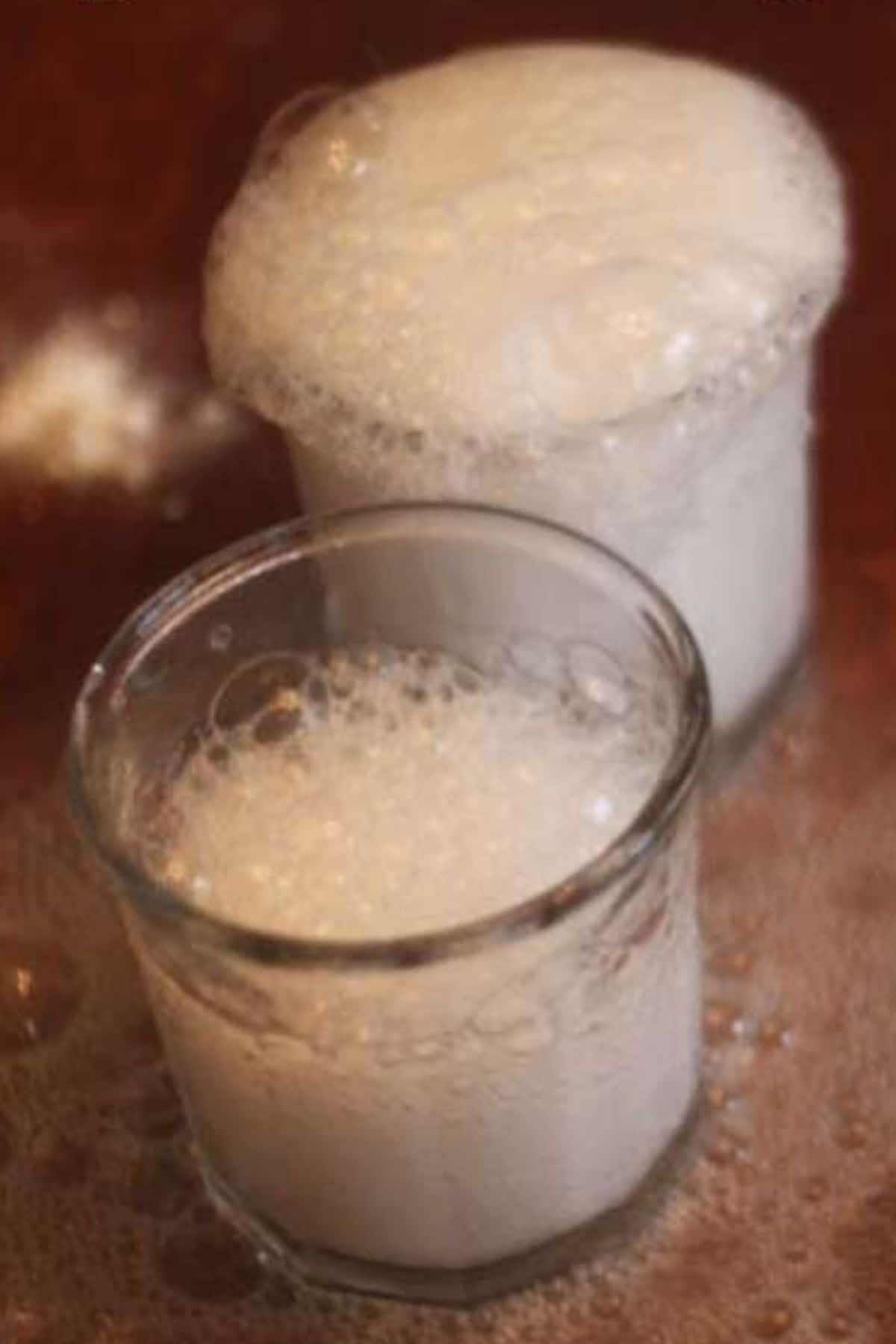
This classic duo creates a fizzy reaction that lifts grime and neutralizes odors.
Soak with Baking Soda and Vinegar
For white film and odors:
- Fill vase with water.
- Add 2 tablespoons baking soda.
- Pour in 2 tablespoons white vinegar (expect fizzing).
- Swirl and let sit:
– 15–30 minutes for light stains
– 2–4 hours for mineral buildup - Scrub with a bottle brush if accessible.
- Rinse well.
The chemical reaction breaks down organic matter and dissolves cloudiness.
Use Baking Soda Paste
For stubborn cloudy spots:
- Mix baking soda and vinegar to form a thick paste.
- Apply to affected areas (interior or exterior).
- Wait 10 minutes.
- Rinse thoroughly.
This paste is mildly abrasive and perfect for spot treatment on cloudy patches.
Vinegar Solutions for Cloudiness
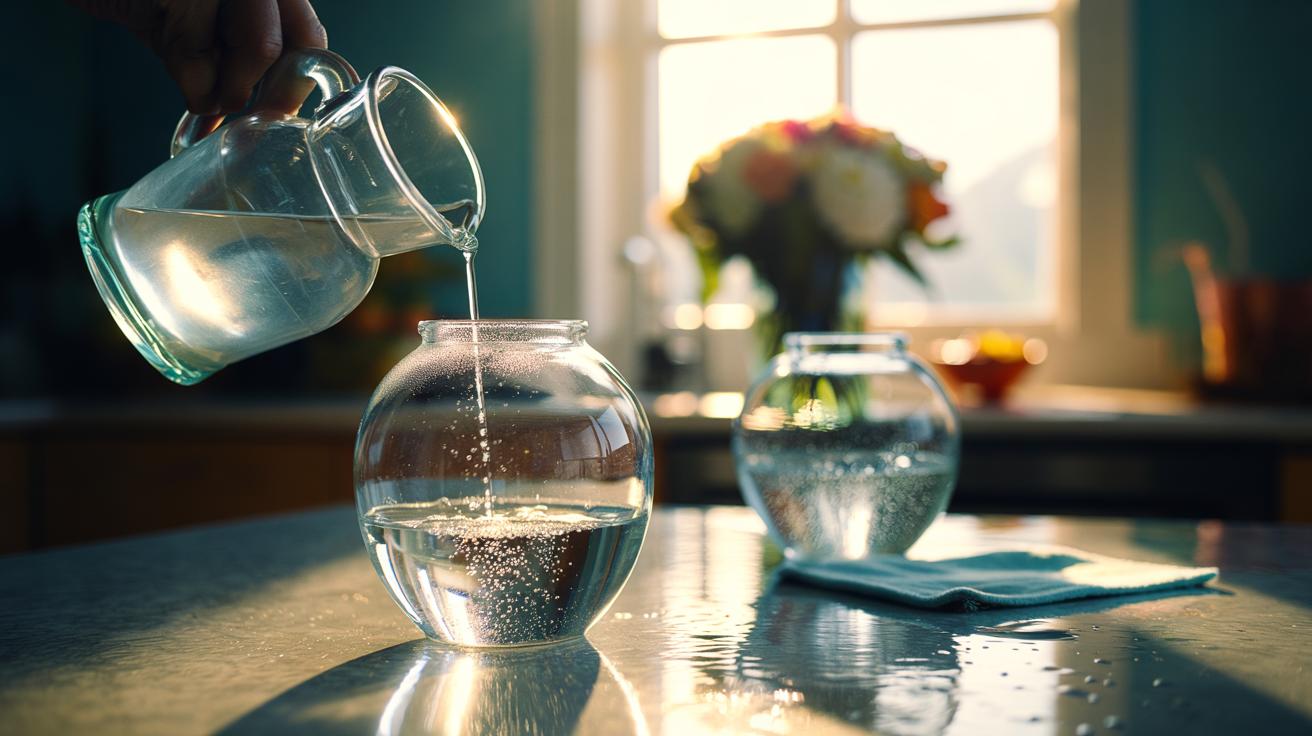
White vinegar is the go-to solution for dissolving hard water stains.
Soak in Vinegar and Water
For cloudy glass:
- Mix equal parts white vinegar and warm water.
- Fill vase to submerge cloudy areas.
- Soak:
– 30 minutes for light film
– Overnight for heavy deposits - Gently scrub and rinse.
For crystal vases, use a 1:3 vinegar-to-water ratio to prevent damage.
Try Vinegar, Soap, and Rice
For deep cleaning with mechanical action:
- Fill vase 1/3 full with hot water.
- Add 2 tablespoons vinegar, a drop of dish soap, and a handful of rice.
- Swirl vigorously.
- Let sit overnight.
- Shake again, empty, and rinse.
This hybrid method combines chemical, abrasive, and thermal actions for maximum effectiveness.
Caution: Check for trapped rice in corners or crevices after use.
Disinfect with Bleach When Needed
Use bleach only when sanitizing is critical, such as before storing or reusing after mold.
Sanitize with Diluted Bleach
- Mix 1 part bleach with 10 parts water.
- Pour into vase.
- Soak 2–4 hours.
- Scrub with a bottle brush.
- Rinse thoroughly with soapy water, then clear water.
Bleach kills bacteria and removes biological stains, but residue can harm flowers and irritate skin. Rinse extensively.
Safety First:
– Wear gloves and eye protection
– Work in a ventilated area
– Never mix bleach with vinegar or ammonia, as toxic gas forms
Milder Option: Bleach and Soap
Add just one drop of bleach to warm, soapy water for light disinfection without full soaking.
Use Specialized Tools for Stubborn Areas
When shaking and soaking are not enough, physical tools can help.
Try Aquarium Gravel
Instead of rice:
- Add 1/2–1 teaspoon of fine gravel.
- Add water or denture solution.
- Swirl gently.
- Reuse after drying and storing in a ziplock bag.
Gravel is reusable and reaches deep into curves.
Use Bottle Brushes
For wide-mouth vases:
- Choose brushes with sponge or bristle tips
- Some have flexible shafts for curved interiors
- Use with soapy water or cleaning solutions
Try Magic Cleaning Balls
Reusable silicone or plastic balls:
- Drop into vase with soapy water.
- Swirl to scrub.
- Remove and dry.
Great for regular cleaning and eco-friendly maintenance.
Avoid Marbles and Wire Hooks
- Marbles: Risk getting stuck in narrow necks
- Wire Hangers: Can scratch glass if not wrapped in cloth
Use only as a last resort and with extreme care.
Clean Crystal Vases Safely
Crystal is delicate. Improper cleaning can permanently dull its brilliance.
Use Warm, Not Hot Water
Thermal shock can crack crystal. Always use warm or cool water, never boiling.
Avoid Harsh Scrubbers
Do not use coarse salt, rice, or abrasive pads. These can micro-scratch the soft surface.
Best Cleaning Methods
- Vinegar soak (1:3 ratio with water) for cloudiness
- Denture tablets for gentle fizzing action
- Orange peel shake: Fill halfway with water, add peels, shake. This is a natural and safe option.
- Vinegar and oil mix (2:1): Rub on deposits with a soft cloth
Final Rinse and Dry
- Rinse with distilled water to prevent new mineral spots
- Dry immediately with a lint-free cloth to avoid streaks
Prevent Buildup with Smart Habits
Keep vases clean longer with simple preventive steps.
Change Water Regularly
Replace flower water every 2 days to reduce bacterial growth and slime formation.
Rinse Immediately After Use
Wash the vase with warm water right after removing flowers. Do not let residue dry.
Use Filtered Water
In hard water areas, use distilled or filtered water to prevent mineral deposits.
Store Clean and Dry
- Dry completely before storing
- Wrap crystal in soft cloth to prevent scratches
- Keep covered to reduce dust buildup
Skip the Dishwasher
Unless labeled dishwasher-safe, hand wash all glass and crystal vases. Dishwasher heat and detergents can cause etching and cloudiness.
Troubleshoot Common Issues
Quick fixes for the most frequent vase problems.
Fix Cloudy Glass
- Cause: Hard water minerals
- Solution: Soak in equal parts vinegar and water for 30+ minutes
Remove Sticky Gunk
- Cause: Bacterial slime
- Solution: Shake with rice and soda water or use bleach soak
Eliminate White Stains
- Cause: Calcium buildup
- Solution: Apply salt and vinegar paste or use denture tablets overnight
Clean Dull Crystal
- Cause: Residue absorption or scratches
- Solution: Use vinegar/oil mix or orange peels; rinse with distilled water
Clear Bottom Sediment
- Cause: Dried organic matter
- Solution: Shake with aquarium gravel or rice; use a bottle brush if possible
Frequently Asked Questions About Cleaning Glass Vases
What is the best way to clean the inside of a narrow-necked vase?
The rice and soda water shake method works best for narrow openings. Add a handful of uncooked rice, fill three-quarters with soda water, cover the opening, and shake vigorously for 1–2 minutes. The rice reaches areas brushes cannot, while carbonation helps dislodge grime.
How do you remove hard water stains from glass vases?
Soak the vase in equal parts white vinegar and warm water for 30 minutes to overnight, depending on severity. For crystal, use a gentler 1:3 vinegar-to-water ratio. The acid dissolves calcium and magnesium deposits that cause cloudiness.
Can you use bleach to clean glass vases?
Yes, but only when sanitizing is necessary. Mix 1 part bleach with 10 parts water, soak for 2–4 hours, and rinse thoroughly with soapy water followed by clear water. Never mix bleach with vinegar or ammonia, as this creates toxic gas.
How often should you clean flower vases?
Rinse vases immediately after removing old flowers and change flower water every 2 days. Deep clean whenever you notice film, odor, or cloudiness. Regular maintenance prevents the heavy buildup that requires aggressive cleaning.
Will rice scratch crystal vases?
Yes, rice can micro-scratch delicate crystal surfaces. For crystal, use gentler methods like denture tablets, a 1:3 vinegar soak, or the orange peel shake method instead. Always dry crystal with a lint-free cloth after rinsing with distilled water.
Are denture tablets safe for cleaning vases?
Denture tablets are safe and effective for both glass and crystal vases. They cost about 4 cents per tablet, require no scrubbing, and work well for narrow necks and mineral stains. Use 1–2 tablets in warm water and soak 15 minutes for light cleaning or overnight for heavy stains.
Key Takeaways for Sparkling Clean Glass Vases
Cleaning glass vases does not require expensive products or specialized tools. The most effective methods, including rice and soda water, vinegar soaks, and denture tablets, use affordable, accessible ingredients you likely already have at home. Match the method to the stain type, prioritize safety with proper ventilation and protective gear when using bleach, and adopt simple habits like rinsing after each use to keep your vases sparkling.
Start with the rice and soda water method for your next deep clean. It takes only minutes, uses ingredients from your pantry, and outperforms most alternatives for stubborn organic residue. Your flowers will last longer, your vases will look beautiful, and you will never need to toss a grimy vase again.