A chipped mirror can be an eyesore, especially in high-visibility areas like bathrooms or hallways. Whether it’s a small edge chip from a dropped object or black spots creeping in from moisture damage, you’re probably wondering how to fix a chipped mirror without replacing it entirely. The short answer: true structural repair isn’t possible, but there are several smart, affordable ways to hide, reshape, or creatively restore your mirror.
This guide breaks down what types of damage can be addressed, which fixes actually work, and how to choose the best solution based on your mirror’s condition, location, and budget. From quick DIY fixes to artistic transformations, you’ll learn practical steps to restore both function and style without spending hundreds on a new mirror.
Assess Mirror Damage Before Fixing a Chipped Mirror

Not all chips are the same, and your options depend heavily on where and how the mirror is damaged. Before attempting any fix, identify the type and extent of damage to determine the best approach for how to fix a chipped mirror in your specific situation.
Edge Chips Versus Cracks
Edge chips involve small pieces of glass missing along the perimeter, and these are common in bathrooms due to accidental bumps. Cracks are linear breaks that may extend across the surface, and if a crack connects to a chip and runs off the edge, it’s usually unrepairable with fillers.
Repairable? Only if the chip is isolated and doesn’t compromise the silver backing.
Not repairable: When cracks reach the edge or reflectivity is lost through black spots.
Check for Desilvering
Look for black spots or foggy streaks near the edges of the mirror. This means moisture has breached the mirror’s seal and damaged the reflective layer. Once desilvering starts, it will spread, and no amount of glue or resin can restore the silvering.
Visual cue: If the back of the mirror shows dark patches behind the glass, the damage is irreversible and affects how to fix a chipped mirror effectively.
Why True Mirror Repair Isn’t Possible
You cannot fully repair a chipped mirror like new. Glass lacks the ability to self-heal, and once the reflective coating is compromised, it’s gone for good. However, you can improve appearance and prevent further breakage using targeted methods depending on the situation.
Key limitation: If the damage goes off the edge of the glass, repair isn’t possible using conventional methods. The silver backing must be intact for any cosmetic improvement to work.
DIY Fixes for Minor Chips When Learning How to Fix a Chipped Mirror

For tiny nicks where the silver backing is intact, cyanoacrylate (super glue) can fill the void as a temporary solution for how to fix a chipped mirror.
Fill Small Edge Chips with Super Glue
Clean the chipped area with isopropyl alcohol. Apply a generous drop of super glue directly into the chip. Let it cure completely, which takes 10 to 15 minutes. Use a razor blade to scrape off excess glue flush with the glass surface.
Limitations: Glue yellows over time and won’t reflect light properly. It only hides depth rather than restoring the mirror.
Pro tip: Use clear epoxy resin instead of glue for better clarity and durability. Epoxy stays clearer longer and bonds more securely when figuring out how to fix a chipped mirror.
Why Professional Repair Rarely Works for Chipped Mirrors
Some suggest treating a mirror chip like a bullseye crack in auto glass where professionals inject clear resin under pressure. But here’s the catch for anyone learning how to fix a chipped mirror professionally.
Auto glass is laminated and thick, while mirrors are thin and backed with delicate silvering. Most household mirror damage occurs at the edge, making resin injection impractical. Technicians rarely offer this service for mirrors because it’s not cost-effective.
Bottom line: Professional repair is not a realistic option for most chipped bathroom or wall mirrors.
Best Solution: Hide Damage with a Frame
The most effective, long-term fix when considering how to fix a chipped mirror is to add a frame or trim that conceals the chipped edge entirely. Framing wins because it completely hides chips and black spots, adds elegance and modern style, costs far less than replacement, and involves no risk of breaking the mirror during removal.
Use DIY Mirror Frame Kits
Products like MirrorMate make framing easy with a snap-on design that fits standard mirror sizes. They offer over 65 finishes including brushed nickel, oil-rubbed bronze, and matte black. The frames install in minutes with no tools and are designed specifically to hide flaws.
Pro tip: Order sample swatches first to match your bathroom hardware before committing to a finish.
To install, measure your mirror’s outer dimensions. Choose a frame size that overlaps the damaged edge by at least half an inch. Snap pieces together starting from one corner and press firmly into place. This method works even if the mirror is glued to the wall, so removal isn’t necessary when learning how to fix a chipped mirror this way.
Reshape the Mirror If It’s Removable
If your mirror isn’t glued down, held by clips, or sits in a cabinet, you can trim the chipped section using a glass cutter as an alternative method for how to fix a chipped mirror.
Cut Off the Damaged Edge
You’ll need a glass cutter, straightedge ruler or T-square, pliers, and safety gloves and goggles.
Mark a straight line past the chip using a permanent marker. Score the glass firmly along the line with the cutter, making only one pass. Tap the underside along the score line to start the break. Use running pliers to guide the break cleanly. Smooth sharp edges with fine-grit sandpaper.
Only attempt this method if the mirror is removable and you’re comfortable working with glass. Do not try if the mirror is glued to drywall because it will shatter.
Replace the Mirror When Hiding Isn’t Enough
If the mirror is severely cracked, desilvered, or you want a perfect finish, replacement is the only real fix for how to fix a chipped mirror in this condition.
Average costs range from $150 to $300 for a standard 24×36 inch mirror, $450 or more for large plate glass, and $600 or more for custom-cut framed mirrors.
Hidden challenges include glued mirrors being hard to remove safely, adhesive removal leaving residue that damages drywall, and new mirrors requiring precise measurement to fit existing space.
Pro advice: Hire a professional for removal and installation if the mirror is large or glued in place.
Turn Damage into Art with Resin
Instead of replacing a damaged mirror, transform it into a decorative piece using colored resin. This method works best when the mirror is already beyond repair but still mounted securely.
Creative Resin Restoration Steps
Wear safety glasses and a respirator mask. Work in a well-ventilated area and protect surfaces with drop cloths.
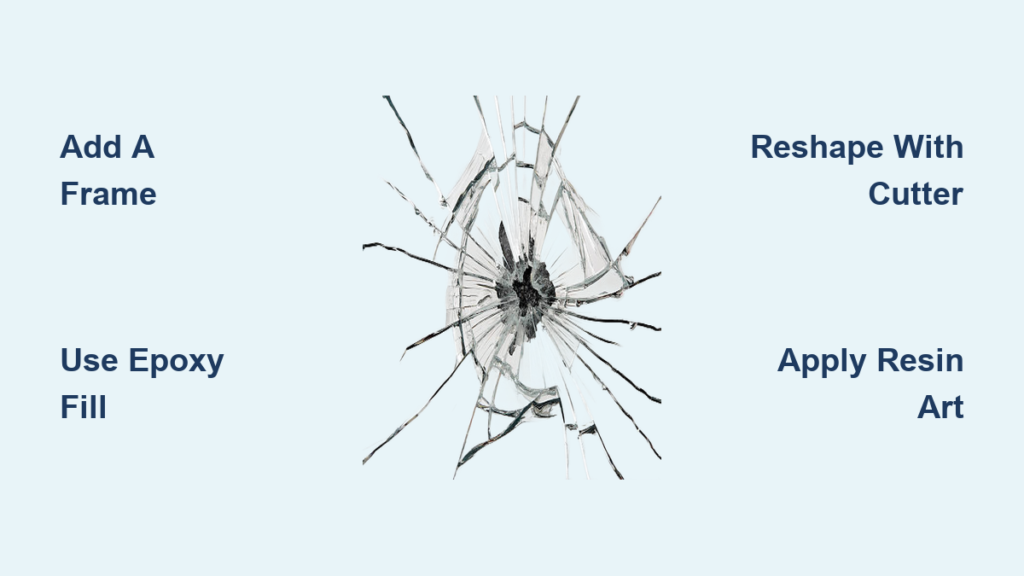
Remove the protective paper backing from the rear of the mirror gently, keeping glass fragments in place if cracked. Use a glass cutter to score around damaged areas, then use pliers to nibble along the line, creating a wider gap for resin flow. From the back, apply small dabs of hot glue to lift each shard slightly off the backing board, creating space for resin to flow underneath.
Mix resin and catalyst in a 1:100 ratio, stir thoroughly, and add copper pigment powder until color is uniform. Pour slowly into cracks from the back, allowing it to wick through to the front naturally. Don’t worry about bubbles or minor bulges because these add character.
Once cured after 24 hours, apply a bead of black silicone around the outer edge to reinforce structure and give a clean, finished appearance.
Compare All Repair Options for Chipped Mirrors

| Solution | Best For | Cost | Ease | Longevity |
|---|---|---|---|---|
| Superglue Fill | Tiny edge chips | $ | Easy | Low (yellows over time) |
| Frame/Trim Cover | Edge chips, black spots | $$ | Easy | High |
| Reshape with Cutter | Removable mirrors | $ | Medium | High |
| Resin Art Fix | Cracked/shattered | $$ | Medium | High (if done right) |
| Full Replacement | Severe damage | $$$ to $$$$ | Hard | Like-new |
Best value options are framing or resin art, both delivering lasting results under $100.
Smart Fixes by Situation
I have a small chip on the corner: Apply clear epoxy and sand smooth, or better yet, install a narrow frame to hide it completely.
My mirror has black spots at the edges: Desilvering can’t be reversed. Frame it or replace it. A mirror frame kit hides black spots perfectly.
It’s glued to the wall—can I still fix it? Yes. Do not remove it. Frame over the damage and avoid cutting or prying.
The mirror is cracked across the middle: Not repairable. Turn it into art with resin or replace it.
I’m on a tight budget: Try MirrorMate or build a cheap wood trim frame. Resin restoration also costs under $50.
Prevent Future Mirror Damage
Avoid hanging heavy items near mirrors like toiletry bottles and razors. Use soft-close cabinet doors if the mirror is inside a vanity. Seal edges with silicone during installation to block moisture. Clean gently with non-abrasive cloths and ammonia-free cleaners.
Prevention beats repair. A well-sealed, framed mirror lasts decades.
Key Takeaways for Fixing Your Chipped Mirror
While you can’t truly repair a chipped mirror structurally, you have better alternatives than costly replacement. For minor chips, fill with epoxy and smooth the surface. For edge damage or desilvering, add a frame because it’s fast, cheap, and stylish. For removable mirrors, reshape by cutting off the damaged edge. For cracked or shattered glass, embrace creativity with resin art restoration. Only replace the mirror when appearance demands perfection or structural safety is compromised.
With the right approach, a chipped mirror doesn’t mean the end. It’s just the beginning of a smarter, more creative upgrade for your home.
Frequently Asked Questions About How to Fix a Chipped Mirror
Can a chipped mirror be repaired like a car windshield?
No. Auto glass is laminated and thick, while household mirrors are thin with delicate silver backing. Professional resin injection doesn’t work for mirror edge chips, making this approach ineffective for most situations.
Does super glue fix a chipped mirror permanently?
No. Super glue fills the void but yellows over time and doesn’t restore reflectivity. It only temporarily hides the chip, making it a cosmetic fix rather than a true repair.
How much does it cost to fix a chipped mirror professionally?
Professional mirror repair is rarely available because it’s not cost-effective. Most technicians won’t attempt it. Framing costs $50 to $150, while full mirror replacement runs $150 to $600 or more depending on size.
Can I fix black spots on my mirror?
No. Black spots indicate desilvering, which is irreversible. Moisture has damaged the reflective coating permanently. Your only options are to hide the spots with a frame or replace the mirror entirely.
Is it safe to cut off a chipped mirror edge yourself?
Only if the mirror is removable and not glued to the wall. Use proper glass cutting tools, safety gloves, and goggles. Never attempt this on glued mirrors because they will shatter and create a dangerous situation.
What’s the cheapest way to fix a chipped mirror?
Adding a decorative frame or using a DIY mirror frame kit like MirrorMate is the most affordable solution. These options cost under $100 and completely hide the damage while improving the mirror’s appearance.