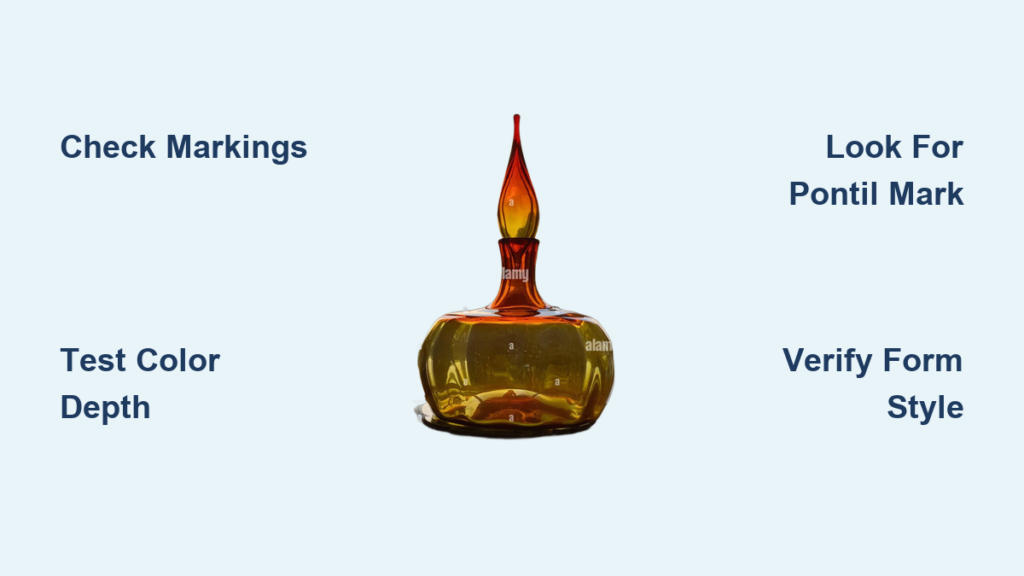
You’ve spotted a striking piece of colorful glassware, maybe at an estate sale, an antique shop, or tucked away in a family collection. Its rich hues and organic shape feel familiar, but you’re wondering: Is it Blenko? With Blenko’s iconic status in American art glass, knowing how to identify Blenko glass is essential for collectors, resellers, and design enthusiasts.
Blenko Glass, based in Milton, West Virginia, has handcrafted glass since 1893, evolving from stained glass to midcentury modern tableware that is now highly collectible. Unlike mass-produced glass, every Blenko piece is made from scratch, blown by hand, and individually inspected. This means no two pieces are exactly alike, and each carries subtle clues to its origin.
In this guide, you’ll learn how to spot authentic Blenko glass using markings, color, form, and proven research tools. Whether you’re verifying a vintage vase or evaluating an online listing, these identification strategies will help you distinguish real Blenko from imitations with confidence.
Decoding Blenko Markings

The most reliable starting point in identifying Blenko glass is examining its markings. These have changed over time, so understanding their evolution is key.
Pre-1958 and Post-1982: Foil Sticker Era
Before 1958 and again after 1982, Blenko used foil or paper stickers featuring the “hand’made” logo, a signature mark where the apostrophe replaces the “a” in “handmade.” These stickers vary in size, shape, and finish, but they share one major flaw: they wear off.
Many authentic pieces today lack this sticker due to age, cleaning, or handling. While finding an intact sticker boosts confidence, its absence does not mean the piece is fake. Always look for secondary indicators.
1958–1982: Sandblasted Marks
From 1958 to 1982, Blenko switched to sandblasted markings, etched directly into the glass base. These are far more durable than stickers and typically read “Blenko,” “Hand’Maded,” or include model numbers like “581” or “652.”
These marks are subtle but permanent. Use a magnifying glass and angled light to reveal them. If a piece claims to be from this era but shows only a sticker, be suspicious, unless it’s a special edition or sample.
Post-1982: Hand-Signed Pieces
After 1982, Blenko began hand-signing many pieces in paint or engraving. These signatures often include the year of production, the initials of the designer, or the full name “Blenko” written freehand.
Since these are applied by hand, they can vary in style and legibility. They also add valuable provenance to a piece.
Early 2000s to Present: Dual Marking System
Since the early 2000s, Blenko uses a dual verification system: a sandblasted mark on the base plus an applied foil sticker. This ensures authenticity even if the sticker is lost. If you find a modern piece with only a sticker and no etching, it may be a reproduction.
Pro Tip: Never rely on markings alone. Stickers can be faked, and marks may be missing. Combine this evidence with color, form, and context.
Recognizing Authentic Blenko Color
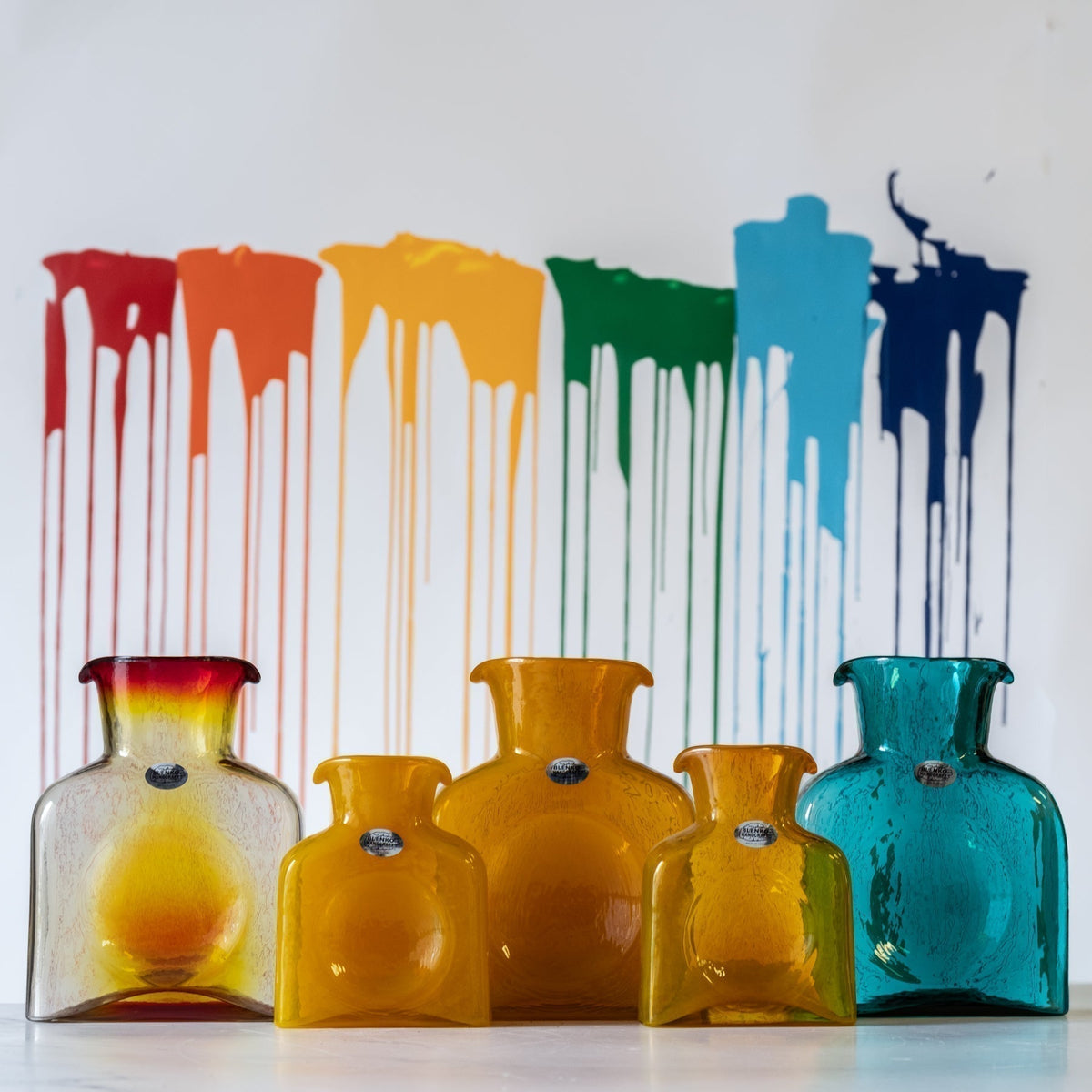
Color is often the first clue that a piece might be Blenko. Their palette is bold, saturated, and deeply integrated into the glass with no surface coating.
Super-Saturated, Stained-Glass Hues
Blenko glass mimics the luminosity of stained church windows, thanks to its origins in architectural glass. Authentic pieces feature deep ambers, forest greens, and cobalt blues from early decades, plus vivid turquoises, purples, reds, and smoky grays from mid-century to modern times. Limited runs of experimental colors also appear in certain years.
If the color looks washed out, chalky, or uneven, it is likely not genuine Blenko.
Color Integration Test
Because Blenko makes its own glass from raw materials, color runs through the entire piece. To test this:
- Hold the item up to light. True Blenko will glow uniformly.
- Check edges and thickness. There should be no fading or layering.
- Compare to known reproductions. Many imitations have thin, superficial color.
Expert Note: Some colors were only produced in specific decades. Use historical catalogs to cross-reference which colors were available when.
Evaluating Form and Design Style
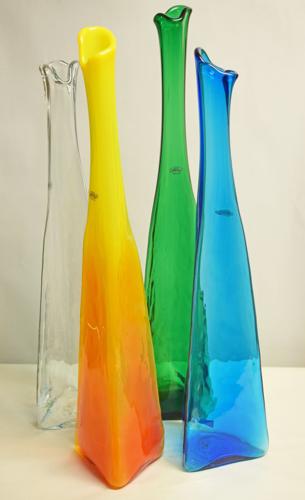
Blenko’s design language evolved over time, but it is always rooted in midcentury modernism and organic abstraction.
Midcentury Organicism (1940s–1970s)
This era defines classic Blenko. Look for asymmetrical shapes with free-flowing vases and undulating bowls, soft sculptural curves inspired by nature, and thick walls with dramatic lips or spouts.
Designers like Wayne Bates and Bill Thomas pushed creative boundaries, resulting in pieces that feel alive and almost molten.
Geometric Modernism (1980s–Present)
Later designs shifted toward clean lines and structured forms, including cylindrical vases, angular pitchers and decanters, and modular sets with uniform profiles.
While less flamboyant, these still carry Blenko’s signature weight and color depth.
Hand-Blown Indicators
All Blenko glass is hand-blown, leaving physical evidence throughout each piece.
Pontil Mark: The Gold Standard
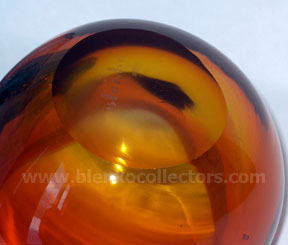
The pontil mark, a rough circular scar on the base, is the strongest indicator of hand-blown American art glass. It is where the pontil rod was snapped off during production. True pontil marks are not polished smooth, may have slight irregularity or glass drips, and appear on most vintage and modern Blenko pieces.
Warning: Some reproductions fake pontil marks with drills or sandblasting. True marks have texture and depth.
Variability in Shape
No two hand-blown pieces are identical. Slight warps, uneven bases, or asymmetrical mouths are normal and desirable. Machine-perfect symmetry suggests mass production.
Spotting Fakes and Reproductions
With rising demand, counterfeit Blenko glass appears more frequently online. Here’s how to avoid being misled.
Red Flags in Listings
Watch for these warning signs:
- “Blenko style” or “inspired by” language, often a disclaimer for non-authentic items
- Perfect symmetry in organic forms
- Faint or glossy stickers that look printed rather than foil-based
- Missing pontil mark on older pieces
- Prices too good to be true, since rare Blenko pieces rarely sell for under $50
Common Imitators
Common imitations include Czech or Chinese glassware with similar colors but thinner walls, pressed glass with molded “pontil” marks, and re-stickered blanks where non-Blenko glass carries fake labels.
Action Step: Search the model number (if present) in Blenko’s online catalog archive. If it does not appear, investigate further.
Using Research Tools Effectively

Even experts use external resources to confirm authenticity. Here’s how to leverage them.
Blenko’s Online Catalog Archive
Blenko provides free access to historical trade catalogs on its official website. These are your best reference. You can view full-year collections by decade, match shapes, colors, and model numbers, and identify rare editions such as anniversary pieces.
Limitation: Not every piece was cataloged. “Catalog exclusions” exist, especially for one-offs, samples, or custom orders.
Collector Communities
Join online groups like Blenko Glass Collectors on Facebook, the Glass Message Board, and Reddit’s r/glassart. Members often share unlisted variations, designer handwriting samples, and photos of rare markings.
Pro Tip: Post clear photos of the base, side profile, and any marks. Ask, “Can anyone ID this form or color?”
Professional Appraisal
For high-value items, consider a certified appraisal from American Society of Appraisers members, antique glass specialists, or auction houses focusing on midcentury design. They assess weight and density, glass composition, and stylistic consistency with known works.
Care and Handling Tips
Once you’ve identified a genuine piece, protect its value with proper care.
Cleaning Do’s and Don’ts
- Use warm water and mild dish soap.
- Soak stained pieces overnight before gentle cleaning.
- Dry with a soft microfiber cloth.
- Avoid steel wool, abrasive pads, and bleach or ammonia-based cleaners.
- Do not scrub pontil marks or etched areas.
Display and Storage
- Avoid direct sunlight, since UV rays can fade super-saturated colors over decades.
- Use felt pads to prevent scratching and stabilize uneven bases.
- Store pieces upright to prevent rolling or pressure on delicate rims.
Note: Blenko glass is durable but not indestructible. A fall on tile can crack or shatter it.
Frequently Asked Questions About Blenko Glass
Does Blenko offer official authentication for vintage pieces?
No. Blenko does not provide authentication services for vintage or historical items due to the enormous volume of production over eighty years. Collectors must rely on their own research, visual examination, and community expertise.
What if my Blenko piece has no sticker or marking?
This is common, especially for older pieces where foil stickers have worn away. Absence of a mark does not automatically disqualify authenticity. Evaluate color, form, weight, and pontil marks to build your case.
Are bubbles in Blenko glass a sign of a fake?
Generally, yes. Genuine Blenko pieces are expected to be free of unintentional bubbles due to their quality inspection standards. Bubbles may indicate a reproduction or lower-quality glass.
How can I tell if a pontil mark is real?
A genuine pontil mark is rough, irregular, and textured. It results from the glass being broken off the pontil rod. Faked marks made by drilling or sandblasting tend to look too uniform or smooth.
Where can I find Blenko’s historical catalogs?
Blenko’s historical trade catalogs are available for free viewing on the official Blenko Glass Company website. These catalogs are invaluable for matching designs, colors, and model numbers.
Is Blenko glass a good investment?
Blenko glass holds value well, especially rare midcentury pieces with documented designer provenance. However, like any collectible, value depends on condition, rarity, and market demand. Always buy from reputable sources.
Final Thoughts on Identifying Blenko Glass
Identifying Blenko glass combines detective work with an appreciation for craftsmanship. No single factor guarantees authenticity, but layering evidence from markings, color depth, form, and verified research builds a strong case.
The most important takeaways: markings have evolved across eras and may be missing on legitimate pieces, color should be deeply saturated and integrated throughout the glass, and hand-blown characteristics like pontil marks and slight irregularities are positive signs.
Your next step is simple. Pick one piece from your collection or a recent find and run it through the checklist in this guide. Photograph the base, note the color and weight, and compare your observations against Blenko’s online catalog archive. With practice, your eye will sharpen, and the confidence you build will make every future identification faster and more rewarding.