
You’ve just spotted a gorgeous glass sculpture online, and the listing proudly declares it as “Murano glass.” But something feels off. The price seems too low, the pieces look identical, and the seller can’t answer basic questions about the artist. Unfortunately, your instincts are probably right. Most items labeled “Murano” today aren’t made on the Venetian island at all. They’re factory-produced imitations designed to cash in on a 1,000-year-old tradition.
True Murano glass is handcrafted by skilled artisans on a small island near Venice, using techniques passed down through generations. Prices for authentic pieces range from $100 to $5,000 or more. This guide will walk you through proven methods to verify authenticity, from physical tests to digital certificates, so you can buy with confidence.
Spot Authentic Murano Glass Through Physical Clues

Real Murano glass isn’t flawless. It’s beautifully imperfect. Machine-made glass looks uniform and crystal-clear, while hand-blown Murano glass shows subtle signs of human craftsmanship. These “flaws” are actually proof you’re holding the real thing.
Start by looking closely at the piece. Do you see tiny air bubbles trapped inside? That’s a strong sign of authenticity. Traditional layering techniques involve blowing and folding molten glass, which naturally traps small bubbles between layers. If the glass is perfectly clear and bubble-free, it’s likely lead crystal, a common material in cheap imitations from China and Eastern Europe. Lead is actually banned in authentic Murano production for safety and tradition.
Next, check the base. Run your finger over the bottom. Is there a rough, slightly raised scar? That’s the pontil mark, left when the glassblower snaps off the rod used to shape the piece. A perfectly smooth base means it was likely molded, not hand-blown.
Finally, examine the weight. Genuine Murano glass feels substantial but balanced. Some counterfeits use thick, dense glass to mimic quality, but they often feel unnaturally heavy. Authentic pieces vary in thickness due to handcrafting, giving them an organic feel.
Check for the Pontil Mark
The pontil mark is one of the most reliable signs of hand-blown Murano glass. It appears as a small, circular scar on the base where the pontil rod was detached. It should feel rough, not polished.
To test this, gently run your fingertip over the base. If it’s completely smooth, the piece was likely made in a mold. Some high-end chandeliers or delicate items may have the mark polished away for aesthetic reasons, but for sculptures, vases, and bowls, the pontil mark should be visible.
Be cautious of pieces with a fake pontil. Some counterfeits add a painted or etched dot to mimic the mark. Real pontil scars have depth and texture you can feel.
Look for Layering and Texture
Authentic Murano glass is built in layers. You can often see this in pieces with color gradients or metallic inclusions. For example, a green bowl with gold leaf inside isn’t just painted. It has a layer of clear glass over gold-infused glass.
Hold the piece up to the light. Can you see distinct layers? Do colors shift or deepen at certain angles? That’s the sommerso technique, meaning “submerged” glass. Mass-produced fakes usually have a single, thick layer of colored glass.
The surface may also feel slightly irregular. Machine-made glass is perfectly smooth. Hand-blown glass can have subtle ripples or texture, especially near the base or rim.
Recognize Signature Murano Techniques

Murano glassmakers use specialized techniques that are hard to replicate. These methods define the art form and are key to identification.
Each technique creates a unique visual signature. If you can spot these, you’re well on your way to confirming authenticity.
Identify Millefiori and Murrine
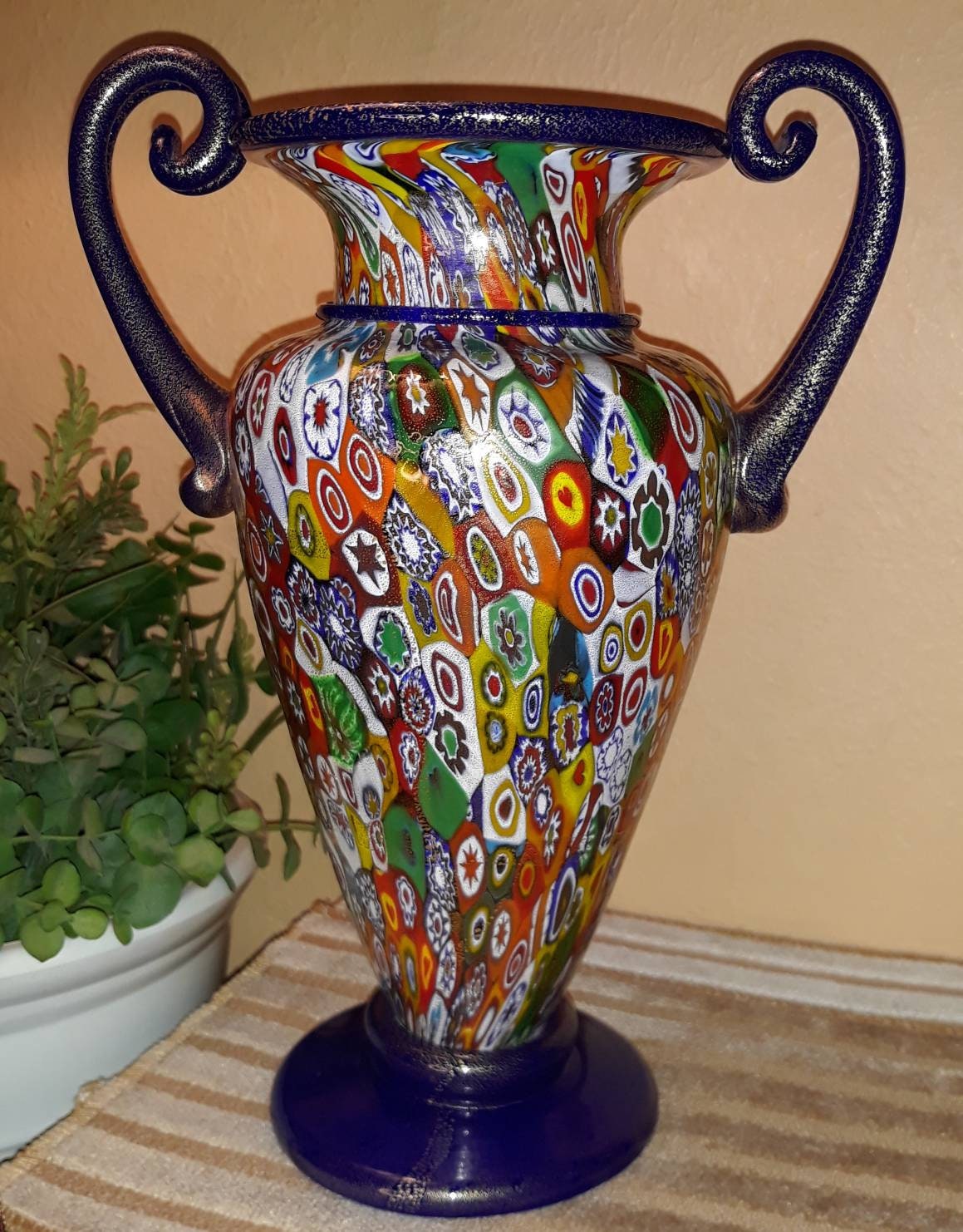
Millefiori (“thousand flowers”) features intricate floral or geometric patterns made from sliced glass canes. These are fused into paperweights, vases, or bowls.
Look for cross-sections of tiny, detailed designs like flowers, stars, or spirals. The patterns should be consistent but not perfectly identical. In real millefiori, slight variations in size or alignment are normal due to handcrafting.
Murrine refers to the glass canes themselves or the patterns made from them. They’re often embedded in clear glass, creating a mosaic effect.
Counterfeit versions use printed decals or plastic inserts. Tap the surface lightly. If it sounds hollow, it’s fake.
Spot Filigrana and Aventurine
Filigrana (or filigree) involves embedding thin threads of white or colored glass into clear glass, creating a lace-like pattern. Common variations include zanfirico (twisted threads) and ribbon filigree (flat, ribbon-like strands).
Look for pieces like clear vases with delicate white spirals. The threads should run continuously through the glass, not sit on the surface.
Aventurine glass contains tiny copper flakes that sparkle like glitter. It’s used in orange-red clam bowls, blue-green bottles, or ashtrays. The sparkles should be evenly distributed but not uniform. Fake aventurine uses plastic glitter or paint, which looks flat under light.
Confirm Polveri and Sommerso
Polveri means “gold dust.” Tiny particles of 24-karat gold are suspended in the glass, often in fish or animal figurines. Tilt the piece. Do you see fine, shimmering specks that move with the light? That’s real polveri. Fake versions use metallic paint that doesn’t shift.
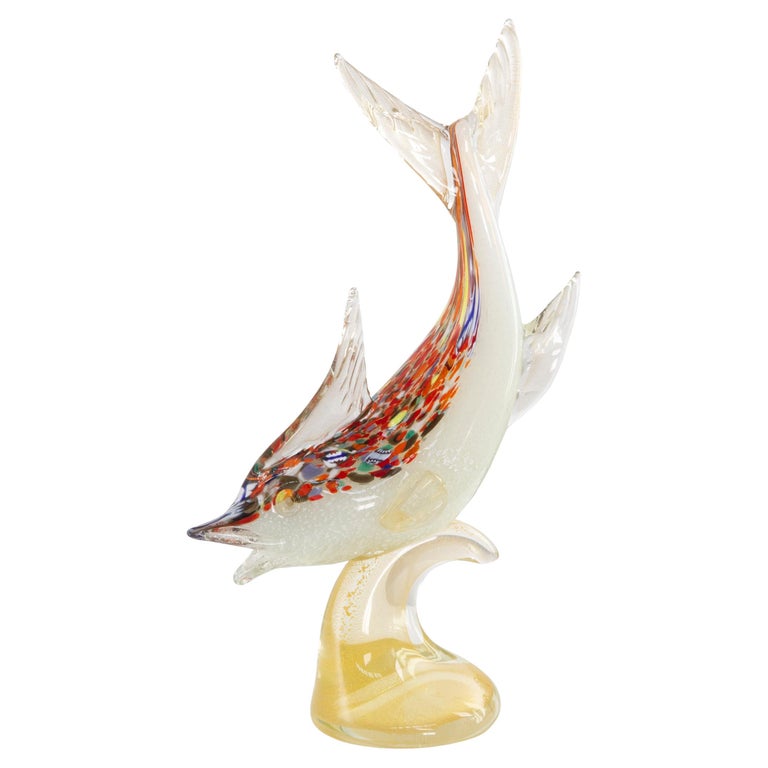
Sommerso (“submerged”) involves layering colored glass under clear glass. Common in fish sculptures or vases, it creates a depth effect. Look for a clear outer layer with a colored inner core. The transition between layers should be smooth, not abrupt. In fakes, the color is often just painted on.
Examine Color and Material Clues

Color in Murano glass isn’t just decorative. It’s technical. The vibrancy, opacity, and light-reactive properties can reveal authenticity.
Detect Neodymium and Alabastro Glass
Neodymium glass changes color depending on the light. A dolphin or deer sculpture might look lilac under daylight and blue under incandescent light. This effect comes from rare earth elements, used only in high-end Murano pieces. Fakes can’t replicate this shift. They stay one color.
Alabastro glass is opaque and stone-like, often pink or white. It’s used for animal sculptures like dogs, rabbits, and elephants. Real alabastro has a soft, matte finish. Fake versions look chalky or overly bright. Touch it. Real alabastro feels smooth but not plastic-like.
Avoid Lead Crystal Imitations
Lead is forbidden in authentic Murano glass. It’s used in cheap imitations to make glass clearer and heavier.
If a piece is perfectly clear, bubble-free, and feels dense, it’s likely lead crystal. Real Murano glass embraces slight imperfections. Also, lead glass rings when tapped. Murano glass makes a softer “clink.”
Verify Labels and Signatures
A label or signature can help, but they’re not foolproof. Many fakes include forged markings. Always verify.
Read Furnace and Artist Marks
Many authentic pieces are signed by the artist or furnace. Common markings include:
- “Bottaro, Murano” for Franco Bottaro, known for smoky grey fish and birds
- “Zanetti L” for Licio Zanetti, maker of clear frogs and fish
- “060, Vetro Artistico Murano” for Ferro Lorenzo, yellow/red birds with gold leaf
- “Vetreria Artistica Gambaro & Poggi, Murano, Made in Italy” for red/green fish with gold leaf
Search the name online. Is the furnace based in Murano? Does the signature match known examples?
Some artists, like Seguso Dalla Venezia, are known for clam-shaped bowls in pink/amber or green/amber. Campanella makes smoky grey elephants and swans.
Beware of Fake Stickers
Older pieces may have paper stickers like “Made in Murano” or “Vetro Artistico Murano.” These are easily forged.
Red flags include:
– Multiple stickers from different furnaces
– Generic “Murano rooster” logo
– “Made in Italy” without “Murano” or furnace name
Since 2024, paper stickers have become less reliable. Look for digital proof instead.
Check for NFT Certificates
Newer authentic pieces come with NFT certificates, which are digital, blockchain-based proof of origin. Each NFT is unique and linked to one artwork. It can’t be copied or forged.
Ask the seller for the NFT code. Verify it on a blockchain explorer. This is the most secure way to confirm authenticity today.
Use Price and Seller as Clues
Price and source matter. If a deal seems too good to be true, it probably is.
Assess Market-Appropriate Pricing
Authentic Murano glass is expensive. Skilled artisans (often third- or fourth-generation) command fair wages. Rare materials like 24-karat gold, silver, and copper aventurine add cost. Time-intensive techniques require hours of hand-blowing, layering, and firing.
A real Murano fish with gold leaf should cost $150 or more. A clam bowl with aventurine runs $200 and up. A signed paperweight starts around $100.
If you see “Murano” fish for $20 on Amazon, it’s fake. No true artisan can compete with Chinese mass production.
Buy from Trusted Sellers
Purchase from reputable galleries, authorized Murano dealers, or directly from Murano-based workshops.
Trusted sellers know the history and techniques, offer customization, provide certificates (paper or NFT), and guarantee origin. Avoid sellers who can’t name the artist or furnace.
Avoid Common Counterfeit Traits
Fakes have telltale signs. Learn them to protect your investment.
Spot Mass-Produced Uniformity
Real Murano glass is unique. No two pieces are identical.
If you see 10 identical fish, vases, or paperweights, they’re machine-made. Look for slight variations in shape, color flow, or bubble pattern. These prove handcrafting.
Reject Smooth, Heavy Bases
Fake Murano glass often has:
– Perfectly smooth bases (no pontil mark)
– Excessive weight (thick, molded glass)
– Uniform thickness
Compare to a known authentic piece. The difference is obvious.
Frequently Asked Questions About Murano Glass
What is the difference between Murano glass and regular glass?
Murano glass is handcrafted on the island of Murano in Venice, Italy, using techniques passed down through generations. Regular glass is typically machine-made in factories worldwide. Murano glass features unique imperfections like tiny bubbles and pontil marks, while machine-made glass appears flawless and uniform.
How can you tell if Murano glass is real at home?
Check for small air bubbles inside the glass, feel for a rough pontil mark on the base, and look for layered colors rather than painted surfaces. Genuine Murano glass also feels balanced in weight, not unnaturally heavy. These physical tests can reveal authenticity without special equipment.
Are all Murano glass pieces signed?
Not all pieces carry signatures. Masters often omit signatures on aesthetically sensitive items like glasses, carafes, mirrors, and chandeliers. However, sculptures, vases, and bowls typically bear the artist’s or furnace’s mark. When in doubt, request a certificate of authenticity.
What does a pontil mark look like?
A pontil mark appears as a small, rough, circular scar on the bottom of hand-blown glass. It forms when the glassblower snaps off the metal rod used to shape the piece. The mark should feel textured when you run your finger over it, not smooth.
Why is authentic Murano glass so expensive?
Authentic Murano glass requires skilled artisans, rare materials like 24-karat gold and copper aventurine, and hours of handcrafting. The 1,000-year-old tradition involves techniques that can’t be replicated by machines. These factors justify prices starting around $100 for smaller pieces.
Can Murano glass be checked with a blacklight?
Some collectors use blacklights to check for certain fluorescent properties in glass, but this isn’t a reliable standalone test for Murano authenticity. Physical characteristics like pontil marks, bubbles, and layering remain the most dependable indicators.
Key Takeaways for Authenticating Murano Glass
Authentic Murano glass is art shaped by centuries of tradition, not factory decor. The most reliable signs include small air bubbles, a rough pontil mark on the base, layered construction, and signature techniques like millefiori, sommerso, and filigrana. Avoid pieces that are perfectly clear, flawlessly smooth, or suspiciously cheap.
Always verify signatures against known artists, request certificates of authenticity (preferably NFTs for newer pieces), and buy from reputable sellers. When examining a potential purchase, use multiple authentication methods together rather than relying on a single clue.
Your next step: Before buying any Murano glass, ask the seller for the artist’s name, furnace location, and certificate details. If they can’t provide these basics, walk away. True Murano glass is worth the wait and the investment.