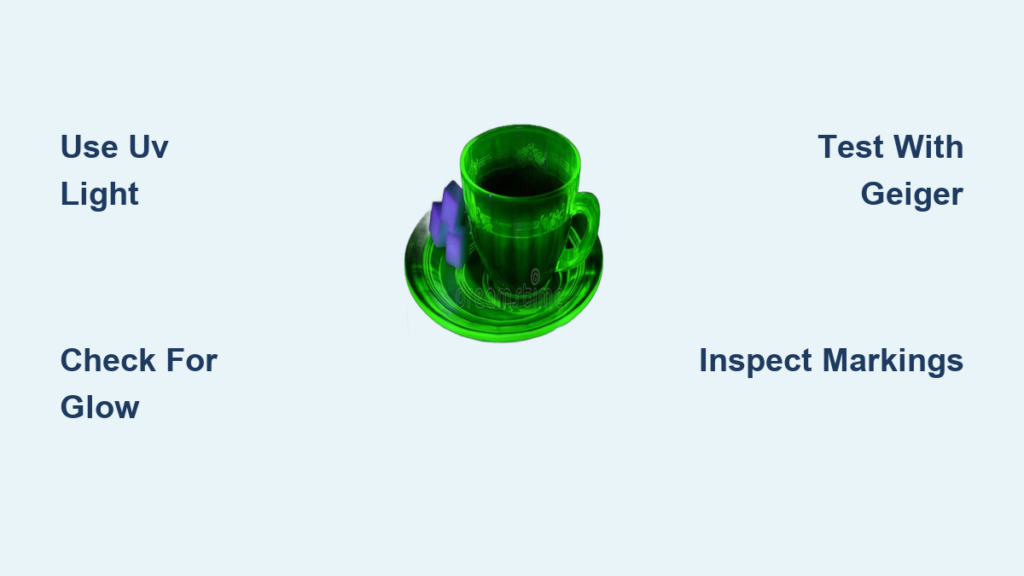
You’ve inherited a set of vintage green glassware or found a striking yellow dish at a thrift store. It glows under blacklight—could it be uranium glass? You’re not alone. Thousands of collectors and curious homeowners are drawn to this luminous, radioactive relic of the past. Uranium glass, glass infused with uranium oxide, has a unique history, a signature glow, and subtle clues that can help you identify it with confidence. While many assume all glowing green glass is uranium-based, the reality is more complex. Some fakes glow just as brightly, while some real uranium pieces don’t glow at all.
This guide cuts through the confusion, giving you clear, actionable steps to identify uranium glass using light, labels, and logic. Forget guesswork. With just a UV flashlight and a trained eye, you can distinguish true uranium glass from its lookalikes. Whether you’re a seasoned collector, a history buff, or a cautious homeowner, knowing how to spot uranium glass protects your health, preserves value, and unlocks a fascinating chapter of industrial design. In this guide, you’ll learn how to use UV light testing, interpret markings, recognize key types like Vaseline and Custard glass, and avoid common misidentifications.
Use UV Light to Detect Glow

The most reliable first step in identifying uranium glass is testing it under ultraviolet (UV) light, commonly known as a blacklight. This method is fast, non-invasive, and effective for most pieces.
Shine a Blacklight in Darkness
Turn off the lights and shine a UV flashlight (365–395 nm wavelength) directly onto the glass. Authentic uranium glass will emit a bright, vivid green glow, sometimes neon-like in intensity. This fluorescence happens when uranium atoms absorb UV energy and re-emit it as visible green light. The glow should be consistent across the surface, though thickness and color can affect brightness. If the piece doesn’t glow, it may still contain uranium. Some formulations, especially clear or lightly tinted variants, lack fluorescence. But if it does glow green, uranium is likely present.
Pro tip: Test the glass in total darkness. Even small amounts of ambient light can mask subtle fluorescence. Hold the light close and rotate the object to check all sides.
Compare Glow Intensity
Not all uranium glass glows equally. Some items shine like a glow stick, while others emit a soft, faint green. Glow strength depends on the uranium concentration and the chemical formula used during manufacturing, not the radiation level. A dim glow doesn’t mean less uranium; it might just mean different additives were used. Conversely, a bright glow doesn’t guarantee high radioactivity. This disconnect is critical: fluorescence intensity does not equal radiation level.
Use this scale to assess:
– Bright neon green = High likelihood of uranium (e.g., classic Vaseline glass)
– Soft green glow = Possible uranium, especially in opaque types like Custard or Jadeite
– No glow = Not necessarily safe to rule out; test further if historical clues suggest uranium
Watch for False Positives
A green glow isn’t exclusive to uranium. Some thorium-containing glass, often found in old lenses or scientific glassware, can also fluoresce under UV light. Thorium was used in heat-resistant glass and certain colorants, creating a nearly identical glow. Without further testing, it’s easy to misidentify. Additionally, modern novelty items may contain phosphorescent coatings that mimic the effect.
To reduce false positives:
– Check for manufacturer stamps or era-specific designs
– Use a Geiger counter if available
– Avoid relying solely on glow; combine with visual and historical analysis
Confirm with a Geiger Counter
While UV testing is the go-to method, a Geiger counter provides scientific confirmation of radioactivity, which is key for verifying true uranium content.
Detect Low-Level Radiation
Uranium glass emits alpha and beta radiation, but levels are typically very low. A sensitive Geiger counter (preferably one capable of detecting alpha particles) can register readings above background radiation, usually between 10–30 µR/h, though some pieces reach up to 100 µR/h. For comparison, background radiation in most homes is around 5–10 µR/h. If your device shows a noticeable spike when near the glass, it likely contains uranium.
Note: Many consumer-grade Geiger counters are not sensitive enough to detect low-uranium pieces. Don’t assume a negative reading means no uranium, especially if the item glows under UV.
Interpret the Results Correctly
A positive UV glow does not guarantee a positive Geiger reading, and vice versa. Some highly fluorescent pieces have uranium levels too low to register, while others with weak glow may still emit detectable radiation. The isotopic composition and chemical binding of uranium affect detectability more than visual appearance.
Use this checklist:
– Glow + Radiation = Strong evidence of uranium
– Glow + No Radiation = Likely uranium (low concentration) or thorium dupe
– No Glow + Radiation = Rare, but possible (non-fluorescent uranium glass)
– No Glow + No Radiation = Probably not uranium glass
Avoid Misreading the Data
Don’t panic over small spikes. The US Nuclear Regulatory Commission confirms that uranium glass poses minimal health risk during normal handling. Radiation levels are often lower than those from household electronics or a day spent outdoors in sunlight. The goal of using a Geiger counter is verification, not fear. It’s especially useful for collectors distinguishing antiques from reproductions or confirming rare finds.
Recognize Key Visual Clues
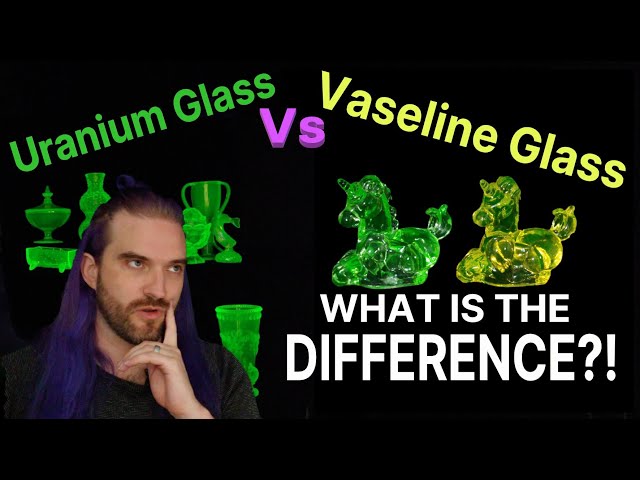
Before pulling out tools, examine the glass with your eyes. Many types of uranium glass have distinct colors, textures, and markings that point to their identity.
Look for Signature Colors
Uranium glass appears in several daylight hues, each linked to a specific subtype:
– Transparent yellow or yellow-green = Likely Vaseline glass
– Opaque milky-white = Possibly Custard glass
– Pink-to-white gradient = Could be Burmese glass
– Opaque green-white = Often Jadeite glass
But color alone isn’t proof. Green glass may contain iron or chrome oxide; white “milk glass” is often just tin oxide. Uranium was expensive, so many manufacturers faked the look. Always follow up with UV testing.
Check for Manufacturer Marks
Vintage uranium glass often bears stamps or etchings on the base. These can confirm authenticity and origin:
– Whitefriars (UK): Look for “Whitefriars” or a monk logo
– Reidel (Bohemia): Early 1800s pieces may have hand-etched marks
– Jadeite makers (USA): Fostoria, McKee, and Jeannette used proprietary stamps like “Jadite” or “Fostoria”
Warning: Modern reproductions often mimic these marks. Cross-reference with known patterns and production dates.
Inspect the Finish and Opalescence
Some uranium glass types have unique surface qualities:
– Custard glass may show fiery red opalescence along edges when held to light
– Burmese glass typically has a matte, acid-etched finish, not sandblasted (a sign of modern remake)
– Vaseline glass is smooth and transparent, with a petroleum jelly-like hue
These details help separate true antiques from modern fakes sold as vintage.
Know the Main Types of Uranium Glass
Understanding the subcategories helps you pinpoint what you’re looking at and whether it’s likely to contain uranium.
Vaseline Glass: Transparent Yellow Glow
Vaseline glass is the most iconic type: transparent, yellowish, and intensely fluorescent. Named for its resemblance to petroleum jelly, it was popular from the 1880s to 1930s. Early versions were called Canary glass. It glows bright green under UV and feels smooth to the touch. Most Vaseline glass contains uranium, making it a reliable target for collectors.
Red flag: Some modern “Vaseline-style” glass uses dyes instead of uranium. Always test with UV light.
Custard Glass: Milky White with Red Edge
Custard glass is opaque and milky-white, designed to mimic porcelain. What sets authentic uranium-based custard glass apart is the red or orange opalescence visible along rims when backlit. This fiery glow is rare in non-uranium milk glass. It was mass-produced in the late 19th and early 20th centuries, often as tableware.
Tip: If it glows green under UV but lacks red opalescence, it may be plain milk glass.
Burmese Glass: Pink-to-White Gradient
Burmese glass features a soft gradient from pink to white, created by reheating the glass. It always contains uranium and glows green under UV. Antique Burmese glass has a chemically etched matte finish, a hallmark of original production. Modern versions use sandblasting, which creates a rougher texture.
Expert note: Burmese glass was patented by Mount Washington Glass Company in 1885. True pieces are rare and valuable.
Jadeite Glass: Opaque Green-White
Jadeite glass (sometimes misspelled “Jadite”) is opaque green-white, popular in mid-20th century American kitchens. Brands like Fire-King and Jade-ite used uranium in some batches, but not all vintage Jadeite contains uranium. Manufacturers often mixed green glass scraps with milk glass to achieve the color.
Key insight: Stamped Fire-King pieces from the 1940s–50s are more likely to be uranium-based. Test each piece individually.
Depression Glass: Yellow-Green Tableware
Depression glass refers to mass-produced, low-cost tableware from the 1920s–40s. Some green or yellow-green varieties contain uranium oxide for fluorescence. However, many were “tainted” with iron or other metals to enhance color, making them less desirable to purist collectors.
Fact: Much Depression glass was discarded after WWII. Surviving uranium-containing pieces are now collectible.
Avoid Common Misidentifications
Even experienced collectors make mistakes. Knowing what mimics uranium glass helps you stay accurate.
Don’t Confuse with Milk Glass
Milk glass is opaque white glass made with tin oxide, antimony, and arsenic, with no uranium. It does not glow under UV light. However, it’s often mistaken for Custard glass, especially if untested. Always use a blacklight to confirm.
Visual clue: Milk glass lacks the red opalescence seen in true uranium custard glass.
Watch for Thorium Glass
Some old scientific or optical glass contains thorium, which also fluoresces green under UV. These pieces may come from lab equipment, camera lenses, or vintage marbles. A Geiger counter can help: thorium emits different radiation signatures than uranium.
Collector caution: Thorium glass is rarer and sometimes more regulated.
Spot Modern Reproductions
Today, companies in China and the US produce uranium-free replicas of Vaseline, Jadeite, and Burmese glass. These are designed to glow under blacklight using phosphors, not uranium. They’re often sold online as “vintage style” but lack historical value.
How to tell: Reproductions usually have sharper mold lines, brighter colors, and no manufacturer stamps from pre-1960 makers.
Understand Historical Context
The era and origin of your glass can hint at uranium content, especially if it predates WWII.
Pre-1940s: Peak Production Era
The golden age of uranium glass was from the 1830s to the 1930s. Josef Reidel in Bohemia (now Czech Republic) pioneered it in 1830. By the 1880s, Whitefriars in England and Baccarat in France were mass-producing it. In the US, it arrived via trade and became popular in the Midwest.
Clue: If your piece looks Victorian or Edwardian and glows green, it’s likely genuine.
1942–1958: US Production Halt
During WWII, the US government confiscated uranium for the Manhattan Project. Commercial production of uranium glass stopped completely from 1942 to 1958. Any US-made glass claiming to be uranium from this period is likely false.
Exception: Some European factories continued limited production.
Post-1958: Limited Modern Use
Today, only a few specialty glassmakers (e.g., Fenton, Boyd) produce uranium glass in small batches. These are labeled as such and sold to collectors. Most “uranium glass” on the market is antique.
Note: Modern pieces are safe and legal, but not as valuable as antiques.
Follow Safety Guidelines
Uranium glass is generally safe to own, but smart handling prevents risk.
Don’t Use for Food or Drink
Even though radiation levels are low, do not eat or drink from uranium glass. Studies show that food left in contact for 24 hours can absorb radioactive particles. The risk is highest during first uses or after long storage.
Safe use: Display only. Wash hands after handling if used for storage.
Limit UV Light Exposure
Collectors love blacklight display cabinets, but UVA radiation from blacklights is linked to skin cancer. Turn off lights when not viewing. Use timers or motion sensors to reduce exposure.
Best practice: Display under normal light; use UV for periodic checks.
Handle Fragments with Care
The real danger comes from ingesting broken pieces. If a uranium glass item shatters, avoid inhaling dust or swallowing fragments. Wear gloves when cleaning up and dispose of debris in a sealed container.
Storage tip: Keep in a secure cabinet away from high-traffic areas.
Value and Collecting Tips
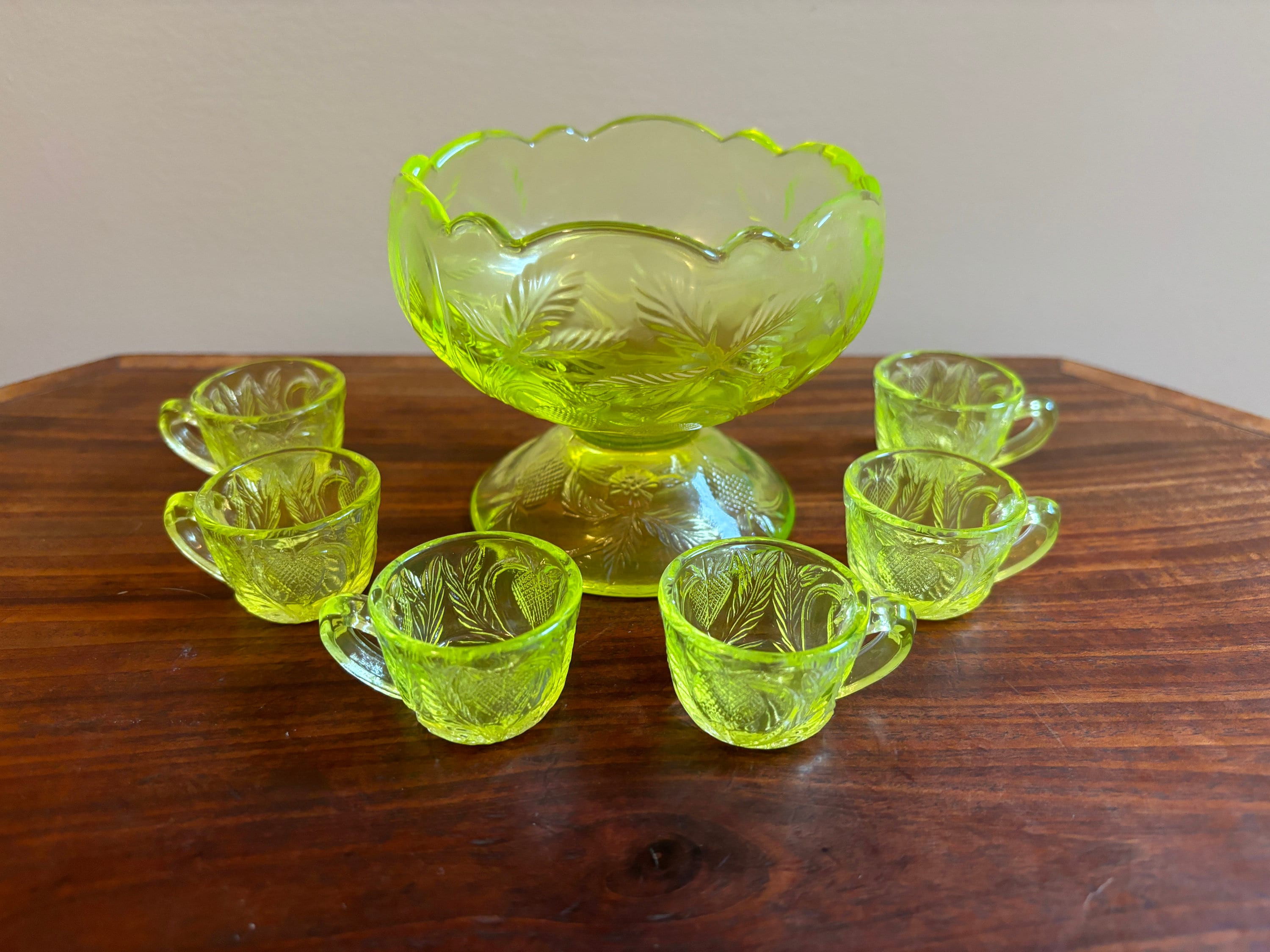
Uranium glass ranges from thrift-store cheap to museum-worthy. Knowing what drives value helps you collect wisely.
Assess Rarity and Condition
Common items like plates or cups sell for under $100. Rare pieces, such as Reidel vases, Baccarat stemware, or Burmese punch bowls, can exceed $10,000. Key factors:
– Manufacturer prestige
– Pattern scarcity
– Original finish (e.g., acid-etched Burmese)
– Provenance or documentation
Pro tip: Stamped, pre-1940 pieces with strong UV glow are most valuable.
Hunt in the Right Places
Thrift stores, estate sales, and flea markets are goldmines; sellers often don’t know what they have. Bring a portable UV light and check every green or yellow piece.
Best finds: Jadeite mixing bowls, Vaseline tumblers, Custard cake stands.
Beware of Online Scams
On eBay or Etsy, sellers may label any glowing glass as “uranium” to inflate prices. Always ask for UV video proof and check return policies.
Red flags:
– No Geiger counter data
– Overly bright colors
– Missing or fake stamps
Frequently Asked Questions About Identifying Uranium Glass
Does all uranium glass glow under a blacklight?
No. While most uranium glass fluoresces bright green under UV light, rare clear-glass variants containing uranium for light green or yellow tints may not glow at all. Additionally, some non-uranium glass containing thorium can produce a similar green glow, so UV testing alone isn’t foolproof.
Is uranium glass dangerous to own?
Uranium glass is technically radioactive, but levels are very low. According to a 2001 US Nuclear Regulatory Commission report, it is considered safer than common household electronics. The main risk comes from ingesting fragments or using it for food and drink over long periods, which can cause particles to leach into food.
How can I tell uranium glass from regular green glass?
Color alone is unreliable. The best method is UV light testing; genuine uranium glass glows bright green. You can also use a Geiger counter to detect radiation. Checking for manufacturer stamps, era-appropriate designs, and distinctive finishes like Burmese matte etching or Custard red opalescence adds further confirmation.
What is the most valuable type of uranium glass?
Rare pieces from prestigious manufacturers like Reidel, Baccarat, or Whitefriars command the highest prices, sometimes exceeding $10,000. Authentic Burmese glass with original acid-etched finishes and stamped mid-20th century Jadeite also hold significant collector value.
Can modern glass be uranium glass?
Yes, but production is very limited. A few specialty makers like Fenton and Boyd produce small batches today, clearly labeled as uranium glass. Most uranium glass on the market is antique from before the 1942–1958 US production halt.
Final Takeaways for Identifying Uranium Glass
Identifying uranium glass is a blend of science, history, and observation. Start with a UV light test; the green glow is your first clue. Confirm with a Geiger counter if possible, and examine color, markings, and finish closely. Know the main types: Vaseline, Custard, Burmese, Jadeite, and Depression glass, each with unique traits. Avoid mistaking milk glass or thorium dupes for the real thing.
Remember: glow doesn’t equal danger, but ingestion does pose risk. Keep pieces for display, not dining. Your next step is simple: grab a UV flashlight, test that mysterious green dish in your cabinet, and see what secrets it reveals. Happy hunting, and always test before you treasure.