Choosing the right bathroom mirror isn’t just about finding a reflective surface, it’s about transforming your daily routine and elevating your entire bathroom design. The perfect mirror balances size, shape, lighting, storage, and style to create a space that works for everyone in your household. Whether you’re tackling a full remodel or simply upgrading your current mirror, this guide gives you clear, actionable steps to choose a mirror that fits your vanity, complements your decor, and stands up to daily humidity and use.
You’ll discover how to avoid common sizing mistakes that make bathrooms feel cramped, which shapes work best with different design styles, and how to integrate lighting that actually helps you see better. From anti-fog technology to smart features like Bluetooth speakers, we’ll cover every option so you can make a confident decision.
Getting the Size Right for Proportion and Function

Your mirror’s size directly impacts how functional and visually balanced your bathroom feels. Getting this wrong leads to awkward proportions that drag down the entire room’s appearance.
Match Mirror Width to Your Vanity
The mirror width should complement your vanity for a cohesive look. Aim for a width that’s 4 to 12 inches narrower than your vanity total, which translates to roughly 70 to 80 percent of the vanity’s span. This creates visual balance without the mirror appearing too bulky or too small for the space.
For a clean, custom appearance, a mirror equal in width to your vanity works exceptionally well, especially with frameless or recessed designs. Never let your mirror extend beyond the vanity edges, as this creates an unbalanced look that disrupts the room’s proportions.
For double vanities, you have two solid options. One continuous mirror spanning both sinks creates a sleek, expansive feel that maximizes light reflection. Two separate mirrors centered over each sink deliver symmetry and allow for individual customization based on each user’s preferences.
Hang at the Right Height for All Users
Mount your mirror 5 to 10 inches above the sink or countertop. This ensures it’s low enough for shorter users while extending high enough for taller family members. The top of the mirror should sit a few inches above the tallest person’s eye level.
For full-face visibility, the mirror needs to cover at least one foot above and below eye level. For maximum usability across all users, plan for the mirror to reach between 4 and 7 feet from the floor.
Use Wall-to-Wall Mirrors in Small Bathrooms
In compact or narrow spaces, a wall-to-wall mirror can dramatically open up the room. Extending from side to side, sometimes up to the ceiling, it amplifies light and creates the illusion of depth. Just ensure it aligns cleanly with the vanity and fixtures below to avoid a cluttered appearance. This approach works especially well in powder rooms or guest bathrooms where space optimization matters most.
Picking the Perfect Shape for Your Bathroom Style
The shape of your mirror sets the entire mood for your bathroom. It influences how the space feels, from sleek and modern to warm and traditional.
Go Rectangular for Clean Lines
Rectangular mirrors are the most versatile and widely used shape in bathroom design. Their straight edges complement modern, minimalist, and traditional bathrooms alike. They pair beautifully with rectangular sinks, linear tile layouts, and angular vanities.
This shape offers maximum reflection and grooming surface without drawing too much attention. It’s ideal for single or double vanities where you want functionality without competing with other design elements.
Try Square for Minimalist Spaces
Square mirrors bring balance and order to small bathrooms or powder rooms. They’re best suited for square vanities or symmetrical layouts where they create a tidy, intentional look.
Use square mirrors to echo other square design elements like tiles or windows for a cohesive aesthetic. They work exceptionally well in urban lofts or contemporary spaces where clean geometry shines.
Soften the Look with Round or Oval
Round and oval mirrors add visual softness, breaking up the hard edges typical in bathrooms. Round mirrors work beautifully in Scandinavian, minimalist, or small bathrooms, pairing well with pedestal sinks and making tight spaces feel friendlier.
Oval mirrors, especially when hung vertically, elongate the space and suggest height. Their classic shape suits traditional and spa-like bathrooms. Both styles leave negative space around the edges, making them perfect for showcasing textured walls or patterned wallpaper.
Add Character with Arched Designs
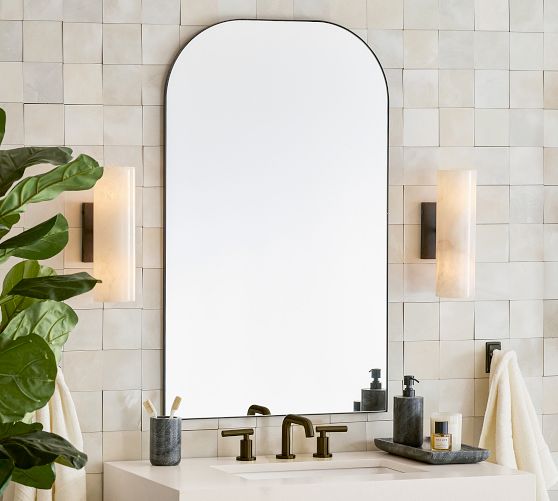
Arched mirrors blend curves with elegance, offering a vintage-inspired yet modern look. They enhance architectural interest, especially when matched with arched doorways or windows.
This shape works well in transitional, traditional, or eclectic bathrooms, adding sophistication without feeling outdated. A slim metal frame enhances the contemporary edge while a wooden frame leans more rustic or farmhouse.
Make a Statement with Unique Shapes
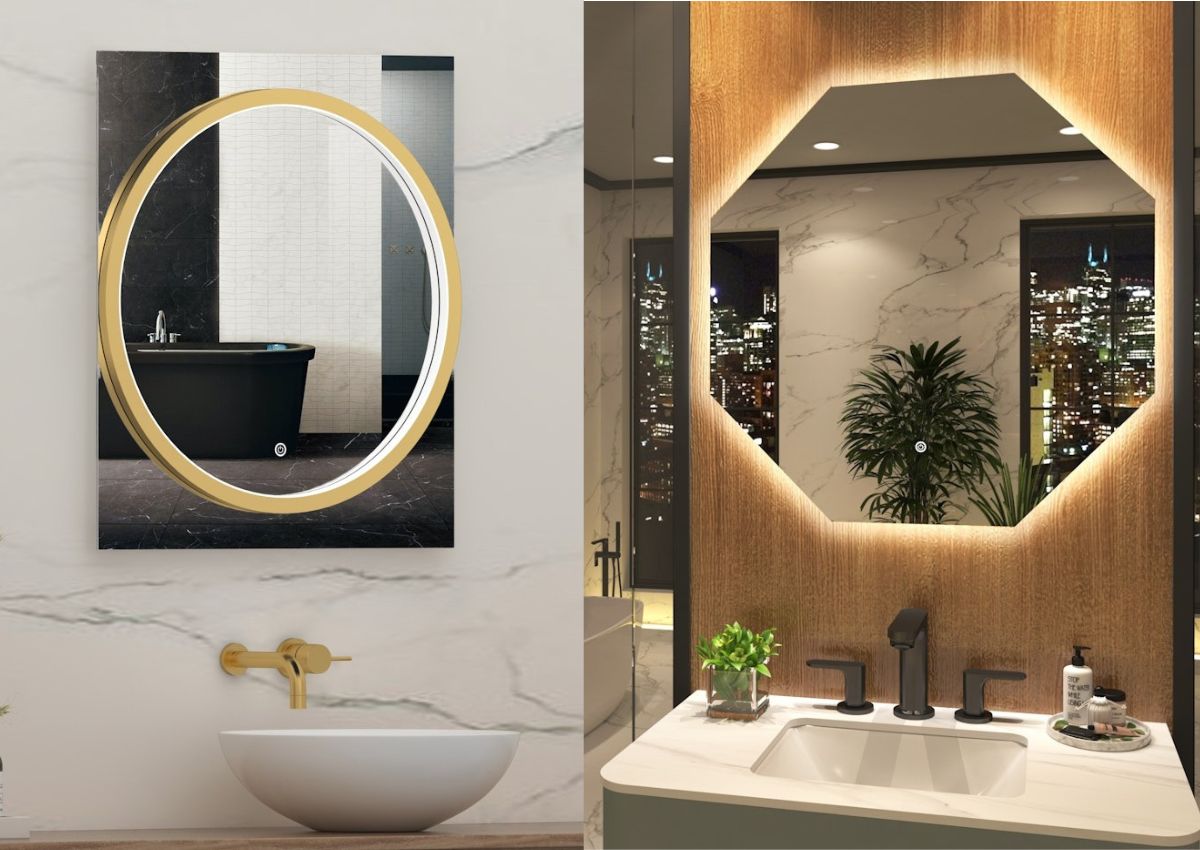
Want your mirror to double as art? Consider hexagonal, teardrop, asymmetrical, or multi-circle designs. These geometric or freeform mirrors serve as focal points in modern, mid-century, or eclectic bathrooms.
Use them to express personality or highlight a vanity nook. Just ensure the rest of the space isn’t too busy, as the mirror should be the star of the show.
Framed vs Frameless Mirrors: What Works Best
The frame choice dramatically affects your bathroom’s overall aesthetic and maintenance needs. Let’s break down which option works for different situations.
Choose Framed Mirrors for Decorative Impact
Framed mirrors add visual weight and style, acting as a design anchor that ties the mirror to your room’s overall aesthetic. The right frame can transform a basic mirror into a statement piece.
Frame materials by style include wood (oak, ash, whitewashed) for warm, natural looks perfect for Scandinavian, coastal, or rustic spaces. Reclaimed or weathered wood fits farmhouse or vintage aesthetics beautifully. Metal frames in brass, black, or nickel offer sleek, modern appeal for industrial or contemporary designs. Rattan or woven finishes bring boho-chic or organic texture into your bathroom.
Frame size matters significantly. Slim frames suit minimalist spaces while chunky, ornate frames fit traditional or eclectic bathrooms. You can even DIY a frame using wood strips or PVC trim and construction adhesive, which is ideal for upgrading an existing mirror on a budget.
Pick Frameless Mirrors for Modern Simplicity
Frameless mirrors deliver a clean, uncluttered look perfect for minimalist, contemporary, or spa-style bathrooms. They’re often more affordable and easier to maintain than framed options.
These mirrors can be inset into tile for a seamless, built-in appearance that blends perfectly with your walls. Some feature beveled edges or frosted detailing for subtle elegance without a frame.
Consider Inset Mirrors for Seamless Style
An inset mirror installs flush within the wall or tile, creating a polished, custom look. It combines the sleekness of frameless with the refinement of architectural integration.
Pair inset mirrors with floating shelves above for storage and visual layering. This option works best when installed during a renovation since it requires cutting into the wall.
Optimizing Lighting for Better Grooming
Good lighting transforms your mirror from a simple reflective surface into a functional grooming station. The right illumination eliminates shadows and helps you see clearly.
Install LED Mirrors for Task Lighting
Integrated LED mirrors provide even, shadow-free illumination critical for shaving, applying makeup, or skincare. Look for models with adjustable brightness, color temperature control ranging from 2,700 to 4,000 K, and motion or touch sensors.
A 4,000 K light hits the ideal balance, bright enough for clarity while warm enough to flatter skin tones. Avoid 5,000 K and above as they feel harsh in bathroom environments.
Use Backlit Mirrors for Ambiance
Backlit mirrors emit a soft glow from behind the glass, creating a luxurious, floating effect. They enhance ambiance and reduce contrast, making the space feel larger. Pair with dimmable switches for nighttime use or mood lighting. This option works exceptionally well in modern master bathrooms.
Add Anti-Fog Features for Steamy Showers
Defogging technology uses a heated element to prevent condensation. No more wiping the mirror after a hot shower, you get clear visibility every time. This feature is essential in high-humidity bathrooms or master suites with enclosed showers. Most models connect via GFCI outlet or are hardwired.
Pair with Sconces for Balanced Light
Even with a lighted mirror, external lighting improves your grooming results. Mount sconces at eye level on both sides of the mirror to eliminate facial shadows. Leave 2 to 3 inches between the mirror and sconce to avoid glare. Use upward-facing or diffused bulbs for soft, flattering light. Avoid overhead downlights as they cast unflattering shadows directly onto the mirror surface.
Adding Storage and Functional Features
Your mirror can do much more than reflect. Consider these functional additions that enhance daily use.
Install Medicine Cabinets for Hidden Storage
Recessed medicine cabinets are the most space-efficient option. Built into the wall, they keep essentials within reach without cluttering your counter. Best installed during a remodel, they require adequate wall depth typically around 3.5 inches. Choose models with mirrored fronts, lighting, and adjustable shelves.
Surface-mounted cabinets are easier to install but protrude, reducing wall space. Opt for sleek, modern versions to avoid a dated look.
Use Mirrors with Shelves for Display
Mirrors with attached shelves or floating shelves above combine function and style. They’re ideal for small bathrooms where wall space is limited. Use them to hold daily essentials, candles, or decorative items. Choose water-resistant materials like teak or sealed wood to prevent moisture damage.
Pick Magnifying Mirrors for Detail Work
If you wear makeup or need precision grooming, choose a mirror with a built-in magnifying panel. Common in double-sided or pivot mirrors, the magnifier usually 5x or 10x swings out or flips for easy access. This works great in vanity corners or tight spaces where a separate magnifier won’t fit.
Installing Your Mirror on Any Wall Type
Proper installation ensures your mirror stays secure and functions properly for years. Here’s how to do it right.
Mount Wall Mirrors with Care
Wall-mounted mirrors are the most common and space-saving option. But improper installation leads to wobbling or potential damage.
Tools needed include measuring tape, level, drill and screwdriver, wall anchors and screws, and painter’s tape to protect glass during installation. Follow these steps. First, measure and mark height 5 to 10 inches above sink. Second, use a level to ensure alignment. Third, drill pilot holes using a diamond bit for tile or standard bit for drywall. Fourth, insert anchors, attach brackets, and hang the mirror. Fifth, test for stability.
Hang on Tile Without Cracking
Yes, you can hang a mirror on tile if you use the right tools. A diamond-tipped drill bit prevents chipping. Drill slowly with light pressure. Use plastic or metal wall anchors rated for the mirror’s weight. Avoid adhesive strips for heavy mirrors as they fail in humid environments.
Try Freestanding or Suspended Options
Not all mirrors need wall mounting. Freestanding mirrors work well in large bathrooms or dressing areas. They’re moveable and flexible, ideal for renters or changing layouts. Suspended mirrors hang from the ceiling or rails and work well in bathrooms with obstructed walls like behind toilets or showers. Both add visual interest and creative flair.
Smart Features Worth the Investment
Modern mirrors offer features that elevate your daily routine. Here are the ones worth considering.
Enable Defogging with One Touch
Mirrors with built-in defoggers use a low-voltage heating pad behind the glass. Activate with a touch sensor or switch and clears fog in seconds. No more towels or steam wipes. This premium feature is worth the investment in master bathrooms.
Charge Devices with Integrated USB Ports
Some high-end mirrors include USB ports or AC outlets on the frame or sides. Charge electric razors, toothbrushes, or phones while grooming. Ensure outlets are GFCI-protected for safety in wet environments.
Add Bluetooth for Audio Convenience
Mirrors with built-in Bluetooth speakers let you stream music, podcasts, or calls during your routine. Control volume via touch panel. This feature is ideal for spa-like bathrooms where ambiance matters.
Use Dimmers and Nightlights
Adjustable brightness lets you switch from bright task lighting to soft evening glow. Some mirrors include integrated nightlights, low-level LED strips that turn on automatically in the dark. Perfect for midnight bathroom trips without flipping on harsh lights.
Keeping Your Mirror Clean and Damage-Free
Regular maintenance keeps your mirror looking pristine and extends its lifespan.
Clean with Vinegar and Microfiber
Skip commercial cleaners. Mix equal parts white vinegar and water in a spray bottle. Spray on the mirror and wipe with a microfiber cloth, never paper towels as they leave lint. Use circular motions then buff dry for a streak-free shine.
Prevent Fog and Moisture Damage
Wipe mirror edges regularly to prevent moisture buildup that damages sealant or frames. For quick fog prevention, apply shaving cream before showering and wipe off after. It leaves a thin film that resists condensation. Avoid abrasive cleaners or ammonia-based products as they scratch glass and degrade anti-fog coatings.
Matching Your Mirror to Your Design Style
Your mirror should complement your existing bathroom decor. Here’s how to match different styles.
Modern and Minimalist Spaces
Choose frameless, rectangular, or round mirrors with clean lines. Opt for backlit or edge-lit LED mirrors. Pair with neutral tiles, matte black fixtures, and floating vanities. Keep accessories minimal to maintain the sleek aesthetic.
Vintage and Rustic Bathrooms
Use ornate wooden frames, arched shapes, or antique-style mirrors. Complement with matte black sconces, clawfoot tubs, and shiplap walls. Add distressed finishes or crystal knobs for authenticity.
Farmhouse Aesthetics
Go for reclaimed wood frames, large rectangular mirrors, or arched designs. Use wrought iron accents or candle-style lighting. Stick to earthy tones, textured walls, and apron-front sinks.
Eclectic and Expressive Styles
Mix materials, shapes, and finishes. Try a hexagonal mirror with brass trim or a cluster of small round mirrors. Use the mirror as art in a simple room to create a focal point. Combine wood, metal, and glass for layered texture.
Frequently Asked Questions About Choosing a Bathroom Mirror
What size bathroom mirror do I need for my vanity?
Your mirror should be 70 to 80 percent the width of your vanity, or 4 to 12 inches narrower total. For double vanities, choose one large mirror spanning both sinks or two separate mirrors centered over each sink.
Should I choose a framed or frameless bathroom mirror?
Framed mirrors add decorative impact and work well in traditional, rustic, or eclectic spaces. Frameless mirrors offer modern simplicity and work best in contemporary, minimalist, or spa-like bathrooms.
Do I need a mirror with built-in lighting?
Integrated LED or backlit mirrors provide even, shadow-free illumination ideal for grooming tasks. They’re worth the investment if you apply makeup, shave, or need consistent lighting in your bathroom.
How high should I hang my bathroom mirror?
Mount the mirror 5 to 10 inches above the sink or countertop. The top should reach a few inches above the tallest user’s eye level, typically between 4 and 7 feet from the floor.
Can I install a mirror on a tiled wall?
Yes, use a diamond-tipped drill bit to prevent chipping. Drill slowly with light pressure and use appropriate wall anchors rated for the mirror’s weight.
Key Takeaways for Choosing Your Perfect Bathroom Mirror
The best bathroom mirror blends function and beauty in equal measure. Start by sizing your mirror correctly, aiming for 70 to 80 percent of your vanity width and hanging it 5 to 10 inches above the sink. Next, choose a shape that complements your design style, whether that’s rectangular for modern spaces, round for softening angles, or arched for adding elegance.
Don’t overlook lighting, as integrated LEDs or properly placed sconces dramatically improve grooming visibility. Consider storage needs like medicine cabinets or attached shelves if counter space is limited. Finally, match your frame material and finish to your existing fixtures for a cohesive look that elevates your entire bathroom.
Your perfect mirror isn’t just seen, it’s used every single day. Take time to evaluate your specific needs, measure carefully, and choose features that will serve your household for years to come.