Driving isn’t just about watching the road ahead. It’s about knowing what surrounds you at all times. One of the most critical yet overlooked habits for safe driving is checking your rearview mirror regularly. Failing to do so can leave you blind to fast-approaching vehicles, sudden stops, or dangerous tailgaters. But how often is often enough?
Research, driving instructors, and experienced drivers agree: you should glance at your rearview mirror every 5 to 10 seconds during normal driving. This isn’t a rigid rule. It’s a rhythm you build through practice. In heavy traffic or before braking, turning, or changing lanes, you’ll need to check even more frequently. This guide breaks down exactly when, how, and why to check your mirrors so you can drive with confidence and avoid preventable collisions.
Mirror Check Frequency by Driving Condition
Your mirror-checking routine should adapt to speed, traffic, and environment. A one-size-fits-all approach does not work.
Normal Driving: Every 5 to 10 Seconds
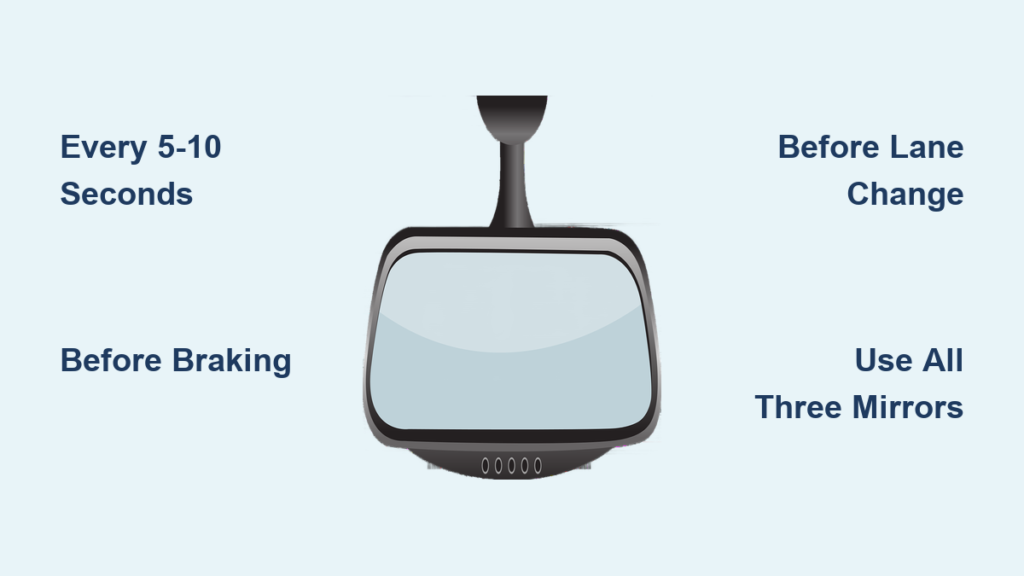
Most driving schools and safety experts recommend checking your rearview mirror every 5 to 10 seconds during normal driving. This keeps you aware of vehicles approaching from behind without distracting from forward focus.
• Ideal range: Every 5 to 8 seconds in urban or mixed traffic
• Acceptable: Every 8 to 10 seconds on open highways
• Too infrequent: Anything over 15 seconds increases risk
This rhythm ensures you are never caught off guard by a tailgater or sudden slowdown.
Heavy Traffic: Every 5 Seconds or More
In stop-and-go traffic, mirror checks should be nearly constant. With vehicles close behind and unpredictable movements, you need real-time awareness.
• Check before easing off the gas
• Scan after every light change or brake tap
• Combine with side mirror checks every few seconds
A distracted driver behind you could rear-end you without warning. Frequent checks let you anticipate danger and adjust your gap ahead.
Highway Driving: Every 8 to 15 Seconds
At high speeds, your focus is forward, but you still need rear awareness.
• Check every 8 to 12 seconds during steady cruising
• Increase frequency before lane changes or exits
• Rely more on side mirrors if rearview is obstructed
Even with light traffic, a vehicle can close in fast at 70 mph. A quick glance every 10 seconds keeps you informed.
Low-Speed Zones: Constant Scanning
In parking lots, school zones, or city streets, your mirrors are survival tools.
• Scan all mirrors continuously (eyes on a swivel)
• Check before reversing, even if you think the area is clear
• Watch for pedestrians, cyclists, and reversing vehicles
At 5 mph, you have time to react, but only if you are looking.
When to Check Mirrors: Critical Trigger Moments
Beyond routine scanning, certain actions demand immediate mirror checks. These are non-negotiable for safety and are closely watched during driving tests.
Before Braking or Slowing Down
Always glance in your rearview mirror before touching the brake.
• Check to assess following distance and speed of vehicles behind
• Risk if skipped: rear-end collision if you brake suddenly
• Pro tip: If a large vehicle is close behind, ease off the gas earlier to slow gradually
This simple check can prevent a chain-reaction crash.
Before Changing Lanes
This is a must-check moment.
- Glance at rearview mirror
- Check relevant side mirror
- Perform shoulder check (blind spot)
- Signal and proceed
Skipping any step increases collision risk, especially on multi-lane highways.
Before Turning or Signaling
Check mirrors before signaling a turn.
• Confirms no vehicle is passing you
• Alerts you to aggressive drivers closing in
• Helps time your turn safely at intersections
Examiners fail candidates who signal without mirror checks.
After Completing a Maneuver
Check mirrors after turning, merging, or passing.
• Reassesses your new traffic environment
• Identifies new followers or lane-changers
• Helps maintain defensive positioning
It is not over until you are fully settled in your new lane or path.
Mirror Scanning Patterns: How to Look Effectively
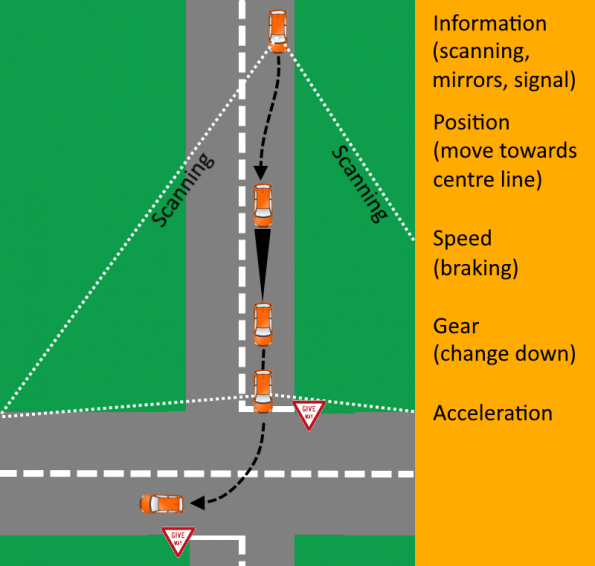
Glancing at mirrors is not enough. You need a systematic pattern to ensure full coverage.
The Rainbow Check Method
A left-center-right scan ensures complete rear awareness.
- Left side mirror: Check left lane traffic
- Rearview mirror: Assess directly behind
- Right side mirror: Monitor right lane
- Return to road ahead
Use this pattern when entering a new road, before braking, after passing a cyclist or pedestrian, or when preparing to turn.
The Continuous Rotation Method
A fluid visual loop that keeps awareness dynamic.
• Road ahead to rearview to road to right mirror to road to left mirror to repeat
• Prevents fixation and builds subconscious scanning
• Ideal for long highway drives
This method keeps your eyes moving and your brain engaged.
How Many Mirrors Should You Check
Best practice is to check all three mirrors regularly.
Interior Rearview Mirror
• Primary tool for monitoring directly behind
• Most used in straight-line driving
• Should show full rear window with minimal blind spots
Left Side Mirror
• Critical for left lane changes and merging
• Should be adjusted to eliminate blind spots
• Use every 5 to 7 seconds in traffic
Right Side Mirror
• Essential on multi-lane highways
• Often underused but vital for right-side awareness
• Some drivers check only when changing right
You cannot check your mirrors too often. Knowing what is beside you is critical in case you need to make a sudden lane change.
Debunking the Fixed-Interval Myth
While many instructors teach check every 5 seconds, rigid timing does not work in real driving.
Why Clock-Based Rules Fail
• Humans cannot maintain perfect 5-second intervals
• Situational awareness matters more than timing
• Examiners look for meaningful observation, not robotic repetition
Instead of counting, focus on triggers: speed changes, traffic shifts, or upcoming maneuvers.
What Driving Tests Actually Require
• Visible head movement (even a slight chin lift)
• Mirror checks before braking, turning, or lane changes
• Awareness of tailgaters or fast-approaching vehicles
• No requirement for exact timing
Examiners need to see you checking, not just assume you did.
Mirror Adjustment: Eliminate Blind Spots
Even perfect timing will not help if your mirrors are poorly adjusted.
BGE (Blindzone Glare Elimination) Method
This technique eliminates blind spots so you rarely need shoulder checks.
How to Adjust
- Left Mirror: Lean head against driver window. Adjust mirror to just see the side of your car.
- Right Mirror: Move head to center. Adjust to just see edge of car.
- Test: As a vehicle passes, it should move from rearview to side mirror to peripheral vision without disappearing.
No gaps means no blind spots.
Traditional vs. BGE Comparison
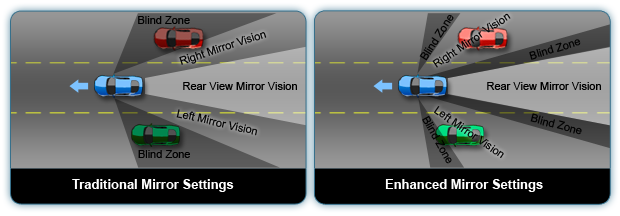
| Aspect | Traditional | BGE |
|---|---|---|
| Car visibility in mirror | Edge visible | No car visible |
| Blind spots | Large | Eliminated |
| Glare | Headlights reflect | Reduced glare |
| Coverage | Gaps between mirrors | Seamless transition |
BGE is superior for safety and efficiency.
Enhance Visibility with Accessories
Boost your mirror effectiveness with low-cost tools.
Spot Mirrors (Convex Add-Ons)
• Attach to side mirrors
• Show full adjacent lane and rear tire
• Help with parking alignment
Ideal for blind spot coverage.
Ultra-Wide Rearview Mirrors
• Replace standard mirror
• Show rear window plus side windows
• Often anti-glare
Great for SUVs and sedans.
Build the Habit: Mirror Checks by Experience Level
Frequency improves with experience.
Experienced Drivers
• Mirror checks are automatic
• Described as subconscious or constant
• Many check every 3 to 5 seconds due to training
Habit equals safety.
New or Inattentive Drivers
• Check only during lane changes or turns
• Often fail to scan during braking
• May miss tailgaters entirely
Do not be this driver.
Key Takeaways for Safe Mirror Checking
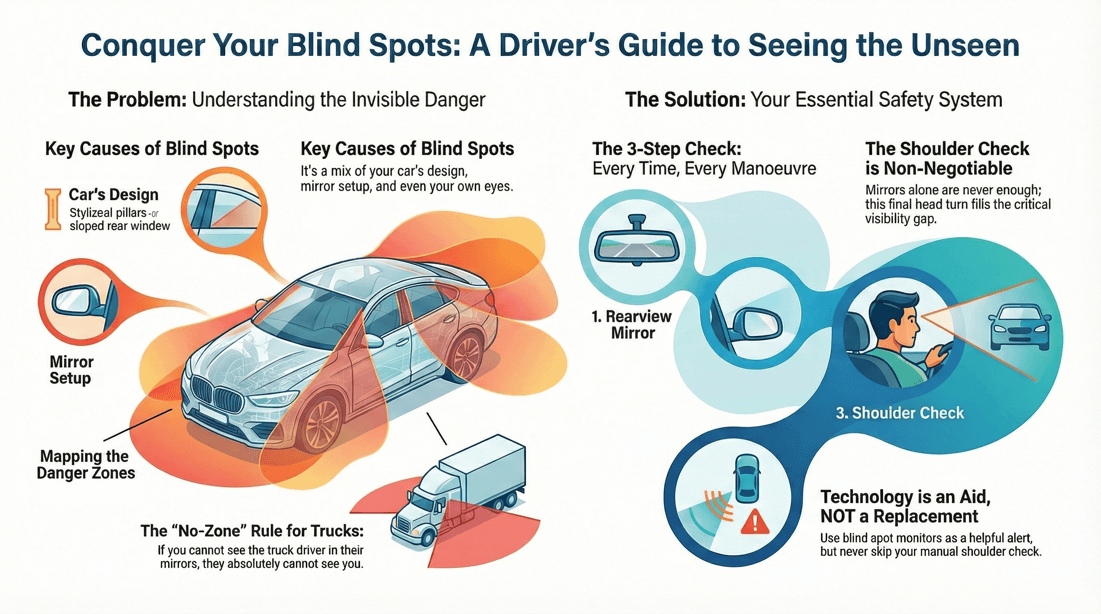
Checking your rearview mirror is not a chore. It is a lifeline that keeps you and others safe on the road. The core principle is simple: check every 5 to 10 seconds during normal driving, and increase frequency in heavy traffic, before braking, or when preparing to change lanes. Use all three mirrors, adjust them using the BGE method to eliminate blind spots, and develop a scanning pattern like the rainbow check or continuous rotation. Remember that examiners look for visible head movement and meaningful observation, not robotic timing. By building this habit, you transform from a passive driver into a defensive one who anticipates danger before it happens. Start practicing today. Your future self will thank you every time you avoid a collision.
Frequently Asked Questions About Rearview Mirror Checks
How often should I check my rearview mirror while driving?
You should check your rearview mirror every 5 to 10 seconds during normal driving conditions. In heavy traffic or before braking and lane changes, check more frequently, ideally every 5 seconds or less.
What are the most important moments to check mirrors?
Always check mirrors before braking, before changing lanes, before turning or signaling, and after completing any maneuver. These trigger moments are non-negotiable for safe driving and are closely watched during driving tests.
Why do driving instructors emphasize mirror checks?
Instructors emphasize mirror checks because they prevent collisions. Failing to check mirrors can lead to rear-end accidents, lane-change crashes, and failure to notice tailgaters or approaching emergency vehicles.
What is the best mirror adjustment technique?
The BGE (Blindzone Glare Elimination) method is considered superior. Adjust your side mirrors so you cannot see your own car in them. This eliminates blind spots and creates seamless coverage from rearview to side mirror to peripheral vision.
Can I rely only on my rearview mirror?
No. You should check all three mirrors (interior rearview, left side, and right side) regularly. Each serves a different purpose and together they provide complete 360-degree awareness of your surroundings.
Do driving tests require specific mirror-checking timing?
No. Driving tests do not require exact timing. Examiners look for visible head movement and meaningful mirror checks before braking, turning, or changing lanes. A slight chin lift can prevent a fail for insufficient mirror checks.