
Moving a mirror might seem straightforward until it cracks during transport. Whether it’s a full-length antique, a sleek modern bathroom mirror, or a family heirloom with sentimental value, mirrors are fragile, heavy, and prone to shattering under stress. The key to how to move a mirror without damage lies in proper preparation, the right materials, and strict adherence to safety practices.
A single misstep like laying it flat in a truck or skipping corner protection can result in costly breakage or dangerous glass shards. But with the right technique, even oversized or delicate mirrors can survive long-distance moves intact. This guide walks you through every critical step from assessing your mirror to transporting it safely.
Assess Your Mirror Before Packing
Not all mirrors require the same handling. The approach depends on size, framing, weight, and value.
Identify Framed vs. Frameless Mirrors
Framed mirrors have structural support around the edges, offering some protection during handling. Wood, metal, or composite frames help distribute pressure but can chip or dent if not padded.
Frameless mirrors are far more vulnerable. With exposed glass edges, they’re prone to chipping and cracking. These must be sandwiched between rigid boards and wrapped with extra edge protection.
Always assume a frameless mirror is high-risk and handle it like glass art.
Classify by Size and Weight
Small mirrors under 24 by 36 inches are lightweight and often manageable alone.
Medium mirrors between 36 and 60 inches require two people and need full wrapping and upright transport.
Large full-length mirrors over 60 inches exceed 40 pounds and are unwieldy. Always use two people, rigid backing, and secure strapping.
Oversized mirrors like 8-foot pieces are too big for standard boxes. Use the plywood sandwich method instead.
A thick antique mirror can exceed 60 pounds. Test lift carefully before moving.
Evaluate Value and Fragility
Antique, gilded, or custom mirrors may be irreplaceable. Look for cloudy silvering or delamination, loose joints in wooden frames, and ornate carvings that chip easily.
If the mirror has sentimental or monetary value, consider hiring professionals or investing in a custom crate.
Gather Essential Packing Supplies
Using the wrong materials can doom your move. Invest in purpose-built supplies.
Must-Have Materials for Protection
Painter’s tape applies in an X pattern to hold glass together if shattered. Never use duct tape because it leaves residue and can damage coatings.
Large-bubble bubble wrap provides cushioning. Use 2 to 3 layers, especially on corners.
Glassine paper or microfiber cloth prevents micro-scratches between glass and wrap.
Corrugated cardboard or plywood sheets provide rigid front and back protection. Cut to mirror size.
Cardboard corner protectors or DIY L-shapes reinforce all four corners. This is critical for framed and frameless mirrors.
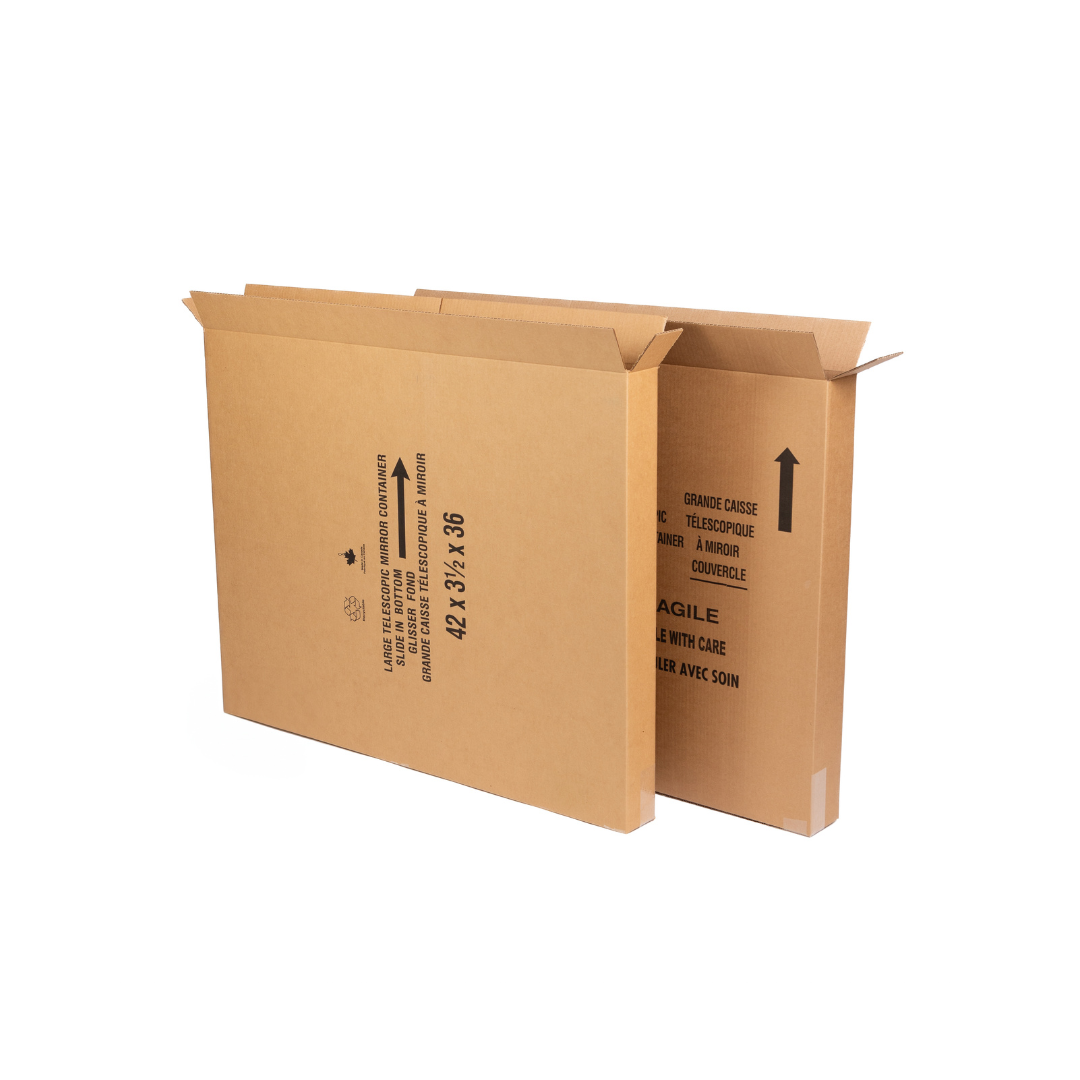
Mirror boxes are telescoping, adjustable, double-walled cardboard boxes designed for flat fragile items.
Moving blankets or thick towels add extra shock absorption during transport.
Ratchet straps or tie-downs secure the mirror in the vehicle with no shifting allowed.
Permanent markers and labels mark fragile, glass, this side up, and do not lay flat on all sides.
Avoid packing peanuts because they shift and create voids. Use crumpled kraft paper or foam padding instead.
Apply Tape and Corner Protection

Start protection at the most vulnerable points: the glass surface and corners.
Tape the Glass in an X Pattern
Use painter’s tape, which is low-adhesion and residue-free.
Stretch from one corner to the opposite, forming a large X.
Extend tape slightly beyond the edges and secure along the border.
Add a second X if the mirror is large or valuable.
The tape won’t prevent breakage but keeps shattered glass in place, reducing hazard and cleanup.
Never use packing tape directly on glass because it can peel off silvering.
Protect All Four Corners
Corners take the most impact during bumps and handling.
For framed mirrors, add foam bumpers or wrap corners with double-layer bubble wrap.
For frameless mirrors, use pre-made rubber or foam corner guards or DIY with L-shaped cardboard taped securely over each corner.
A former glass installer stresses that corner damage is the number one cause of mirror failure during moves.
Wrap the Mirror in Protective Layers
Use a layered wrapping sequence to maximize protection.
Add Scratch-Resistant Inner Layer
Place glassine paper, microfiber cloth, or packing paper directly on the glass. This prevents fine scratches from contact with bubble wrap.
Attach Rigid Boards
Cut two pieces of corrugated cardboard, foam core, or half-inch plywood to match the mirror dimensions.
Tape one sheet to the front and one to the back.
This ensures the mirror won’t flex during transport, which is critical for large pieces.
For frameless mirrors, screw a three-quarter-inch trim strip to the bottom of the plywood to prevent sliding.
Wrap in Bubble Wrap
Use large-bubble bubble wrap, not small bubble, because it offers less cushioning.
Wrap the entire mirror, front, back, sides, and frame with 2 to 3 overlapping layers.
Pay extra attention to edges and corners. Add double wrapping here.
Secure with packing tape but do not over-tighten because excessive pressure can cause microfractures.
Optionally, cover the wrapped mirror with a moving blanket before boxing for added shock absorption.
Choose the Right Packing Method
Your mirror’s size and value determine the best method.
Use a Specialty Mirror Box
This method works best for mirrors under 8 feet, framed pieces, antiques, and high-value items.
Telescoping mirror boxes expand to fit your mirror with 2 to 3 inches of padding on all sides.
They are made of double-walled corrugated cardboard for strength.
They allow upright storage and prevent flexing.
To pack in a mirror box, line the bottom with crumpled packing paper or foam padding.
Insert the wrapped mirror upright, never lay flat.
Fill all gaps with padding strips or balled paper because no movement is allowed.
Add top padding, close the box, and H-tape all seams both horizontal and vertical.
For long-distance moves, apply double layers of tape on stress points.
After sealing, gently shake the box. Silence means success with no internal movement.
Build a DIY Box or Use Plywood Sandwich
Use this method when no mirror box is available or the mirror is oversized.
For a DIY mirror box, cut four panels from sturdy cardboard. Two are for front and back, mirror size plus 6 to 8 inches. Two are side strips, same height, 3 to 4 inches wide.
Assemble like a picture frame, taping side strips between front and back.
Reinforce joints and line with padding before inserting mirror.
For the plywood sandwich method with oversized mirrors, use two 4 by 8-foot sheets of half-inch or three-quarter-inch plywood.
Sandwich the wrapped mirror between them.
Secure tightly with ratchet straps.
Keep the assembly on edge, vertical, at all times.
Transport upright, never flat.
Carry, load, and store the mirror on its edge, which mimics wall mounting and prevents flex cracks.
Label the Package Clearly
Miscommunication leads to mishandling. Make your warnings impossible to miss.
Write fragile, glass, do not lay flat, and this side up in bold letters.
Add arrows to indicate correct orientation.
Mark all four sides because handlers may rotate the box.
Include room designation like master bedroom mirror for easy unpacking.
Use a permanent marker for durability.
Never assume movers will guess the contents. Explicit labeling prevents flat stacking.
Transport the Mirror Upright

This is the golden rule: never lay a large mirror flat during transport.
Why Vertical Transport Is Critical
Laying flat allows the mirror to flex under its own weight.
Road vibrations amplify stress, leading to stress fractures or sudden shattering.
Upright positioning distributes weight evenly, just like on a wall.
Every expert source agrees that do not lay it flat is the single most important rule.
Load Into a Vehicle Safely
For rental trucks or vans, place the mirror upright against a solid side wall.
Wedge tightly between stable items like sofas, mattresses, or dressers.
Use ratchet straps to secure surrounding furniture. Do not strap directly to the mirror.
Never stack boxes on or near the mirror.
Leave space between mirror boxes to avoid lateral pressure.
For pickup trucks, if the mirror extends beyond the bed, lower the tailgate.
Secure with straps to prevent movement.
Flag the overhang if over 12 inches, which is required by law.
Ensure full support underneath with no hanging ends.
Avoid rough roads and high speeds.
An 8-foot mirror fits diagonally in a 5.5-foot truck bed with tailgate down if properly secured and flagged.
In a personal car, use seatbelts or straps to hold the mirror upright.
Place blankets between mirror and interior to prevent scratches.
This is ideal for small or high-value mirrors where you want full control.
Handle and Carry With Care
Even the best packing fails if handling is sloppy.
Use Two People
This is required for any mirror over 4 feet tall or 20 pounds.
Communicate clearly. One person leads and both lift together.
Keep the mirror on edge. Never tilt or pivot on one end.
Wear Textured Gloves
Rubber-palm gloves improve grip on smooth surfaces.
They prevent slips during lifting and carrying.
Clear the Path
Remove rugs, close doors, and ensure stair access.
Use wooden shims or blocks to set the mirror down temporarily without scratching floors.
Never rest a mirror on its corner or edge without bottom support.
Store Mirrors Properly If Needed
If you’re not moving directly to the new home, storage matters.
Use Climate-Controlled Units
This prevents wooden frames from warping.
It stops adhesive degradation from humidity.
It avoids condensation that can damage mirror backing.
Store Vertically, Not Flat
Keep mirrors on edge in freestanding racks or against walls.
Never stack mirrors because they can crack under pressure.
Cover With Breathable Fabric
Use a cotton sheet or moving blanket, never plastic.
Plastic traps moisture, leading to spotting or corrosion.
Choose month-to-month storage for flexibility during renovations or transitions.
Avoid Common Moving Mistakes
Even experienced movers make these errors. Do not let them ruin your mirror.
Laying mirror flat in vehicle causes flexing and cracks. Always transport upright.
Skipping painter’s tape makes shattered glass scatter dangerously. Apply X pattern before wrapping.
Using packing tape on glass damages coating or leaves residue. Tape only wrap or box, never glass or frame.
Poor corner protection leads to chipped or dented corners. Use foam, cardboard, or double bubble wrap.
Inadequate securing in truck causes mirror to tip, slide, or fall. Wedge between padded items and use straps.
Transporting in extreme temperatures causes thermal stress cracks. Avoid direct sun or freezing conditions.
Perform a shake test, pressure test, and visual inspection before loading.
When to Hire Professional Movers
Some mirrors are too risky to move yourself.
Hire Professionals If
The mirror is antique, oversized, or extremely valuable.
You lack a proper vehicle, mirror box, or straps.
The move involves stairs, narrow hallways, or long distance.
You’re unsure about safe handling.
Professional handling is often cheaper than replacement, especially for irreplaceable pieces.
What Professionals Provide
Specialty mirror boxes and custom padding.
Experience with tight spaces and fragile items.
Climate-controlled trucks for antiques.
Separate insurance for high-value items.
Companies like Boston Best Rate Movers or National Van Lines specialize in fragile art and antiques.
Frequently Asked Questions About Moving Mirrors
Can I move a mirror by myself?
Small mirrors under 4 feet and 20 pounds can be moved by one person with proper packing. Larger mirrors always require two people to prevent dropping and damage.
Should I lay a mirror flat in the moving truck?
Never lay a large mirror flat. Transport it upright on its edge to prevent flexing and cracking. This is the single most important rule for safe mirror transport.
What is the best way to protect mirror corners?
Use foam or cardboard corner protectors on all four corners. Wrap corners with double-layer bubble wrap for extra protection. Corner damage is the number one cause of mirror failure during moves.
Can I use a regular moving box for a mirror?
Regular boxes lack the rigidity and padding needed. Use a specialty telescoping mirror box designed for flat fragile items, or build a DIY box with rigid cardboard and ample padding.
How do I transport a mirror in my car?
Secure the mirror upright using seatbelts or straps. Place blankets between the mirror and interior surfaces to prevent scratches. This method works best for small or high-value mirrors.
What should I do if my mirror gets damaged during the move?
Check existing damage before packing and document with photos. If damage occurs during transport, carefully dispose of glass shards wearing thick gloves. For valuable mirrors, file a claim with your moving insurance.
Key Takeaways for Moving Your Mirror Safely
Moving a mirror successfully comes down to three critical practices. First, always transport it upright on its edge, never flat. Second, use rigid support like cardboard, plywood, or a specialty mirror box to prevent flexing. Third, label every side with clear warnings including fragile, glass, do not lay flat, and this side up.
Gather proper supplies before starting. You’ll need painter’s tape, large-bubble bubble wrap, corner protectors, and a mirror box or plywood for large pieces. Two people are required for any mirror over 4 feet or 20 pounds.
When in doubt about antique or extremely valuable mirrors, hire professional movers who specialize in fragile art. The cost of professional handling is often less than replacement, especially for irreplaceable pieces. With the right preparation, materials, and mindset, you can protect even the most delicate mirror and arrive at your new home with it intact.