
Cutting a glass tube cleanly is a practical skill for lab work, repairs, and DIY crafting. A sloppy cut leaves jagged edges, wasted material, and serious injury risk. The secret is creating a precise score line and then applying controlled stress to guide the fracture. This guide walks you through every proven method, from simple hand scoring to hot-wire techniques. You’ll learn how to pick the right approach for your tube size, avoid common pitfalls, and finish edges safely.
Choose the Right Cutting Method for Your Glass Tube
Match the Tool to Tube Diameter
Tube size is the biggest factor in choosing a method. Small tubes respond to manual scoring, while larger or fixed tubes demand thermal techniques.
- Under 1 inch (25mm): Manual scoring with a carbide file or spring-loaded cutter works best.
- 1 to 3 inches (25 to 75mm): Hot glass rod or hot wire methods give cleaner results.
- Over 3 inches or installed tubing: Hot wire or abrasive saws are the only reliable options.
Using the wrong method increases breakage and reduces cut quality.
Compare Manual, Thermal, and Abrasive Methods
Each category has strengths depending on your setup and skill level.
| Method | Best For | Skill Level |
|---|---|---|
| Manual Scoring | Small, removable tubes; quick cuts | Beginner |
| Hot Glass Rod | Large or installed tubes; no power needed | Intermediate |
| Hot Wire | High-precision large cuts; clean breaks | Advanced |
| Abrasive Saw | Quartz, thick-walled, or square-cut needs | All (with caution) |
Always weigh safety, workspace, and material type before starting.
Score the Glass Tube Properly for a Clean Break
Use a Sharp Scoring Tool
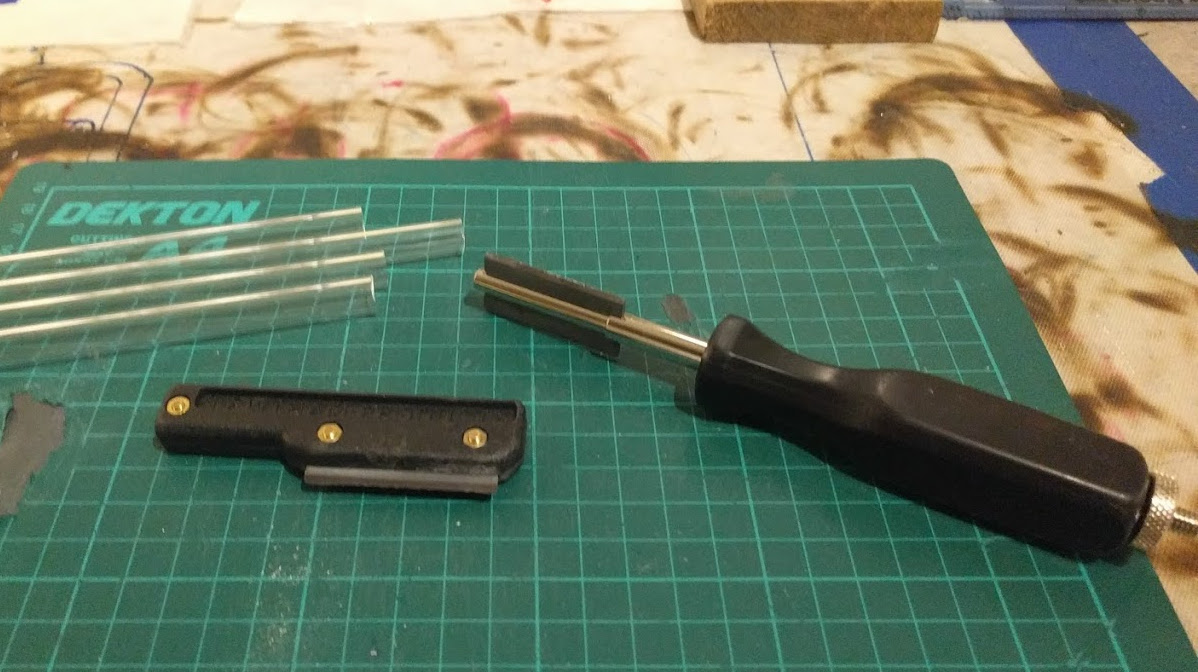
A clean score is the foundation of any successful glass tube cut. Dull tools grind grooves instead of micro-fractures, leading to uneven breaks.
- Tungsten carbide knife: Best for a single, crisp scratch.
- Triangular file corner: Acceptable when carbide isn’t available.
- Spring-loaded glass tube cutter: Ideal for consistent circular scores on small tubes.
Avoid standard metal pipe cutters. They are too aggressive and often crush the glass.
Apply One Clean Scratch
Never saw back and forth. Repeated motion grinds the surface and removes control over the break.
- Hold the tool perpendicular to the tube.
- Draw it across once with light pressure to make a 1/8-inch (3mm) scratch.
- Rotate the tube manually if needed to complete a full circle.
If the scratch doesn’t catch, reposition and try again. Do not deepen an existing mark.
Wet the Score Line
Moisture helps the crack travel evenly when pressure or heat is applied.
- Apply water or saliva to the scratch before snapping.
- Re-wet during thermal methods if the area dries out.
This small step dramatically improves success rates.
Snap the Glass Tube Safely
Position Your Thumbs Correctly
Proper hand placement ensures the break happens where intended and keeps your hands safe.
- Hold the tube with the scratch facing away from your body.
- Place thumbs on the side opposite the scratch, aligned with the mark.
- Grip the far side of the tube with your fingers.
This positioning directs force across the stress point without exposing skin to flying shards.
Push and Pull to Break
Use controlled motion for a clean snap.
- Push thumbs outward away from you.
- Pull fingers inward slightly.
Apply steady pressure. A clean snap should occur within seconds.
Pro Tip: Wrap the tube in a thick cloth or wear heavy gloves to protect your hands. Fresh glass edges are razor-sharp.
Apply Thermal Shock When Manual Snapping Fails
Fix Failed Manual Cuts with a Hot Glass Rod
When a scored tube refuses to snap, heat can trigger the fracture.
- Re-wet the original scratch.
- Heat the end of a 6mm glass rod or Pasteur pipette until molten.
- Touch the glowing tip directly to the wet score.
A crack will form instantly and travel around the circumference.
Warning: Do not extend the hot rod beyond the end of the existing scratch. This can divert the crack off course.
Tap to Guide a Stalled Crack
If the crack stops mid-way, try these techniques.
- Lightly tap the glass near the crack tip with a metal tool.
- Or reheat the rod and touch it to the leading edge of the stalled crack.
Never force the break. Let thermal expansion do the work.
Use Hot Wire for Large or Fixed Glass Tubes
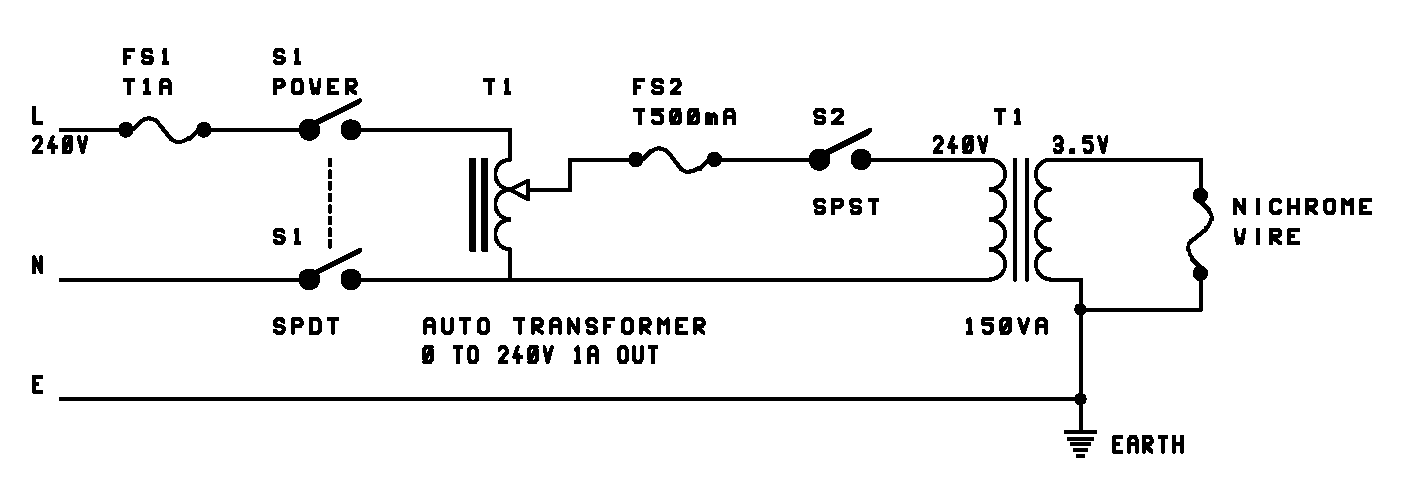
Set Up the Resistive Wire
For tubes over 1 inch or fixed installations like sight glasses, a hot wire delivers precision.
- Cut a length of .020-inch (0.5mm) nichrome or stainless steel wire.
- Form it into a loop slightly larger than the tube’s diameter.
- Attach the ends to a low-voltage power supply such as a 12V battery or variable DC source.
Alternatively, heat a steel wire loop with a torch until red-hot.
Choke and Cool the Tube
- Place the hot wire around the tube at the cut line.
- Let it sit for 10 seconds to heat the glass evenly.
- Quickly dunk the heated section in water.
Thermal shock causes a clean, circular break.
Time Tip: The entire process takes under 15 minutes, including setup.
Cut Tough Glass with Abrasive Power Tools
Select the Right Power Tool
When scoring fails, especially with quartz or thick-walled tubing, abrasive cutting is the answer.
- Dremel with cut-off wheel: Good for short cuts or trimming.
- Wet tile saw with diamond blade: Best for straight, square cuts.
- Bench grinder: Use with light pressure and frequent cooling.
Quartz cannot be scored effectively. Abrasive methods are required.
Control the Feed Rate
Pushing too fast causes the glass to crack or the blade to bind.
- Feed slowly and steadily.
- Let the tool do the work. Do not force it.
- Expect up to 20% loss rate due to operator error if rushed.
Keep the blade cool with water when possible to extend life and prevent overheating.
Finish Glass Tube Edges Smoothly

Fire Polish for Rounded Edges
Raw cuts are dangerously sharp. Fire polishing is the standard lab method.
- Use a butane or propane torch.
- Rotate the tube end in the flame until the edge glows slightly.
- Stop when the sharp rim melts into a smooth, rounded finish.
Caution: Overheating can flare or seal the end. Watch closely.
Sand or Grind Rough Cuts
If no flame is available, try mechanical smoothing.
- Use 220-grit sandpaper (wet or dry).
- Sand in a circular motion while rotating the tube.
- Or use a Dremel grinding bit with light pressure.
The goal is to remove burrs and square the end for accurate fitting.
Prevent Common Glass Tube Cutting Mistakes
Avoid Sawing During Scoring
Sawing back and forth creates a wide groove instead of a stress line.
Result: The crack doesn’t follow the path, leading to uneven breaks.
Fix: Use one firm, single pull stroke with a sharp tool.
Ensure a Full-Circle Score
Incomplete scores won’t propagate properly.
- Use a roller jig to rotate the tube against a fixed cutter.
- Or mark the start point and rotate fully around the tube.
Check visually before attempting to break.
Don’t Rush Thermal Methods
Applying heat unevenly or cooling too slowly reduces effectiveness.
- Heat the wire or rod until consistently red-hot.
- Immerse immediately after heating for maximum shock.
- Wait at least 30 seconds before handling cooled pieces.
Follow Critical Safety Rules for Cutting Glass
Wear Proper Protective Gear
Glass shards can cause serious injury.
- Eye protection: Always wear safety goggles. Flying chips are invisible.
- Gloves: Use heavy-duty work gloves, not latex, when snapping.
- Long sleeves: Protect arms from accidental cuts.
Even small tubes can produce dangerous fragments.
Handle Hot Glass Carefully
Hot glass looks like cold glass. Never assume a piece is safe to touch.
- Use metal tongs for handling heated sections.
- Mark hot areas with a tool or set them on a designated heat-safe zone.
- Allow ample cooling time before finishing.
Clean Up Thoroughly
Tiny glass slivers are hard to see but can cause cuts later.
- Sweep and wipe the work area with a damp paper towel.
- Dispose of scraps in a puncture-proof container labeled “Sharp Waste.”
- Check clothing and shoes if working on the floor.
Special Cases and Pro Tips for Glass Tube Cutting
Work with Quartz or Borosilicate
Different glasses behave differently under stress.
- Borosilicate (e.g., Pyrex): Can be scored but requires sharper tools.
- Quartz: Extremely hard. Only cut with diamond blades or grinders.
- Soda-lime glass: Easiest to score and snap.
Always identify your glass type before choosing a method.
Repair Installed Tubing
For sight glasses or vacuum lines that can’t be removed, specialized techniques apply.
- Use the hot glass rod method, which requires no rotation.
- Or apply a hot wire loop around the fixed section.
These techniques allow in-place cutting without disassembly.
DIY Hacks for Hobbyists
Many crafters repurpose household tools for glass tube projects.
- Bathroom wet saws: Effective with diamond blades.
- Amazon-bought tube cutters: Inexpensive but may fail on small diameters.
- Cigar tube projects: Use a Dremel for precise shaping after cutting.
For tiny tubes under 1 inch, manual filing often works better than commercial cutters.
Frequently Asked Questions About How to Cut Glass Tube
What is the best tool for cutting small glass tubes?
A tungsten carbide knife or a spring-loaded glass tube cutter works best for small tubes under 1 inch. Both create a clean, single-stroke score that snaps predictably. A triangular file corner is an acceptable backup when carbide tools aren’t available.
Can you cut a glass tube without a glass cutter?
Yes. You can score a glass tube using the corner of a triangular file or a tungsten carbide knife, then snap it with controlled hand pressure. For larger tubes, thermal methods using a heated glass rod or hot wire work without a traditional cutter.
How do you cut a glass tube that is already installed?
Use the hot glass rod method or a hot wire loop. Score the tube if possible, wet the line, then touch a molten glass rod to the score to trigger a thermal crack. Hot wire can also wrap around fixed tubing for in-place cutting without disassembly.
Why does my glass tube crack unevenly after scoring?
Uneven breaks usually result from sawing back and forth during scoring instead of using a single, clean stroke. Sawing creates a wide groove rather than a sharp stress line, causing the crack to wander. Use one firm pull with a sharp tool and ensure the score circles the entire tube.
How do you smooth sharp edges after cutting a glass tube?
Fire polish the edges by rotating the cut end in a butane or propane torch flame until the rim melts slightly. Alternatively, sand with 220-grit sandpaper in a circular motion or use a Dremel grinding bit with light pressure to remove burrs.
Is quartz glass harder to cut than regular glass?
Yes. Quartz is significantly tougher than soda-lime or borosilicate glass and cannot be scored effectively. Cutting quartz requires abrasive methods such as a wet saw with a diamond blade or a Dremel with a cut-off wheel. Expect a higher loss rate and slower feed speeds.
Key Takeaways for Cutting Glass Tube Successfully
Mastering how to cut glass tube comes down to three core principles: create a clean score line, apply controlled fracture, and finish the edges safely. Start with small, manual cuts to build confidence and perfect your single-stroke scoring technique. Match your method to the tube diameter, and don’t hesitate to switch to thermal or abrasive approaches when manual snapping fails. Always wear proper protective gear, handle hot glass with tongs, and clean your workspace thoroughly to avoid hidden slivers. With the right technique and a bit of practice, you can achieve professional-quality results on any glass tube project.