Stuck wrestling with a stubborn jar lid? You are not the only one. Millions of people struggle daily with vacuum-sealed jars of pickles, sauces, and jams. The real problem is usually physics, not your grip strength. Most sealed jars create a vacuum when contents cool after filling, locking the lid down with surprising force.
The good news: you do not need superhuman strength. With the right technique, whether breaking the vacuum, boosting traction, or applying heat, you can open any jar safely. This guide covers step-by-step methods backed by real-world testing, from household tricks to specialized tools.
Boost Your Grip on Slippery Lids

When hands slide off a smooth or greasy lid, more force only makes things worse. The fix is increasing friction between your hand and the metal surface.
Wrap a Rubber Band Around the Lid
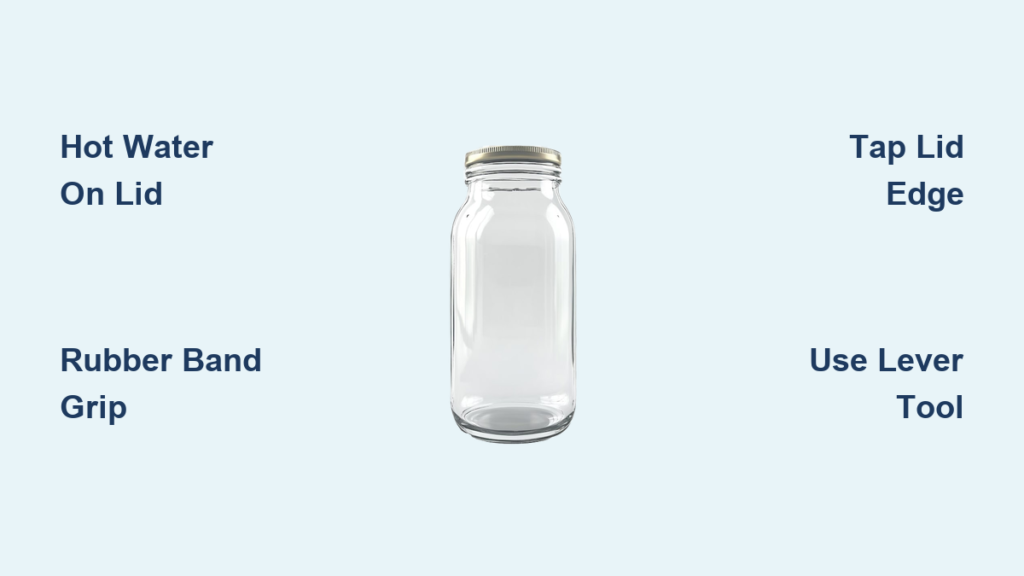
Place one or more wide rubber bands around the lid’s edge. The raised ridges give fingers something to grip and prevent slippage. This works especially well on shiny or oily lids. Leave the band on after opening to make re-closing easier.
Use a Dry Towel or Silicone Mat
Place a dry dish towel, oven mitt, or silicone trivet over the lid before twisting. These materials absorb moisture and add texture. Make sure both the lid and your hands are completely dry, since wet surfaces defeat the purpose.
Wear Rubber Gloves for Maximum Hold
Put on a pair of clean rubber or dishwashing gloves. The non-slip material dramatically improves grip. For best results, grip the jar body with one gloved hand and twist the lid with the other.
Try Tape or Plastic Wrap
Apply a strip of duct tape across the lid and use the end as a pull tab. Alternatively, stretch plastic wrap tightly over the lid. It can create enough stickiness to get the lid turning.
Pro Tip: Combine grip methods for stubborn jars. Run the lid under hot water, dry it, add a rubber band, and wear gloves. This multi-step approach works on even the toughest seals.
Apply Heat to Break the Vacuum Seal

Heat is one of the most effective ways to loosen a stuck lid because metal expands faster than glass when warmed.
Run Hot Water Over the Lid Only
Hold the jar upside down or at an angle and run hot tap water over the metal lid for 15 to 30 seconds. Do not let water touch the glass body to avoid thermal shock, which can crack the jar.
After heating, dry the jar completely and try twisting. The warmed metal should have expanded slightly, breaking the vacuum seal.
Use a Hairdryer for Controlled Heating
If running water is not handy, aim a hairdryer on high heat at the lid for 30 seconds while rotating the jar. Use a dry towel to grip the lid immediately after, since metal can get hot.
Warning: Never heat a sealed jar in a microwave or oven. Pressure buildup can cause it to explode.
Tap to Release the Vacuum
If grip and heat do not work, break the vacuum seal physically. A small release of pressure can make the lid turn freely.
Tap the Lid Edge with a Spoon
Use the handle of a wooden or metal spoon to tap the edge of the lid firmly a few times. Rotate the jar and tap all around the rim. The vibrations can loosen the seal. Listen for a soft “pop,” which signals air entering and equalizing pressure.
Pry the Lid Slightly with a Knife
Insert the tip of a butter knife or bottle opener under the edge of the lid. Gently lever it upward to lift the seal just enough for air to enter. Move the tool around the lid, repeating at different points. Keep the knife pointed away from your body in case it slips.
Note: This may dent the lid, so avoid it if you plan to re-seal the jar for canning or long-term storage.
Use Leverage for Extra Tough Lids

For weak hands or extremely tight industrial seals, leverage beats strength every time.
Try the Wooden Spoon Handle Trick
Slide the handle of a sturdy wooden spoon under the lid’s edge. Push down firmly to lift the rim slightly. This can break the vacuum without tools or damage. Alternatively, press the handle against the lid and rotate it like a lever.
Wrap a Belt or Strap Around the Lid
Wrap a leather belt, towel, or strap around the lid. Hold one end with a heavy object like a hammer, or tuck it under your arm, then twist the jar body with both hands. The strap multiplies your grip force, making it easier to break the seal.
Invest in a Jar Opener Tool
Commercial jar openers come in several types:
– Rubber grip pads for simple, non-slip surfaces
– Leverage openers that clamp and twist with minimal hand effort
– Electric models that auto-twist with the push of a button
These are ideal for people with arthritis or limited hand mobility. Manual models cost under $15 and are widely available at major retailers.
Try the Water Hammer Method
This lesser-known trick uses physics to break the seal from the inside out.
Slap the Jar Base Firmly
Hold the jar at a 45-degree angle with the lid facing down. Use the palm of your hand to slap the bottom of the jar firmly. The force sends a pressure wave through the liquid, pushing up on the lid and breaking the vacuum. You might hear a “pop.”
Repeat 2 to 3 times if needed. This works best on jars filled with liquid like sauces or juices.
Safety: Place a towel on your hand or use a glove to protect against glass breakage.
Reverse Before You Loosen
Sometimes the first move should be tightening, not loosening.
Turn the Lid Clockwise First
Gently try to tighten the lid a tiny bit. This can disrupt the static friction that locks the threads in place. Then immediately twist counter-clockwise. Many users report this paradoxical trick makes a stiff lid suddenly turn.
Emergency Methods When Nothing Else Works
If the jar remains sealed and you are out of options, these last-resort techniques will get it open, though they may damage the lid.
Punch a Hole in the Lid
Use a nail, screwdriver, or center punch to pierce a small hole in the center or edge of the lid. This instantly equalizes pressure. Once open, transfer contents to another container, since this lid cannot reseal.
Warning: Wear gloves and eye protection. Work over a sink or towel to catch any spills.
Tap the Bottom on the Counter
Hold the jar at a 45-degree angle and tap the bottom gently on a countertop in a circular motion. Place a kitchen towel on the surface to protect the glass. The jolt can loosen the seal. Avoid hard strikes on stone or metal counters.
Prevent Future Stuck Lids
Once you have opened the jar, take steps to keep it from happening again.
Leave a Rubber Band on the Rim
After use, wrap a rubber band around the lid. It creates a barrier that prevents the metal from fusing tightly to the glass threads over time.
Clean Lids Before Storing
If sticky residue like syrup or oil is left on the lid, it can harden and create extra resistance. Wipe the lid and threads clean before closing.
Store Jars Upside Down
Some users report that storing sealed jars upside down helps maintain a looser seal. The theory is that internal pressure gently pushes the lid up, preventing over-tightening.
Essential Safety Tips for Opening Jars
Even simple jar-opening methods come with risks. Follow these rules to stay safe.
Avoid Thermal Shock
Never pour boiling water on a cold glass jar, or place a hot jar in cold water. The sudden temperature change can cause the glass to shatter. Always apply heat only to the metal lid, not the glass body.
Protect Against Glass Breakage
When tapping or striking the jar, place a towel or blanket underneath. If the glass breaks, this cushions the impact and reduces the risk of cuts.
Keep Tools Pointed Away
When prying or piercing a lid, always angle the tool away from your face and body. A slipping knife or screwdriver can cause serious injury.
Do Not Reuse Damaged Lids
If you have dented, pried, or punctured a lid, it cannot form a proper seal again. Do not use it for canning or long-term food storage.
Frequently Asked Questions About Opening Glass Jars
Why are some jars so hard to open?
Most sealed jars create a vacuum seal when contents cool after filling. This pressure differential increases resistance significantly, making the lid difficult to twist. The goal of most opening techniques is to break this vacuum or overcome the friction.
What is the fastest method to open a stuck jar?
Running hot water over the lid for 15 to 30 seconds combined with a rubber band for grip is typically the fastest approach. Most methods can be executed within 2 minutes when done correctly.
Is it safe to tap a glass jar to open it?
Yes, when done carefully. Hold the jar at a 45-degree angle and tap the bottom gently on a countertop with a towel underneath for protection. This method sends a pressure wave through the liquid that breaks the vacuum seal without damaging the glass.
Can I microwave a jar to loosen the lid?
No. Never heat a sealed jar in a microwave or oven. Pressure buildup can cause the jar to explode, creating a serious safety hazard. Always apply heat externally using running water or a hairdryer.
What should I do if the lid is dented after opening?
If the lid has been dented, pried, or punctured during opening, it cannot form a proper vacuum seal again. Do not use it for canning, jam-making, or storing sterile items. It remains safe for dry goods or refrigerated leftovers.
Are jar opener tools worth buying?
For people with arthritis, limited hand mobility, or weak grip strength, jar openers are highly recommended. Manual models cost under $15 and provide significant mechanical advantage. Electric versions are a premium option for those who frequently encounter stuck jars.
Key Takeaways for Opening Any Glass Jar
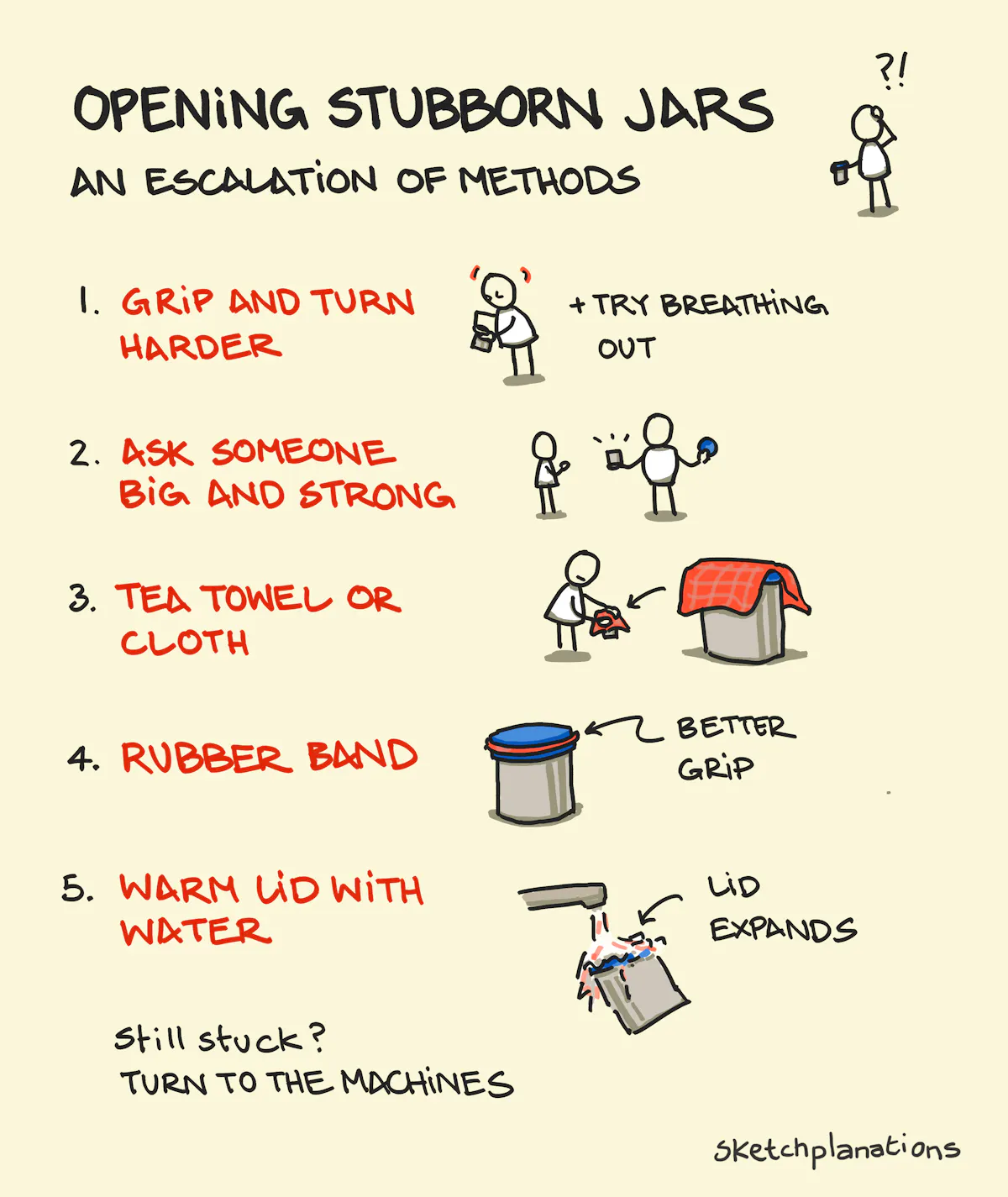
Opening a glass jar does not have to be a daily struggle. With the right method, whether heat, grip, leverage, or seal-breaking, you can defeat any lid in under two minutes. Start with the safest, least damaging techniques: use a rubber band, run hot water over the lid, or tap the edge. Save forceful methods like piercing for emergencies only.
If you open jars often, keep a jar opener tool on hand. It is a small investment that makes a big difference, especially for anyone with limited hand strength. Now go ahead: that pickle jar is not going to open itself.