You step in front of a mirror expecting your usual reflection, but instead you see a stretched, squashed, or warped version of yourself. One moment you appear as a towering beanpole, the next you look like a comical stub. This is the magic of a funhouse mirror, an optical illusion powered not by trickery but by physics. These mirrors distort your image using curved surfaces that bend light in unexpected ways, creating exaggerated and often hilarious reflections.
Unlike flat mirrors, which reflect light uniformly, funhouse mirrors use convex, concave, and compound curves to manipulate how light rays bounce off their surface. This changes the angles at which light reaches your eyes, fooling your brain into seeing shapes that do not actually exist. The result is a distorted self-image that appears taller, shorter, wider, thinner, or even upside down, depending on the mirror’s shape and your position relative to it.
Curved Surfaces Bend Light Differently
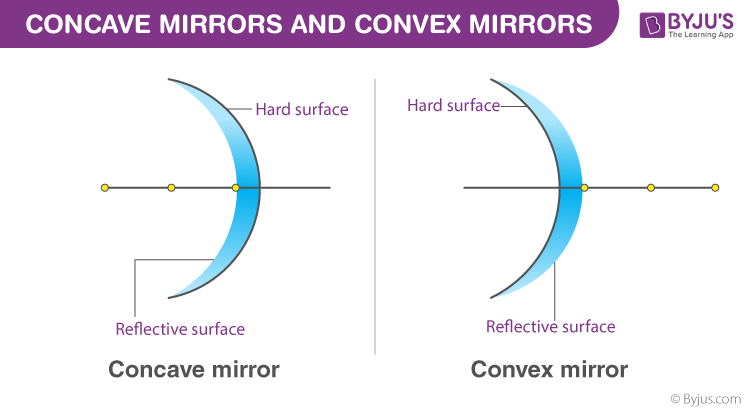
The key to a funhouse mirror’s magic lies in its non-flat surface. While a regular mirror has a uniform shape, funhouse mirrors are intentionally curved, either outward (convex), inward (concave), or in complex wave-like patterns. Each curve alters the path of reflected light, leading to distorted images.
Light follows the law of reflection: the angle at which it hits a surface equals the angle at which it bounces off. On a flat mirror, this law produces a true-to-scale image because every point reflects light predictably. But on a curved mirror, the surface normal (a line perpendicular to the surface) changes at each point. This means light rays reflect at different angles across the mirror, distorting the final image.
Your brain assumes light travels in straight lines from objects to your eyes. When distorted rays reach your retina, your mind interprets them as coming from a differently shaped object, making you appear stretched or compressed even though your body has not changed.
Convex Mirrors Widen and Shrink
A convex mirror bulges outward, like the side of a balloon. This shape causes light rays to diverge, or spread apart, after reflection.
• Fewer rays enter your eyes compared to a flat mirror.
• Your brain interprets this as a smaller, compressed image.
• The result is you look shorter and wider, especially if the mirror is vertically convex.
These mirrors are often used to squash height, turning adults into cartoonish dwarfs. Horizontally convex sections widen the torso or face when viewed head-on. Because convex mirrors offer a wider field of view, they are also used in security settings, like store corners and driveways.
Concave Mirrors Stretch and Flip
A concave mirror curves inward, like the inside of a spoon. It causes light rays to converge, or come together.
• If you stand beyond the focal point, the reflected rays cross, creating an inverted (upside-down) image.
• Move closer than the focal point, and the image flips upright but appears magnified and elongated.
• At the focal point itself, the image blurs or vanishes momentarily.
In funhouses, vertically concave mirrors stretch you into a beanpole. Horizontally concave sections narrow your waist or shoulders. Crossing the focal point creates a sudden flip, adding surprise to the illusion.
The focal length depends on the mirror’s curvature, typically around 10 inches (25 cm) in carnival mirrors. This means small movements drastically change what you see.
Composite Curves Create Wild Distortions

Most funhouse mirrors are not just convex or concave. They combine both in segmented or rippled patterns. These composite mirrors produce multiple distortions at once, making different body parts appear altered in opposite ways.
Mixed Curvature Effects
• Top concave, bottom convex: Head looks tall and thin, legs short and wide.
• Alternating bands: Body appears wavy, like a sine wave.
• Wave-like surfaces: Distortion shifts with movement, creating fluid, morphing reflections.
These mirrors exploit the brain’s tendency to interpret each part of the reflection independently. Since no real human body looks like this, the result is surreal and humorous.
Cylindrical Mirrors Reverse Distorted Images
Some funhouse mirrors are cylindrical, curved along one axis (usually vertical) and flat on the other. These are used in anamorphic art, where a stretched drawing appears normal only when reflected.
How Cylindrical Mirrors Work
- A distorted image is drawn in front of the mirror.
- The curved surface bends light in reverse.
- The reflection cancels out the distortion, revealing a clear image.
This principle is used in science classrooms and art installations. Students use ray tracing to map how light reflects off each point, learning about angles, normals, and virtual images.
Tools for Learning About Light Behavior
• Graph paper grids: Manual mapping of image points.
• Geometer’s Sketchpad (GSP): Software that simulates reflection.
• Custom algorithms: Automate photo warping for cylindrical mirrors.
These activities teach geometric optics and transformation geometry, making physics both visual and interactive.
Why Your Brain Sees Distortion as Reality
The illusion would not work without your brain’s assumptions about how light behaves. It assumes light travels in straight lines, so when bent rays reach your eyes, your mind reconstructs the image as if the object itself were distorted.
Key Perceptual Mechanisms
• Virtual image location: Your brain thinks the reflection comes from behind the mirror, at an equal distance.
• Triangulation: It estimates size and shape based on incoming light angles, misjudging when rays are abnormally bent.
• Local flatness approximation: Each tiny section of the mirror acts like a flat mirror, but with a different tilt. The brain does not detect the curve, only the changing reflections.
Movement Enhances the Illusion
Walking toward or away from the mirror changes the reflection in real time.
• A face may stretch, then flip upside-down.
• Legs grow longer, then compress.
• The dynamic shift tricks your brain into feeling like your body is transforming.
This interactivity is what makes funhouse mirrors so engaging. They are not just visual, but kinesthetic illusions.
Mirror Types and Their Visual Effects
| Mirror Type | Curvature | Light Behavior | Visual Effect | Common Use |
|---|---|---|---|---|
| Convex | Outward bulge | Diverges rays | Shorter, wider appearance | Squash height, widen face |
| Concave | Inward curve | Converges rays | Taller, thinner, or inverted | Stretch limbs, magnify features |
| Composite | Mixed curves | Alternating divergence/convergence | Multi-part distortion (e.g., tall head, short legs) | Full-body carnival mirrors |
| Cylindrical | Curved in one axis | Radial distortion | One-directional stretch; reverses pre-distorted art | Educational and artistic displays |
Design and Materials: Built to Last
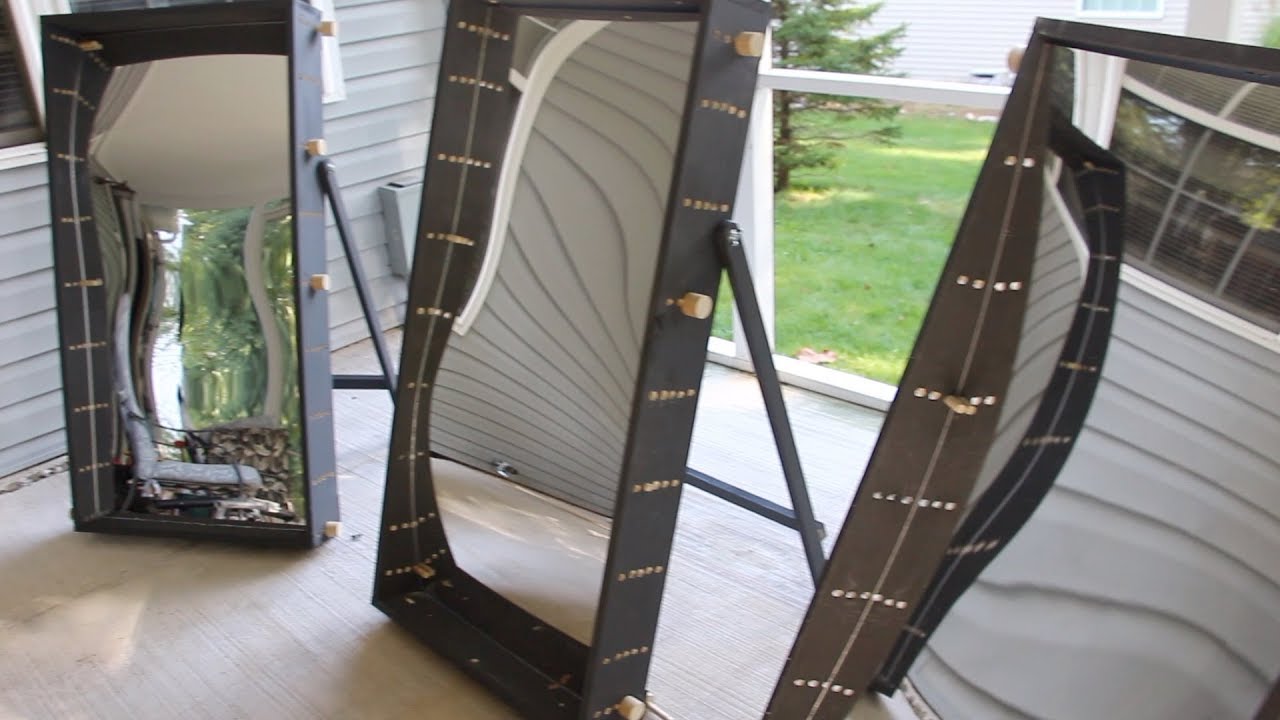
Funhouse mirrors must endure constant use and abuse in public spaces. Their construction balances optical precision with durability.
Surface Materials
• Mirror-finish acrylic: Shatter-resistant, lightweight, ideal for high-traffic areas.
• Polished metal or silvered glass: High reflectivity, but more fragile.
• Coated composites: Combine strength with clarity.
Structural Features
• Rigid backing: Maintains curvature under temperature and humidity changes.
• Framing or edge guards: Prevent warping and protect users.
• Flexible panels: Allow custom shaping for segmented mirrors (e.g., convex-concave-convex patterns).
A typical full-length panel is 6 to 8 feet tall, designed for full-body interaction. Some mirrors can be rotated, hanging vertically to stretch height or horizontally to widen the body.
Funhouse Mirrors Beyond the Carnival
While best known for laughs, these mirrors have serious applications in science, art, and society.
Educational Tools in Physics
• Teach reflection, focal points, and image formation.
• Demonstrate ray optics through hands-on experiments.
• Used in Algebra II and Pre-Calculus to explore coordinate geometry and transformations.
Students use cylindrical mirrors to reconstruct distorted images, applying math to real-world optics.
Art and Perception Exhibits
• Featured in museums like Yayoi Kusama’s infinity rooms.
• Challenge viewers’ sense of self and reality.
• Used in interactive installations where movement alters perception.
Artists use distortion to question how we see ourselves and the world, turning mirrors into philosophical tools.
Security and Surveillance
• Convex mirrors in stores and parking lots use the same principle to provide wide-angle views.
• Though not for humor, they rely on light divergence to eliminate blind spots.
• A testament to how the same physics can serve both safety and entertainment.
Funhouse Mirrors as Social Metaphors
The term funhouse mirror has evolved beyond optics. It is now used to describe systems that distort reality rather than reflect it accurately.
Social Media: A Digital Distortion
A 2024 study in Current Opinion in Psychology calls social media a funhouse mirror factory.
• Algorithms amplify extreme content, making rare behaviors seem normal.
• A vocal minority of outrage or perfection skews public perception.
• As PBS journalist John Yang noted, it is not a reflection of society. It is a distorted version shaped by outliers.
Wikipedia: A Biased Knowledge Mirror
A 2014 analysis in EPJ Data Science describes Wikipedia as a distorted mirror of academia.
• Overrepresents tech and science, underrepresents humanities.
• Reflects the interests of its editors, mostly male, Western, and tech-savvy.
• Not objective truth, but a curated, skewed version of knowledge.
Personalized Healthcare: Data That Distorts
A 2021 paper in Life Sciences, Society and Policy warns that personalized health data can act like a funhouse mirror for the self.
• Genetic tests highlight rare risks, making people overestimate danger.
• Wearables track anomalies as if they are emergencies.
• The result is a distorted self-image, where noise feels like signal.
Frequently Asked Questions About Funhouse Mirrors
What makes funhouse mirrors distort your reflection?
Funhouse mirrors distort reflections because their surfaces are curved. Unlike flat mirrors where light reflects uniformly, curved mirrors change the angle of reflection at each point. Your brain assumes light travels in straight lines, so it interprets the bent rays as actual changes in your body shape.
Why do some funhouse mirrors make you look upside-down?
Concave mirrors create inverted images when you stand beyond their focal point. The reflected rays cross before reaching your eyes, forming an upside-down projection. Moving closer than the focal point flips the image upright but magnified.
What is the focal point of a funhouse mirror?
The focal point is where parallel light rays meet after reflecting off a concave mirror. For typical carnival mirrors, this is around 10 inches (25 cm) from the surface. Crossing this point causes your reflection to flip from inverted to upright.
Can funhouse mirrors be used for education?
Yes, cylindrical mirrors are excellent teaching tools. Students learn geometric optics by tracing light rays, mapping how reflection angles change across curved surfaces. They apply math concepts like coordinate geometry and transformation.
Why does moving closer to a funhouse mirror change what you see?
Moving changes the angle at which light rays reflect off the curved surface. Small movements dramatically alter the image because the mirror’s curvature constantly changes the surface normal. This is why walking toward or away from the mirror creates dynamic, shifting distortions.
Are funhouse mirrors used for anything besides entertainment?
Convex mirrors appear in security settings, like store corners and driveways, because they provide a wider field of view. The same light-diverging principle that creates funny reflections also eliminates blind spots in real-world applications.
Key Takeaways for Understanding Funhouse Mirrors
Funhouse mirrors are more than carnival novelties. They are a brilliant blend of physics, perception, and psychology that demonstrates how easily our brains can be fooled.
The core mechanism involves curved surfaces that bend light rays. Convex mirrors diverge light, making you appear shorter and wider. Concave mirrors converge light, stretching your image or flipping it upside down depending on your position relative to the focal point. Composite mirrors combine both curvatures to create wild, multi-part distortions where different body parts appear altered in opposite ways.
Your brain plays a crucial role in the illusion. Because it assumes light travels in straight lines, bent rays are interpreted as actual physical changes. Movement intensifies the effect by changing reflection angles in real time, creating a sense that your body is transforming before your eyes.
Beyond entertainment, these mirrors serve serious purposes in education, art, and security. They teach geometric optics, challenge perceptions in gallery installations, and provide wide-angle surveillance views. The funhouse mirror has also become a powerful metaphor for modern systems like social media and personalized healthcare, which distort reality rather than reflect it accurately.
Next time you encounter a funhouse mirror, take a step forward and back. Watch how your reflection morphs in real time, and remember that what you see is not what you get. It is light, bent by physics and interpreted by your brain.