
You’re hosting a last-minute gathering and realize your drinks are still warm. You’ve heard the trick: wrap a glass in a wet paper towel and toss it in the freezer. But how long does it really take to chill glass with wet paper towel, and does the method actually work?
The answer depends on your freezer, airflow, and how you apply the towel. Based on experimental data, a room-temperature beverage in a glass wrapped with a wet paper towel can reach a drinkable 45°F (7.2°C) in about 50 minutes in a standard freezer, up to 25% faster than an unwrapped glass. But this only works under the right conditions.
In this guide, you’ll learn exactly how long to leave your drink in the freezer, why the wet towel trick works (and when it doesn’t), and how to maximize cooling speed. We’ll break down the science, debunk common myths, and give you a step-by-step method for the fastest chill possible.
Freezer vs. Fridge: Where This Method Works
Why It Fails in the Refrigerator
The wet paper towel method does not work in a refrigerator. In fact, it may slow cooling. Refrigerators maintain high humidity to prevent food from drying out, and this same humidity prevents water from evaporating off the towel. Without evaporation, you lose the primary cooling mechanism.
Instead, the wet towel adds thermal mass. The water must cool down before it can help chill the glass, creating a lag. In humid, low-airflow fridges, this turns the towel into a slight insulator.
Only use this method in a freezer, not a fridge.
Why Freezers Are Ideal
Freezers have cold, dry air, which is perfect for rapid evaporation. As water from the towel turns to vapor, it absorbs heat from the glass through latent heat of vaporization, speeding up cooling. This evaporation-driven process is the key reason the trick works.
Additionally, freezers typically operate between -14°C (6.8°F) and -21°C (-6°F), creating a large temperature gradient that drives faster heat transfer.
How the Wet Towel Cools Faster
Evaporative Cooling Explained
When water evaporates, it pulls heat from its surroundings. Each gram of water that evaporates removes about 2,260 joules of energy. That energy comes directly from the glass and the liquid inside.
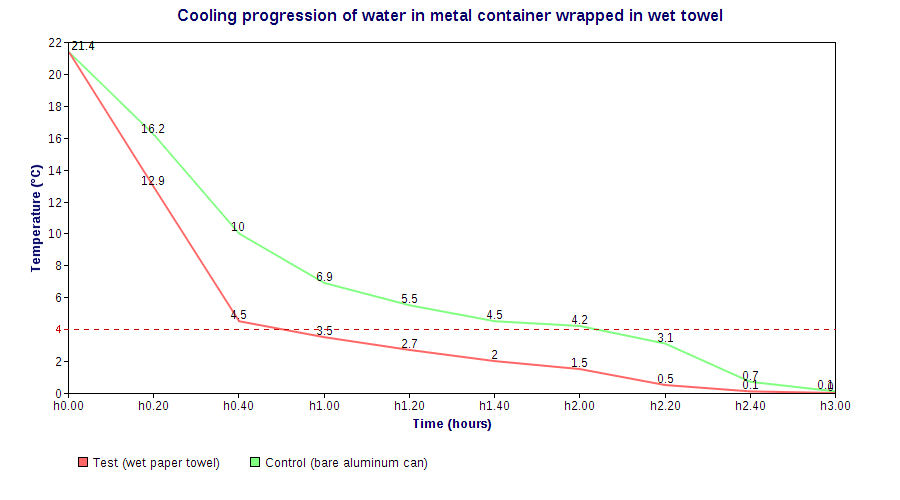
In a dry freezer, this evaporation happens quickly. One test showed a wet-towel-wrapped can lost 10ml of water to evaporation, while the control lost only 2ml, proving active phase change.
Thermal Bridging with Water
Air is a poor conductor of heat at 0.0262 W/mK. A dry glass sits in a layer of still air, which acts as insulation. A wet paper towel replaces that air gap with water at 0.5984 W/mK, over 20 times more conductive.
This creates a thermal bridge, allowing heat to escape the glass faster. The towel also conforms tightly to the surface, eliminating air pockets that would slow conduction.
Expanded Surface Area
Paper towels are porous. They wick water across a larger surface than the glass alone, increasing the area available for evaporation. More surface means more simultaneous evaporation and faster cooling.
Cooling Time: What to Expect

Standard Freezer Conditions
In a typical home freezer with low airflow, here’s what you can expect:
| Condition | Start Temp | Target Temp | Time to Chill |
|---|---|---|---|
| Wet towel + glass | 70°F (21°C) | 45°F (7.2°C) | ~50 minutes |
| Unwrapped glass | 70°F (21°C) | 45°F (7.2°C) | ~65–70 minutes |
That’s a 23–25% reduction in chilling time. For urgent cooling, that’s a meaningful difference.
High Airflow = Faster Results
If you place the wrapped glass near a freezer fan, cooling time drops dramatically, by up to 70% compared to a static bin. Airflow removes the warm boundary layer around the glass, allowing continuous heat exchange.
Even better, wet towel plus fan equals the fastest chill. While airflow alone is the biggest factor, combining it with the towel gives the best overall performance.
Why Some Tests Show No Benefit
Thick Towels Can Insulate
If the paper towel is too thick or fully wraps the neck of the bottle or glass, it adds thermal mass. The water in the towel must cool down before it can help cool the drink. This creates a delay.
In some experiments, pint glasses fully wrapped cooled slower than controls. The thick, wet layer acted like a jacket, trapping heat initially.
Use a single, thin layer of paper towel. Avoid wrapping the neck or top of the glass.
Measurement Limits Mask Small Gains
In some trials, temperature differences between wrapped and unwrapped bottles were within 1°F (0.5°C), smaller than the margin of error for many thermometers. This led to claims of “no effect,” even when real differences existed.
High-resolution sensors confirm the wet towel provides consistent, measurable improvement in dry freezer environments.
Step-by-Step: Fastest Way to Chill a Glass
1. Use the Right Towel
Choose a highly absorbent paper towel. One full sheet is enough for a pint glass. Avoid thick, quilted towels because they add unnecessary mass.
2. Soak and Wrap Properly
Follow these steps:
- Soak the towel in cold tap water
- Wring it slightly so it’s saturated but not dripping
- Wrap it tightly around the body of the glass
- Leave the top 1–2 inches exposed; don’t cover the rim or neck
This maximizes surface contact while minimizing insulating mass.
3. Place in High-Airflow Zone
Put the glass near the freezer’s fan or vent. Avoid crowded areas where air can’t circulate. If your freezer has a “fast freeze” setting, use it.
Pro tip: Rotate the glass every 15 minutes to stir the liquid and disrupt internal temperature layers.
4. Set Timer: 45–50 Minutes
Set a timer for 45 minutes. Most drinks reach optimal serving temperature (35–45°F) by then. After 50 minutes, remove it and don’t leave it longer.
If the drink gets too cold, it may freeze, especially if it contains alcohol below 5%. Water freezes at 32°F (0°C), and beer (typically 4–6% ABV) freezes around 27–30°F (-2.8 to -1.1°C).
Container Matters: Glass vs. Can
Glass Takes Longer
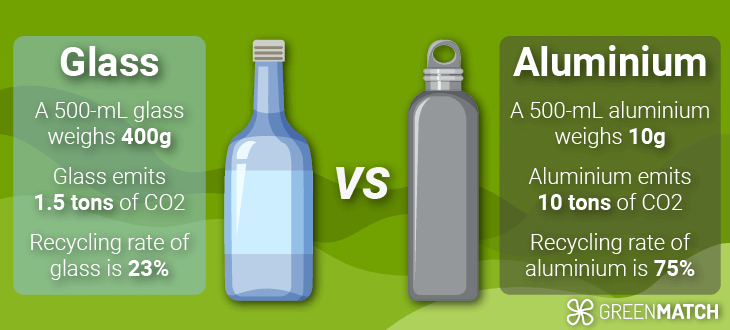
Glass has lower thermal conductivity (1.06 W/mK) than aluminum (205+ W/mK), so it transfers heat more slowly. A glass-wrapped drink will cool slower than a can, even with a wet towel.
But the wet towel helps close the gap by improving surface conduction and enabling evaporation.
Cans Cool Fastest
Aluminum cans respond best to this method. One test showed a wet-towel-wrapped can reached 4°C (39°F) in 50 minutes, while an unwrapped can took over an hour.
For fastest results, use cans when possible.
Common Mistakes to Avoid
Using a Refrigerator
No evaporation means no benefit. The towel just adds mass. This is the most common reason people say the trick “doesn’t work.”
Over-Wrapping the Glass
Wrapping the neck or top traps warm air and adds insulating layers. It can also cause condensation to drip into the drink.
Do: Wrap only the body. Don’t: Seal the top.
Using a Dry or Damp Towel
A dry towel insulates. A slightly damp towel won’t provide enough water for evaporation. The towel must be fully saturated to work.
Leaving It Too Long
After 60 minutes, most beverages in a standard freezer will begin to freeze. Carbonated drinks may explode if frozen completely.
Set a timer. Remove at 50 minutes.
Debunked Myths
“It Works in the Fridge”
False. High humidity prevents evaporation. Tests confirm no measurable benefit in refrigerators. It may even slow cooling.
“It’s Instant”
No. While faster, it still takes 30–50 minutes. It’s not a substitute for pre-chilled drinks.
“The Paper Cools the Drink”
No. The paper is just a scaffold. The water does the work. Once it evaporates or freezes, the paper becomes an insulator.
“It Works on Skin Like a Cooling Towel”
Not really. A small paper towel on your neck has insignificant surface area to produce meaningful cooling. Real cooling towels use phase-change materials and larger coverage.
When to Avoid This Method
Already Cold Drinks
If your drink is already chilled, don’t re-freeze it. Thermal cycling can affect flavor and carbonation.
Carbonated Beverages
Soda and sparkling water can burst if frozen. The wet towel speeds cooling, increasing the risk of over-chilling. Use a shorter time (30–40 minutes) and monitor closely.
Alcohol Content Below 5%
Wine, light beer, and seltzers freeze easily. Avoid prolonged exposure. Stick to 40–45 minutes max.
Frequently Asked Questions About Chilling Glass with Wet Paper Towel
Does the wet paper towel trick actually work in a freezer?
Yes, it works in a freezer with low humidity. The method reduces cooling time by 23–25% in static conditions and works through evaporative cooling and thermal bridging. It does not work in refrigerators due to high humidity.
How long does it take to chill a glass with a wet paper towel?
A room-temperature glass wrapped in a wet paper towel reaches 45°F (7.2°C) in about 50 minutes in a standard freezer. Unwrapped glasses take 65–70 minutes under the same conditions.
Why does the wet paper towel method fail in the refrigerator?
Refrigerators maintain high humidity to preserve food. This humidity prevents water from evaporating off the towel, eliminating the primary cooling mechanism. The wet towel then acts as added thermal mass, potentially slowing cooling.
Can I wrap the entire glass including the top?
No. Wrapping the neck or top adds insulating mass and traps warm air. Leave the top 1–2 inches exposed for best results. Fully wrapped pint glasses have shown slower cooling in experiments.
Will the wet towel method freeze my drink?
It can if left too long. After 60 minutes, most beverages begin to freeze. Carbonated drinks may burst. Set a 50-minute timer and remove the glass promptly to avoid freezing.
Is this method better for cans or glasses?
Cans cool faster overall because aluminum has much higher thermal conductivity than glass. However, the wet towel method improves cooling for both container types.
Key Takeaways for Chilling Glass with Wet Paper Towel
The wet paper towel method works, but only under specific conditions. Use a freezer, not a fridge. Apply one thin, fully saturated towel around the body of the glass, leaving the neck exposed. Place the glass near the freezer fan for maximum airflow and set a timer for 50 minutes.
Expect a 23–25% reduction in cooling time compared to an unwrapped glass. For the fastest results, use aluminum cans when possible. Avoid over-wrapping, using dry towels, or leaving the glass in too long.
Next time you’re in a pinch, grab a paper towel, soak it, wrap it, and set the timer. You’ll be sipping a cold drink in 50 minutes.