Museum glass protects artwork from glare and UV rays, but its delicate coating can be permanently damaged by the wrong cleaning products. Many people unknowingly ruin their museum glass with household cleaners like Windex, which leave a permanent blue haze and strip away anti-reflective properties. Paper towels cause tiny scratches that dull the surface over time, while tap water leaves mineral streaks that become nearly impossible to remove. This guide walks you through the exact method professionals use to clean museum glass without compromising its protective coating. You will learn which supplies are safe, which to avoid completely, and how to handle stubborn smudges when dry dusting is not enough.
Essential Cleaning Supplies for Museum Glass

Approved Tools and Cloths
A soft, lint-free microfiber cloth is the gold standard for museum glass care. It traps dust without scratching the sensitive coating and works for both dry and damp cleaning. Some galleries prefer lint-free cotton cloths to eliminate even the slightest risk of micro-abrasions from lower-quality microfiber. Always confirm your cloth is clean and free of embedded debris before it touches the glass.
Safe Cleaning Solutions
Distilled water is the only liquid base you should ever use. Tap water contains minerals that leave streaks and residue on the coating. For light grime, mix a few drops of mild dish soap like Dawn or Castile into distilled water. For oily fingerprints, a 50/50 blend of 70% isopropyl alcohol and distilled water works effectively. If you prefer a commercial product, choose one explicitly labeled ammonia-free and designed for anti-reflective coatings.
Materials You Must Never Use
Paper towels, tissues, and abrasive sponges will scratch the coating and leave lint behind. Ammonia-based cleaners like standard Windex or Glass-Ex chemically degrade the anti-reflective layer and cause a permanent blue haze. Vinegar, tap water, acrylic polishes, and any harsh solvent are equally dangerous. When in doubt about a product, do not use it until you have confirmed it is safe for museum-grade glazing.
Step-by-Step Museum Glass Cleaning Process
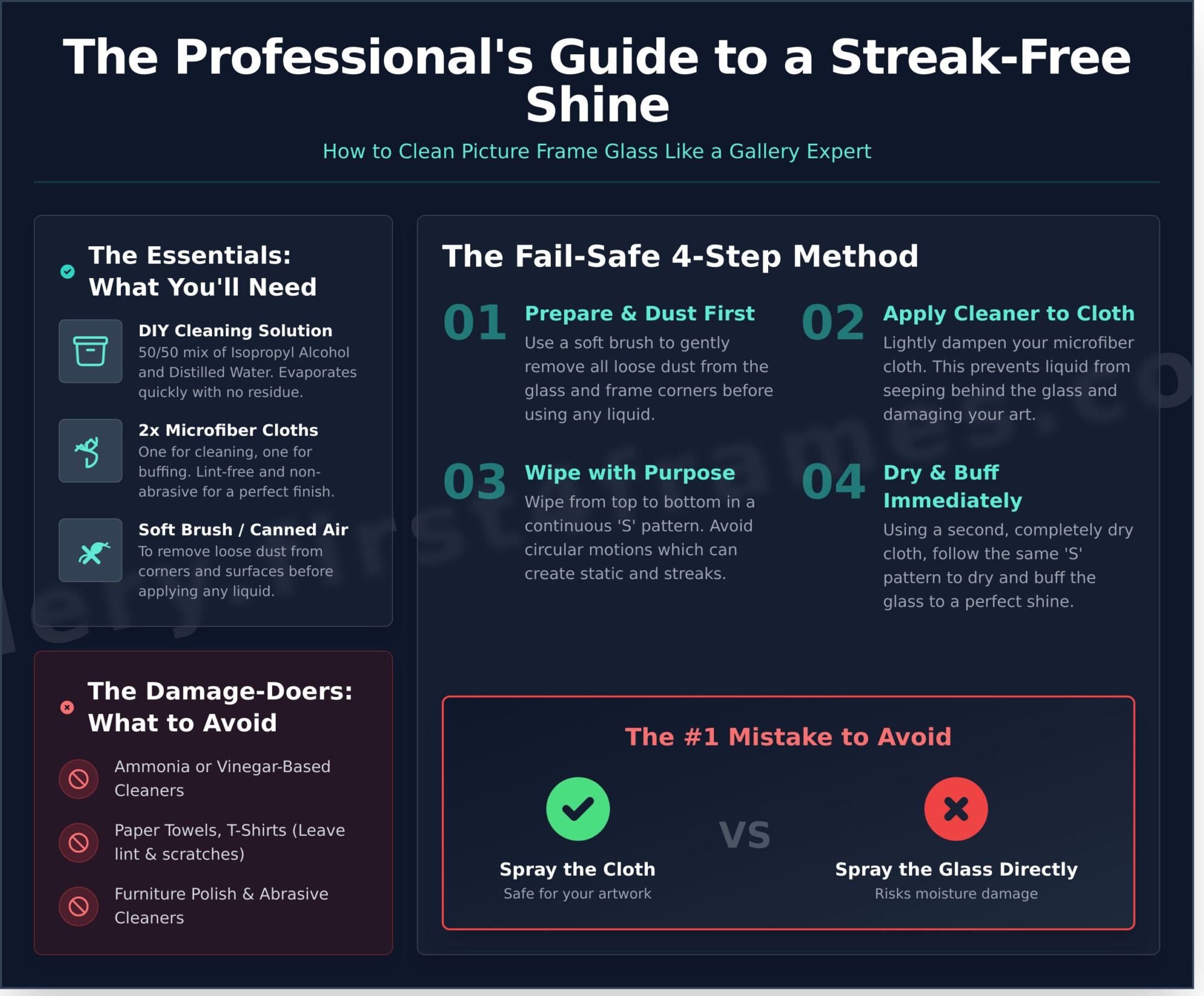
Prepare Your Workspace
Clean in a well-lit, dust-free room at stable room temperature. Direct sunlight or heat causes cleaning solutions to evaporate too quickly, leaving streaks behind. If the frame has been stored in a cold area, let it reach room temperature first to prevent condensation. Always handle the frame by its edges to avoid adding new fingerprints to the surface.
Phase 1: Dry Dusting First
Start with a clean, dry microfiber cloth. Gently wipe the glass using light pressure in circular or top-to-bottom motions. This lifts loose dust without introducing any moisture. Check the surface under bright light. If the glass looks clear, stop here. Over-cleaning accelerates coating wear, so skip wet methods whenever possible.
Phase 2: Damp Cleaning for Stubborn Smudges
If fingerprints or grime remain, move to damp cleaning with caution. Never spray liquid directly onto the glass, as it can seep under the frame and damage the artwork or cause mold. Instead, lightly mist your microfiber cloth until it is damp but not dripping.
Wipe gently in circular motions, starting at the top and working downward. Use minimal pressure and let the cloth do the work. Pay special attention near the edges to prevent solution from pooling or running into the frame seal.
Buff Dry Immediately
After wiping with the damp cloth, grab a second clean, dry microfiber cloth and buff the surface right away. This step prevents water spots and streaks from forming as moisture evaporates. If streaks persist, switch to a fresh section of the dry cloth rather than re-wetting. Limit the number of passes to reduce wear on the coating.
Special Cleaning Cases for Museum Glass
Remove Fingerprints with Alcohol Solution
For oily fingerprints that resist dry dusting, use a 50/50 mix of distilled water and 70% isopropyl alcohol. Apply the solution sparingly to a cloth and spot-clean only the affected area. Wipe gently and dry immediately afterward. Reserve alcohol for targeted use rather than routine cleaning.
Handle Unknown Glazing Safely

If you cannot confirm whether the glass is standard or museum grade, treat it as museum glass and use only dry microfiber cleaning. Introducing moisture or chemicals to an unknown coated surface risks irreversible damage. When uncertainty remains, consult a professional framer before attempting any wet method.
Clean Acrylic Glazing Differently

Products like Optium Museum Acrylic mimic glass but require distinct care. Use an ammonia-free cleaner applied to a cloth, and never use acrylic-specific polishes, which can damage the coating. For Conservation Acrylic, stick to mild soap and water, then blot dry. Ammonia is never safe on any conservation-grade glazing.
Prevent Damage and Extend Glass Lifespan
Avoid the Most Common Cleaning Mistakes
The top error is spraying liquid directly onto the glass, which risks seepage and internal damage. Using paper products or ammonia cleaners scratches and chemically degrades the coating. Over-cleaning also wears down the anti-reflective layer over time. Clean only when dust or smudges visibly impair viewing, typically every 3 to 6 months.
Stop Static and Blue Haze
Ammonia-based cleaners like Glass-Ex cause a permanent blue haze that ruins clarity. They also generate static electricity, which attracts dust rapidly and creates a cycle of frequent, damaging cleanings. Sticking to approved solutions keeps the surface static-free and cleaner for longer.
Handle and Store Frames Properly
Always handle frames by the edges to prevent oils from reaching the glass. Never press hard during cleaning, as the coatings are thin and easily worn. Store frames upright with soft padding between them, and avoid damp areas like basements where high humidity can compromise frame seals and promote mold.
Troubleshoot Common Museum Glass Problems
Fix Streaks After Cleaning
Streaks usually come from leftover moisture or residue. Buff immediately with a dry, clean microfiber cloth. If streaks remain, your cloth may be dirty, so switch to a fresh one. Avoid reapplying solution, which increases seepage risk. For stubborn streaks, lightly dampen a new cloth with distilled water, wipe, and dry instantly.
Respond to Liquid Seepage
If liquid gets under the glass, stop cleaning right away. Do not tilt or shake the frame. Remove it from the wall and place it upright in a dry, ventilated area. Consult a professional framer who can open the frame safely, dry the internal components, and reseal it without harming the artwork.
Know When to Stop Cleaning
If the glass develops a cloudy film, blue tint, or visible scratches, the coating may already be permanently damaged. No cleaning method can restore degraded coatings, and professional replacement becomes the only option. Prevention through proper technique is far more effective than trying to fix damage after it occurs.
Maintain Long-Term Clarity of Museum Glass
Clean Only When Necessary
Dust on the glass does not harm the artwork behind it. Frequent cleaning increases the chance of coating wear. Clean only when visibility is impaired, not on a rigid schedule. In controlled indoor environments, museum glass may need attention just once or twice a year.
Use a Fresh Cloth Every Time
Always use a clean microfiber cloth for each session. Wash cloths regularly with mild detergent and skip fabric softener, which leaves residue. Store them in a sealed bag to prevent dust contamination, and never reuse a cloth that has been dropped or used on other surfaces.
Monitor Environmental Factors
Keep framed pieces away from direct sunlight, heat sources, and humid areas. UV exposure degrades both the artwork and the glass coating over time. Stable temperature and humidity preserve the frame seal and prevent condensation or mold. Proper placement reduces how often you need to clean and extends the life of both glass and artwork.
Frequently Asked Questions About Museum Glass
Can I Use Windex on Museum Glass?
No. Standard Windex contains ammonia, which chemically degrades anti-reflective and UV coatings. It can leave a permanent blue haze and generate static that attracts more dust. Use only ammonia-free cleaners or a mild soap and distilled water solution.
How Often Should I Clean Museum Glass?
Clean only when dust or smudges visibly interfere with viewing. In most indoor environments, this means cleaning once or twice a year. Over-cleaning accelerates coating wear and increases the risk of damage.
What Is the Blue Haze on Museum Glass?
Blue haze is a permanent film caused by ammonia-based cleaners reacting with the anti-reflective coating. It cannot be removed by cleaning and ruins the glass’s clarity and UV protection. The only solution is professional replacement.
Is It Safe to Use Paper Towels on Museum Glass?
No. Paper towels are abrasive and will scratch the delicate coating over time. They also leave lint behind. Always use a clean, lint-free microfiber or cotton cloth instead.
What Should I Do If Liquid Gets Under the Glass?
Stop cleaning immediately and place the frame upright in a dry, ventilated area. Do not tilt or shake it. Contact a professional framer to open the frame, dry the interior, and reseal it without damaging the artwork.
Can I Clean Museum Glass with Vinegar?
No. Vinegar is acidic and can degrade the specialized coatings on museum glass. Stick to distilled water, mild dish soap, or a 50/50 alcohol and distilled water mix for stubborn spots.
Key Takeaways for Cleaning Museum Glass Safely
Cleaning museum glass is about preservation, not perfection. The goal is to maintain clarity and coating integrity with minimal intervention. Always start with dry dusting using a clean microfiber cloth, and only progress to damp cleaning when smudges remain visible. Use distilled water, approved cloths, and ammonia-free solutions to protect your investment. When in doubt, less is more. Skip the cleaning if dust is light, and always prioritize coating safety over a spotless shine.