Your floor mirror sits too low, cutting off your reflection at the knees or dragging against the carpet. This common problem frustrates homeowners, especially with standard full-length mirrors that hover just 4 to 6 inches above the ground. Raising your floor mirror improves visibility, protects the base from damage, and instantly modernizes your space. Whether you rent and need a temporary fix or own a heavy mirror requiring permanent mounting, this guide delivers practical solutions for every situation.
We’ll cover the ideal height to aim for, which materials work best, when to wall-mount versus use a stand, and how to prevent dangerous tipping. You’ll learn how to repurpose furniture, build custom bases, and create adjustable stands without breaking the bank.
Ideal Mirror Height and Stability Rules
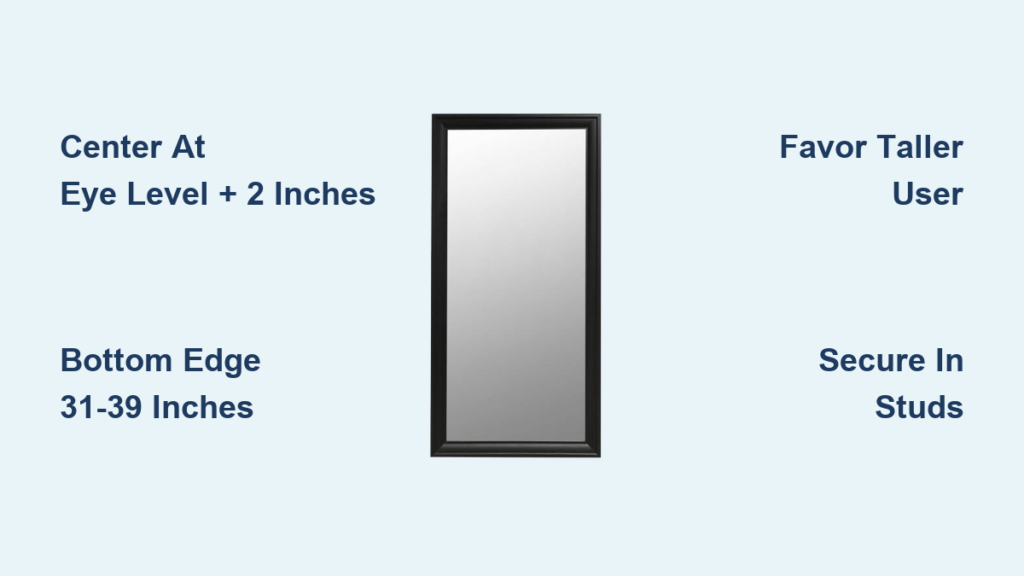
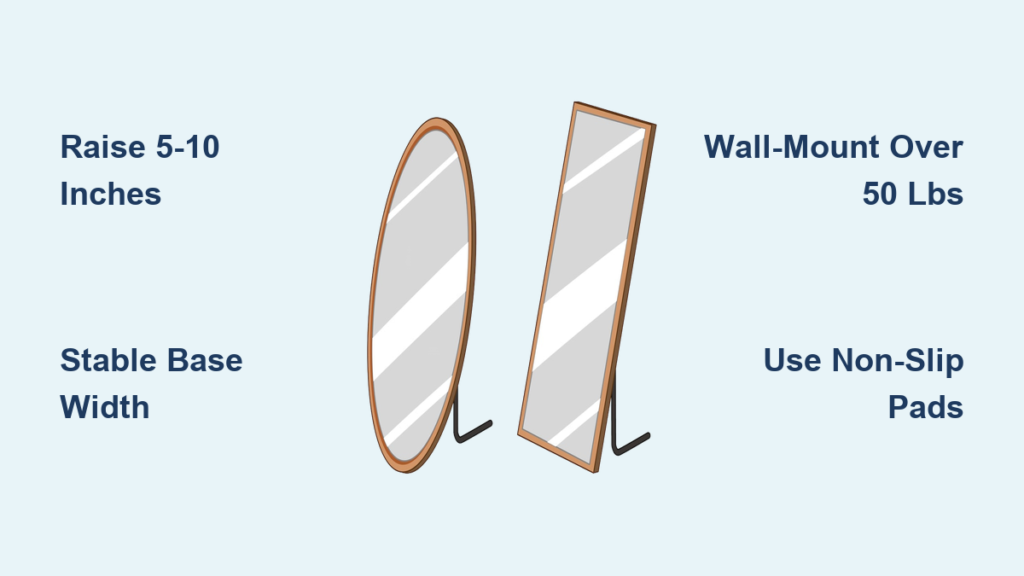
Setting your mirror at the correct height ensures full-body visibility while maintaining safety. The sweet spot for most adults is positioning the mirror center at eye level, which means raising a floor mirror 5 to 10 inches above the ground typically solves the problem. This elevation clears plush carpets, improves sightlines, and creates that coveted full-length reflection without crouching.
Set Mirror at Eye-Level for Full Visibility
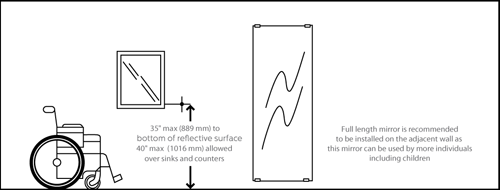
A floor mirror should reflect from at least 6 inches above the floor up to above head height, totaling roughly 70 to 72 inches. The center of the mirror should align with average eye level, around 58 to 60 inches from the floor. Use painter’s tape to mark your desired height on the wall before lifting. Step back and check sightlines while wearing your tallest shoes to simulate real-world use.
Prevent Tipping With Proper Base Width
Stability determines safety. The base width must be at least 70 to 80 percent of the mirror’s width. For a 27-inch-wide mirror, your platform needs to be at least 19 inches wide. Taller lifts over 12 inches require proportionally wider bases to keep the center of gravity low. Never rely on leaning alone for mirrors over 50 pounds.
Match Lift Height to Mirror Weight
Different elevation heights work for different mirror weights. Here is a quick reference for safe solutions.
| Lift Height | Safe for Mirrors Under 22 lbs | Safe for Mirrors 50+ lbs |
|---|---|---|
| 5 to 10 inches | Yes, with stable base | Yes, if base is wide and anchored |
| 12 to 18 inches | Yes, with furniture or DIY stand | Only with wall anchoring |
| Over 18 inches | Risky unless mounted | Must be wall-mounted |
Use Furniture as a Mirror Base
Placing your mirror on existing furniture provides instant elevation with built-in functionality. This approach works well for renters because it requires no permanent modifications.
Place Mirror on a Trunk or Suitcase
Antique trunks and vintage suitcases add 10 to 18 inches of lift while providing hidden storage. They suit rustic, eclectic, or traditional rooms beautifully. Choose solid wood or reinforced models, avoiding flimsy cardboard or thin veneer. Ensure the top surface matches or exceeds your mirror’s base width for stability. Add non-slip rubber pads between the mirror and trunk to prevent sliding.
Elevate With a Coffee or Side Table
A flat-topped coffee or side table 12 to 18 inches tall doubles as a mirror riser and functional surface. This works perfectly in bedrooms or entryways where you need a spot for keys, lamps, or shoes. Choose tables with sturdy legs, solid wood or thick MDF tops, and width equal to or greater than your mirror. Avoid glass-topped or narrow-legged tables.
Try a Gossip Bench or Entryway Seat
Gossip benches 15 to 20 inches tall lift the mirror while offering seating and storage. Place one in a hallway or bedroom to create a mini dressing nook. Add a small tray on top for jewelry, perfumes, or hand creams to keep essentials tidy and visible.
Build a Custom Mirror Stand

Custom stands provide precise height control and design cohesion. These solutions work well for homeowners who want a permanent look without wall mounting.
Use Wooden Crates for Rustic Elevation
Repurposed wooden crates 8 to 14 inches tall offer instant charm and lift. Wine, produce, or shipping crates work well. Reinforce weak joints with wood glue or screws before use. Stack two crates for more height, but screw them together for safety. Avoid thin-walled crates that may collapse under heavy mirrors.
Attach Hairpin Legs to a Wood Platform
For a modern, minimalist look, build a base with hairpin legs and a solid wood or three-quarter-inch plywood platform. Cut the wood to match your mirror width, sand smooth, and finish as desired. Screw hairpin legs into the underside at your desired height. Place non-slip pads on top before setting the mirror. This open-frame design reduces visual bulk while maximizing stability.
Try a Plant Riser With a Lip
Plant risers 6 to 12 inches tall work excellently for mirror elevation if they have a raised edge. Look for wooden or metal risers with lipped edges to prevent sliding, sturdy construction, and width matching your mirror base. Avoid cheap metal risers that flex and wobble under weight.
Buy or Build a Freestanding Leaner
Sometimes the simplest solution is buying a mirror designed to stand safely. Pre-built leaner mirrors offer convenience and factory-tested stability.
Choose a Ready-Made Leaner Mirror
Skip the hassle by purchasing a pre-built leaner mirror designed to stand safely. These come fully assembled, often 70 inches tall, at affordable prices. A 27-inch by 70-inch framed leaner mirror costs under 150 dollars and requires zero setup. Factory testing ensures proper balance with weighted bases or angled supports.
Avoid Mirror Easels for Heavy Units
Standard mirror easels support under 5 pounds, far below the 22 to 110 pounds of typical floor mirrors. They tip easily, especially on carpet. Only use easels for small decorative mirrors under 12 inches tall.
Wall-Mount Heavy or Tall Mirrors
Heavy mirrors over 50 pounds require wall mounting for safety. Leaning poses catastrophic tipping risks in homes with children or pets.
Mount Mirrors Over 50 lbs Safely
Wall mounting is the only safe option for mirrors weighing over 50 pounds. This is especially critical in homes with kids or pets. Mount when the mirror is 70 inches or taller, the backing is solid, or you want a built-in seamless look.
Use a French Cleat for Maximum Security
The French cleat system supports up to 200 pounds per cleat. Using two side-by-side provides 400 pounds total capacity. Attach one cleat to the mirror’s backing with 2-inch screws. Mount the mating cleat to the wall into studs only. Slide the mirror cleat over the wall cleat to lock it in place. Never use drywall anchors for heavy mirrors.
Add a Backing Board If Needed
Many floor mirrors have cardboard or thin particleboard backs unsuitable for mounting. Fix this by cutting a three-quarter-inch plywood sheet to mirror size and bonding it to the back with DAP Dyna Grip adhesive. Let it cure 24 hours before mounting.
Create an Adjustable Floor Stand
Portable, height-adjustable stands work great for renters or anyone needing flexible setup for grooming.
Build a Locking Pole Stand
Need a portable mirror? Build a floor stand using a salvaged pole and weighted base. Use an adjustable pole from a clothes rack or shower rod. Cut a hole in a sturdy container lid to fit the pole, then insert the pole and secure with tape if loose. Fill the container with 5 to 10 pounds of rocks, sand, or pebbles for stability. Attach your mirror to the pole top with a clamp or bracket.
Design Tips for Aesthetic Integration
Your mirror base should complement your room’s style while serving its functional purpose.
Match Riser Style to Room Theme
Modern spaces call for hairpin legs, acrylic risers, or metal plant stands. Rustic rooms suit wooden crates, vintage trunks, or stools. Traditional interiors work with ornate consoles or antique benches. Stain or paint risers to match your baseboards, furniture, or flooring.
Use Lighting to Enhance Function
Place a floor lamp or wall sconce beside the mirror to reduce shadows on your face and highlight your outfit. LED strip lights around the mirror frame mimic salon lighting for optimal visibility.
Room-Specific Mirror Setups
Different rooms call for different approaches based on function and available space.
Foyer: Combine Mirror With Bench and Tray
In entryways, use a gossip bench or trunk as a base. Add a small tray on top for keys and wallets. You get mirror lift, seating, storage, and a decorative surface in one solution.
Bedroom: Pair With Clothing Rack or Trunk
Elevate your mirror on a vintage trunk for off-season clothing storage. Place it near a clothing rack or wardrobe for a complete dressing station. Aim for 8 to 12 inches of lift for clear full-body viewing.
Living Room: Use a Console Table in Front
Want visual lift without moving the mirror? Place a console table 18 to 24 inches tall in front of it. This blocks the lower wall and mirror base, creating the illusion of height. Style it with candles, a lamp, or artwork.
Safety First: Avoid Common Risks
Safety should never be compromised when raising a floor mirror.
Prevent Slipping With Non-Slip Pads
Always place rubber or felt pads between the mirror and any platform. They prevent sliding, protect floors and mirrors, and dampen vibration. Avoid glass, polished metal, or smooth plastic surfaces that are slippery.
Anchor Leaning Mirrors in High-Traffic Areas
Use anti-tip brackets or L-brackets screwed into wall studs. Attach one side to the mirror frame and the other to the wall. This is essential if children or pets live in your home.
Inspect Hardware Every 6 to 12 Months
Check for loose screws, wall stress marks, frame warping, or adhesive failure. Tighten or repair immediately to maintain long-term safety.
Final Recommendations by Mirror Type
Choosing the right solution depends on your specific mirror and needs.
For Quick, Cheap Fix: Use a Wooden Crate or Stool
Thrift stores and online marketplaces offer sturdy stools, crates, or trunks for under 30 dollars. You get lift, character, and stability without significant investment.
For Modern Style: Build a Hairpin Leg Base
Clean lines, open space, and custom height make this DIY perfect for contemporary rooms. Black powder-coated legs create sleek contrast, while brass adds vintage flair.
For Multi-Function: Choose a Bench or Trunk
Get seating, storage, and mirror elevation in one. Ideal for entryways and bedrooms where dual functionality matters.
For Heavy Mirrors: Use French Cleat Plus Stud Mounting
If your mirror weighs over 50 pounds, mount it properly using a French cleat anchored into wall studs. Never rely on drywall anchors.
For Portability: Build an Adjustable Stand
Great for renters, groomers, or anyone needing a flexible setup. The weighted base and locking pole provide stability while remaining easy to move.
Frequently Asked Questions About Raising a Floor Mirror
How high should I raise my floor mirror?
Aim for 5 to 10 inches of elevation. This clears most carpets and improves sightlines while maintaining stability. The mirror center should align with average eye level, around 58 to 60 inches from the floor.
Can I use a regular easel to raise my floor mirror?
No. Standard mirror easels support under 5 pounds and tip easily. They are unsafe for full-length mirrors weighing 22 to 110 pounds. Only use easels for small decorative mirrors under 12 inches tall.
Is it safe to lean a heavy floor mirror against the wall?
Mirrors over 50 pounds should not rely solely on leaning. Anchor them to the wall using anti-tip brackets or French cleats into studs. Leaning poses tipping risks, especially in high-traffic areas or homes with children.
What furniture can I use to raise my floor mirror?
Trunks, antique suitcases, coffee tables, side tables, and gossip benches all work well. Ensure the surface is at least 70 to 80 percent of your mirror’s width and add non-slip pads for stability.
Do I need to wall-mount a mirror over 50 pounds?
Yes. Wall mounting is the only safe option for mirrors weighing over 50 pounds. Use a French cleat system anchored directly into wall studs for maximum security.
Can I raise my floor mirror without drilling holes?
Yes. Use furniture bases like trunks, crates, or benches. Build a custom stand with hairpin legs and a wood platform. Purchase a pre-made leaner mirror. All these solutions avoid permanent wall modifications.
Key Takeaways for Raising Your Floor Mirror
Raising a floor mirror improves visibility, protects your investment, and modernizes your space. The ideal lift is 5 to 10 inches, which clears carpets while maintaining stability. Always ensure your base width is at least 70 to 80 percent of your mirror’s width to prevent tipping. For mirrors under 22 pounds, furniture solutions like trunks, crates, or tables work beautifully. For mirrors over 50 pounds, wall mounting with French cleats anchored into studs is essential. Match your riser style to your room theme for a cohesive look. Start with a simple solution like a wooden crate or thrift store find, then upgrade to permanent mounting if needed.