
Nothing ruins the joy of baking quite like facing a crusty, stained glass dish afterward. Whether it’s caked-on cheese, burnt-on grease, or stubborn baked-on food, cleaning a glass baking dish can feel like a real chore. The good news? With the right method, tools, and a few smart habits, you can restore your Pyrex or casserole dish to like-new condition without scratching or damaging it.
This guide reveals the most effective, tested ways to clean glass bakeware based on real-world performance. From quick fixes to overnight solutions, you’ll learn how to tackle any mess safely and efficiently. The key isn’t just what you use, it’s how you use it. Spoiler: a high-quality scrubber often outperforms harsh chemicals.
Use Cornstarch and Vinegar Mix

This combo is the gold standard for removing baked-on grease fast. It’s gentle, non-toxic, and works in seconds when paired with the right tool.
Make the Cleaning Paste
Mix 1 teaspoon of cornstarch with equal parts white vinegar and water. The cornstarch adds mild abrasion, while vinegar cuts through grease. Apply the paste directly to stained areas.
Scrub with a Mesh Scrubber
Use a wet nylon or polymesh scrubber like the Dawn brand for best results. Standard sponges won’t cut it because this scrubber’s texture lifts residue fast. Scrub in small circles with moderate pressure. Most stains vanish within 30 seconds.
Pro Tip: Even plain water with this scrubber can beat chemical-heavy methods. But the paste delivers the fastest results.
Try the Overnight Soak Method
For zero-effort cleaning, this method is unbeatable. Ideal for dishes used after dinner, just set it and forget it.
Fill with Hot Soapy Water
Right after use, once the dish is cool enough to handle, fill it completely with hot water and a squirt of dish soap. Seal it with plastic wrap or a lid to prevent spills.
Let It Sit 8–12 Hours
Leave it overnight. The prolonged soak softens even the toughest baked-on bits. By morning, most residue wipes away with a soft sponge.
Bonus: Follow up with a quick rinse or dishwasher cycle if needed. Many users report dishes come out spotless with no scrubbing.
Apply Baking Soda Paste for Tough Stains

Baking soda is a kitchen staple for a reason. It’s a safe, effective abrasive that won’t scratch glass.
Create a Thick Paste
Mix 3 parts baking soda to 1 part water. Spread it over burnt areas, especially where food has carbonized.
Let It Sit, Then Scrub
Wait 1–2 hours, or longer for extreme cases. Use a soft brush or sponge to scrub. Add dry baking soda mid-scrub for extra grit.
For extra power: Sprinkle baking soda, then drizzle white vinegar on top. The fizzing action helps lift debris. Let it bubble for 20–30 minutes before scrubbing.
Use a Magic Eraser Safely

The Mr. Clean Magic Eraser works fast on stubborn spots and corners. Don’t let the name fool you, it’s melamine foam, not actual erasing.
Soak First, Then Scrub
Dip the dish in warm water, then rub stained areas with the Magic Eraser. Press with your thumbnail for more pressure.
Safety Note: It’s safe for food-contact surfaces, just rinse thoroughly afterward. Avoid using on nonstick coatings.
Why it works: The foam acts like super-fine sandpaper, lifting stains without visible scratching.
Try the Boiling Water Trick
For dishes with badly burnt bottoms, heat is your friend. This method softens charred food so it peels off easily.
Heat Water in the Dish
If your glass is stovetop-safe, check manufacturer instructions, then add water and bring to a boil. Otherwise, pour boiling water from a kettle into the dish.
Let It Sit 10–15 Minutes
The hot water loosens the burnt layer. Use a silicone spatula to gently lift off the softened gunk.
For final clean: Wipe remaining bits with a saltwater-soaked paper towel.
Prevent Cloudiness and Stains
A cloudy or discolored dish isn’t just ugly. It can harbor bacteria. The fix depends on the cause.
Fix Cloudy Glass
Cloudiness often comes from hard water, dishwasher detergent, or baked-on residue.
- Soak in hot, soapy water for 15 minutes.
- Scrub with a mesh sponge.
- Rinse well and dry with a paper towel to avoid water spots.
Avoid dishwashers if possible because they can etch glass over time and leave a hazy film.
Remove Brown Stains
These usually come from burnt cooking spray or metal utensils.
- Use baking soda paste or vinegar soak.
- For mild cases, dish soap and warm water with a good scrubber may suffice.
Prevention tip: Skip aerosol sprays. Use oil or non-aerosol sprays instead, as they don’t leave a gummy residue.
Clean Burnt Cheese and Proteins
Cheese and proteins bond tightly to glass when overheated. But they respond well to soaking.
Soak for at Least an Hour
Fill the dish with hot water and let it sit. The longer, the better, and overnight is ideal.
Scrub with a Non-Metal Pad
Use a nylon scrubber or Magic Eraser. Avoid steel wool because it scratches and traps bacteria.
Alternative: Boil water in the dish (if safe) to lift burnt cheese quickly.
Avoid Dangerous Cleaners
Some products work but pose risks to you or your dish.
Skip Steel Wool and Harsh Pads
They scratch glass, creating hiding spots for food and bacteria. Even fine steel wool can cause micro-fractures.
Don’t Use Oven Cleaners Regularly
Products like Oven Pride or TSP are powerful but dangerous. They require gloves, ventilation, and can etch glass over time.
Lye-based cleaners? Avoid. Sodium hydroxide is effective but can damage glass with repeated use.
Use Ammonia with Caution
The fume method works for neglected pans, but only in well-ventilated areas. Wear gloves and never mix with bleach.
Prevent Mess Before It Starts
The best clean is the one you don’t have to do.
Line with Parchment Paper
Cut a sheet to fit the bottom. Great for roasting veggies, chicken, or casseroles. Toss it after use and cleanup is instant.
Use Silicone Mats
Reusable and heat-resistant, they protect the entire surface. Ideal for frequent bakers.
Cover with Aluminum Foil
Line the dish or wrap the edges. Focuses mess on the foil, not the glass. Reusable if lightly soiled.
Follow Smart Cleaning Habits
Small actions during and after cooking make cleaning easier.
Scrape While Still Warm
Right after pulling the dish from the oven, add a splash of water or gravy and scrape with a silicone spatula. Residue is softer and easier to remove.
Don’t Let It Sit
The longer food dries, the harder it sticks. Clean within a few hours if possible.
Dry Completely
Always dry glass dishes with a towel or air-dry fully. Moisture left in corners can lead to mold, especially on dishes with rims.
Choose the Right Tools
Your scrubber matters more than you think.
Use a Polymesh Scrubber
Dawn’s blue mesh scrubber outperforms standard sponges. Its texture lifts grease without scratching.
Avoid Cheap Sponges
They fall apart and lack the firmness needed for baked-on food.
Use Soft-Bristled Brushes
For corners and edges, a small brush with nylon bristles gives precision without damage.
Know Your Glass Limits
Not all glass is the same. Handle with care.
Avoid Thermal Shock
Never pour cold water into a hot dish or place a hot dish in the freezer. Sudden temperature changes can cause cracking.
Rule of thumb: Let glass cool to room temperature before washing or refrigerating.
Check for Tempered Glass
Most Pyrex is tempered, but older or generic brands may not be. When in doubt, avoid extreme temperature swings.
Metal Rims Need Care
Some dishes have metal edges. Clean them with soapy water and dry thoroughly to prevent rust.
Sterilize When Needed
For deep cleaning or after storing food, sterilize safely.
Oven Method
Place the dry dish in a cold oven. Heat to 300°F for 10 minutes. Turn off and let cool.
Do not use boiling water or microwave for sterilization because of the risk of shattering.
Quick Cleaning Protocols
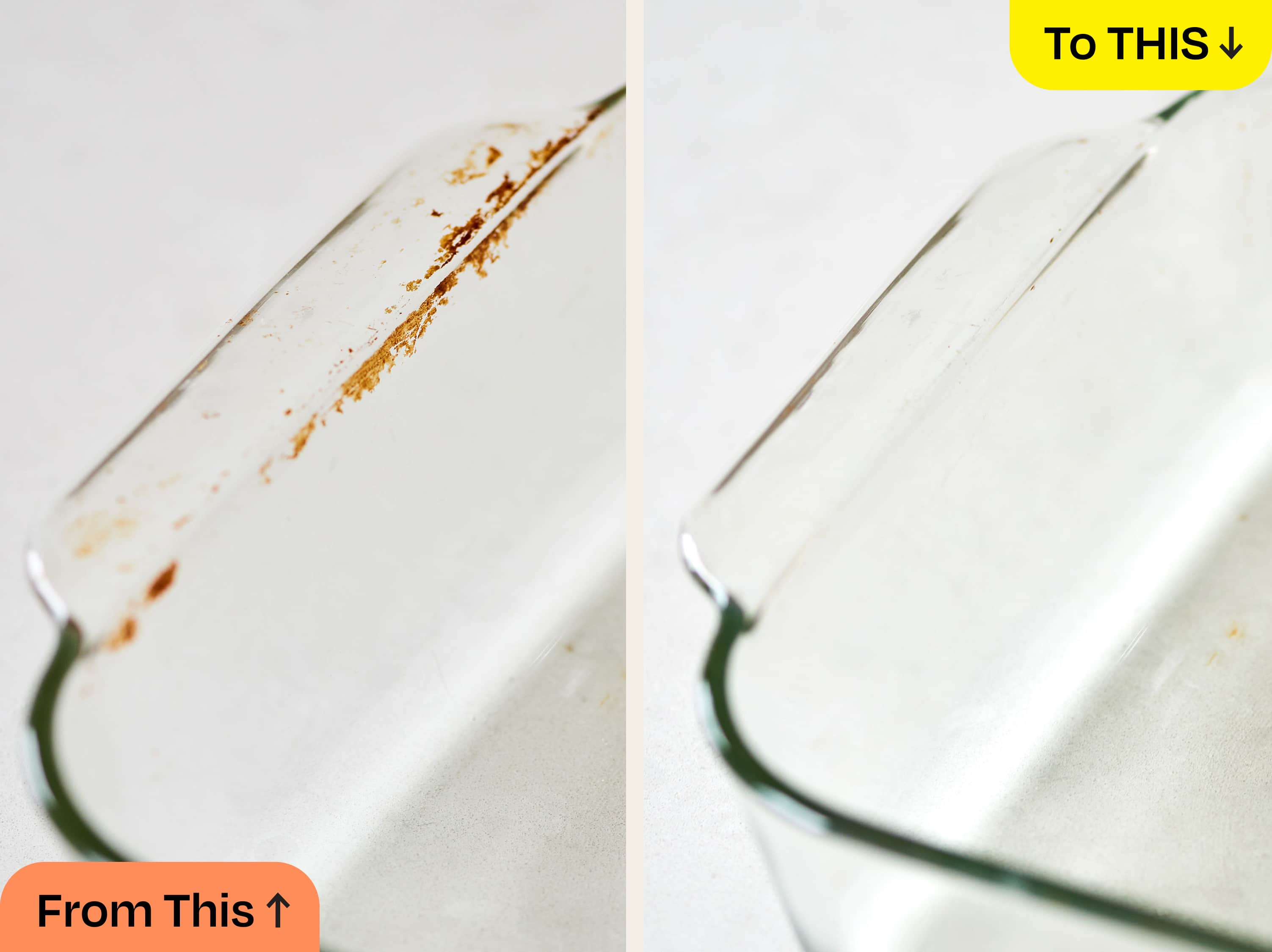
Follow these step-by-step plans based on your situation.
Quick Clean (After Light Use)
- Scrape with a silicone spatula.
- Fill with hot, soapy water.
- Soak 10–15 minutes.
- Scrub with mesh sponge.
- Rinse and dry.
Deep Clean (Burnt or Crusted)
- Scrape loose debris.
- Apply cornstarch-vinegar paste or baking soda paste.
- Let sit 30+ minutes.
- Scrub with mesh pad or Magic Eraser.
- Rinse thoroughly.
- Dry completely.
Lazy Clean (Maximum Ease)
- Fill with hot water and dish soap after use.
- Cover and leave overnight.
- Dump water, wipe once, rinse, dry.
- Done.
Frequently Asked Questions About Cleaning Glass Baking Dishes
What is the best way to remove baked-on grease from a glass dish?
The most effective method combines 1 teaspoon of cornstarch with equal parts white vinegar and water. Apply the paste to stains and scrub with a polymesh scrubber. Most grease lifts within 30 seconds.
Can I use steel wool on my Pyrex dish?
No. Steel wool scratches glass and creates micro-fractures where bacteria can hide. Use a nylon or polymesh scrubber instead for safe and effective cleaning.
How do I fix cloudy glass bakeware?
Cloudiness usually comes from hard water or dishwasher detergent. Soak the dish in hot, soapy water for 15 minutes, scrub with a mesh sponge, rinse well, and dry with a paper towel.
Is it safe to use a Magic Eraser on glass baking dishes?
Yes, the Magic Eraser is safe for food-contact glass surfaces. Soak the dish in warm water first, then scrub stained areas. Rinse thoroughly afterward and avoid using it on nonstick coatings.
How do I prevent my glass dish from cracking during cleaning?
Avoid thermal shock by never pouring cold water into a hot dish. Let glass cool to room temperature before washing, and never place a hot dish directly in the freezer.
Can I put my glass baking dish in the dishwasher?
While many dishes are labeled dishwasher safe, hand washing is often better. Dishwashers can etch glass over time, leave a hazy film, and bake residue into corners where spray doesn’t reach.
Key Takeaways for Cleaning Your Glass Baking Dish
The fastest method for greasy, baked-on residue is cornstarch, vinegar, and water paired with a polymesh scrubber. For hands-off cleaning, the overnight soapy soak delivers spotless results with zero scrubbing. Avoid steel wool, manage temperature changes to prevent cracking, and use parchment paper or silicone mats to prevent messes before they start. With these proven techniques, even the worst baking disasters become easy cleanup jobs. Start with the overnight soak tonight, and grab a mesh scrubber for your next deep clean.