
Nothing ruins a morning commute like sun glare bouncing off a streaky windshield. Smudges, haze, and water spots don’t just look bad—they distort your view and compromise safety. The frustrating part? Most streaks come from the cleaning process itself, not the dirt you’re trying to remove.
This guide breaks down the exact system professional detailers use to achieve perfectly clear auto glass every time. You’ll learn why timing matters, which cloths actually work, and how a simple change in wiping direction can eliminate streaks for good. We’ll cover both interior and exterior glass, troubleshoot stubborn residue, and show you how to keep your windows cleaner longer with hydrophobic protection.
Work in Shade or Cool Conditions
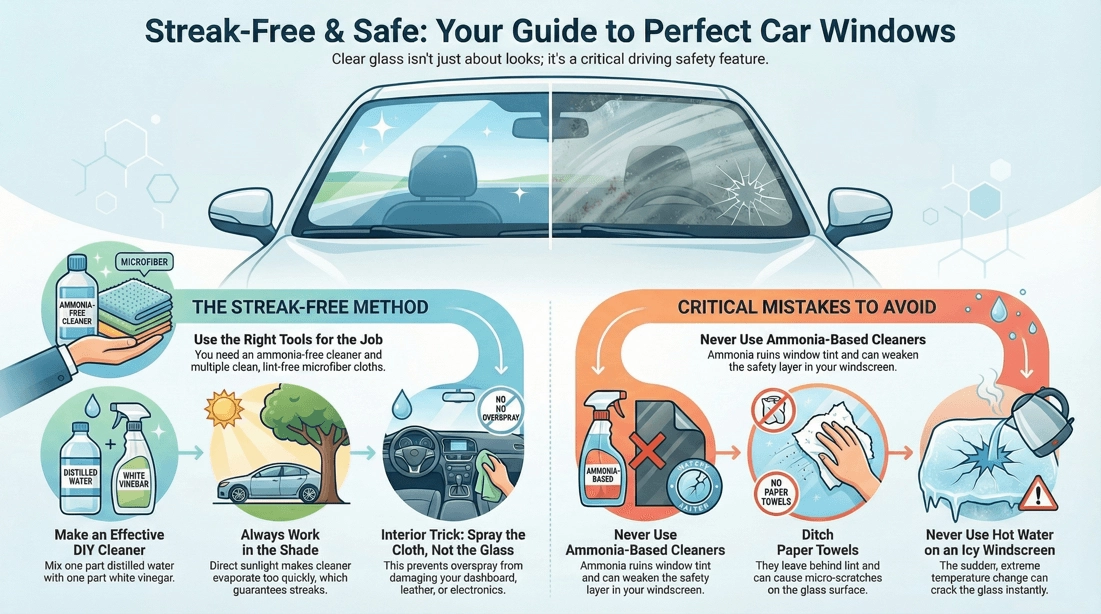
Streaks happen when cleaning solution evaporates before you can wipe it away. Direct sunlight and warm glass accelerate this process, leaving behind a thin film of residue that catches the light and ruins your finish.
Avoid Sunlight and Heat
Never clean your windshield in full sun. Park in a garage, under a carport, or in a shaded spot. Let the engine cool completely first—hot glass causes instant drying the moment your cleaner touches it. If the surface feels warm to the touch, wait. Cool glass gives your solution time to dissolve grime and lift it away cleanly.
Time Your Cleaning Right
Plan your cleaning for early morning, dusk, or an overcast day. These cooler hours naturally slow evaporation. If you must clean midday, shade is non-negotiable. The goal is keeping the surface damp from spray to final buff. A few minutes of patience saves you from redoing the entire windshield.
Use the Right Microfiber Towels

Your cloth determines your final result. Paper towels leave lint, scratch glass, and smear dirt into streaks. Old rags push grime around instead of absorbing it.
Choose Waffle Weave Microfiber
Waffle weave microfiber towels are engineered for glass. Their textured surface traps dirt particles and absorbs moisture without scratching. Avoid terry cloth or flat-weave unless specifically labeled for glass use. Quality matters here—cheap microfibers shed fibers and leave residue.
Apply the Two-Towel System
Use two separate, color-coded towels to prevent cross-contamination:
- Red towel (Cleaning): Applies solution and removes grime.
- Blue towel (Buffing): Dries and polishes to a streak-free shine.
Fold each towel into thirds to access fresh surfaces as you work. When a section gets dirty, unfold to a clean side. Replace towels when stained or frayed—worn fibers cause streaks instead of preventing them.
Pick the Best Cleaning Solution
The wrong cleaner leaves film, attracts dust, or damages tint. Your choice depends on your vehicle’s setup and your budget.
Use Ammonia-Free Cleaners for Tint
If your windows have tint, avoid ammonia-based products at all costs. Ammonia degrades tint film over time, causing bubbling and discoloration. Look for automotive-specific, ammonia-free glass cleaners that are gentle on film but tough on grease and road grime.
Try Proven Homemade Mixes
For a cost-effective alternative, these DIY formulas deliver professional results:
- Formula A: 50% distilled water + 50% isopropyl alcohol + capful of white vinegar
- Formula B: Equal parts water and white vinegar
- Formula C: 70% distilled water + 15% isopropyl alcohol + 15% commercial glass cleaner
Mix in a spray bottle and shake gently. Distilled water prevents mineral streaks that tap water leaves behind. Never use dish soap—it leaves a greasy film that attracts dirt and creates more streaks over time.
Clean Exterior Glass Vertically
The exterior collects bugs, road grime, water spots, and dust. Cleaning it properly sets the foundation for total clarity.
Remove Debris First
Wipe loose dust with a dry microfiber before applying any solution. For stuck-on bugs or bird droppings, gently scrub with a soft brush or old toothbrush. Never scrape—this can scratch the glass surface.
Spray Cloth, Not Glass (If Warm)
If the exterior glass feels warm, spray your cleaner onto the red cleaning towel instead of the window. This prevents instant evaporation. If the glass is cool to the touch, light spraying directly on the surface is safe.
Wipe in Vertical Strokes
Use vertical (up-and-down) motions with the red towel. This directional pattern is your diagnostic tool later. Any vertical streaks you spot after cleaning mean the exterior needs another pass. Work in small sections to prevent the solution from drying before you buff.
Buff with a Dry Blue Towel
Immediately follow with the blue buffing towel using straight, overlapping strokes. Ensure the glass is fully dry before moving on. For large surfaces like the windshield, a squeegee can remove bulk liquid quickly—wipe the blade after every pass to prevent residue buildup.
Clean Interior Glass Horizontally

Interior glass collects skin oils, dashboard off-gassing, and dust. It’s also more sensitive to excess moisture that can drip into electronics or upholstery.
Never Spray Interior Directly
Never spray cleaner onto the inside of the windshield. Liquid can seep into dash crevices, damage speakers, or stain upholstery. Instead, spray the solution onto the red microfiber towel until damp but not soaked.
Wipe in Horizontal Motions
Use horizontal (side-to-side) strokes to clean the interior. This creates an instant diagnostic advantage: horizontal streaks mean the interior needs re-cleaning. Vertical streaks? That’s an exterior issue. This simple system eliminates guesswork.
Clean Window Edges and Corners
Roll the window down about one inch to access the top seal where dust builds up. Use a slightly dampened cloth or cotton swab for tight corners. Pay special attention to the driver’s side edge—it’s frequently touched and often the greasiest spot.
Diagnose Streaks by Direction
After cleaning both sides, inspect thoroughly. Not all streaks are equal, and their direction tells you exactly where the problem is.
Check from Multiple Angles
View the glass from different angles under natural light, garage bulbs, or a phone flashlight. Move around the car—some streaks only appear in certain lighting conditions. Direct and indirect light reveal different types of imperfections.
Identify Streak Origin Fast
Use this quick diagnostic rule:
- Vertical streaks? Re-clean the exterior.
- Horizontal streaks? Re-clean the interior.
If streaks persist after a second pass, your buffing towel may be damp or dirty. Switch to a fresh, dry blue towel and try again.
Prevent Future Streaks with Maintenance
Streak-free glass isn’t a one-time achievement. Regular care keeps visibility sharp and makes each cleaning faster and easier.
Clean Windows Frequently
Dirt and film build up over time, bonding to the surface and making removal harder. Wipe windows every one to two weeks to prevent grime from accumulating. Quick touch-ups take less than five minutes and save you from heavy scrubbing later.
Wash and Replace Towels Regularly
Microfiber cloths trap oils and residue that transfer back to glass. Wash them after three to four uses in warm water without fabric softener—it clogs the fibers and reduces absorbency. Replace towels when they no longer absorb well or show visible wear.
Apply Hydrophobic Coating
After cleaning, apply a hydrophobic treatment like HydroSlick. It creates a water-repelling barrier that causes rain to bead and roll off, improving night driving visibility and reducing wiper smear. Reapply every three to six months for consistent protection.
Winter: Use De-Icer, Not Water
Cold weather brings ice, salt, and frozen residue that standard cleaners can’t handle. The wrong approach can make things worse or even crack your glass.
Spray No-Rinse De-Icer
In winter, use a no-rinse windshield de-icer to melt ice quickly without leaving streaks. Avoid pouring hot water on cold glass—the thermal shock can cause cracking. Keep a bottle in your car for fast morning fixes.
Prevent Salt Buildup
Road salt creates haze and attracts moisture, leading to stubborn film. Clean windows more often during winter months to prevent buildup. A quick weekly wipe-down keeps salt from bonding to the surface and makes spring cleaning much easier.
Frequently Asked Questions About Streak-Free Auto Glass
What is the best cloth for cleaning car windows without streaks?
Waffle weave microfiber towels are the best choice for streak-free auto glass. Their textured surface traps dirt and absorbs moisture without scratching or leaving lint behind. Avoid paper towels, old rags, and terry cloth, which smear dirt and leave fibers on the glass.
Can I use Windex on my car windshield?
Standard Windex contains ammonia, which can damage tinted windows over time. If your vehicle has tint, use an ammonia-free glass cleaner specifically formulated for automotive use. For non-tinted glass, ammonia-based cleaners work but still require proper technique to avoid streaks.
How do I remove hard water spots from auto glass?
Hard water spots come from mineral deposits in tap water. To remove them, clean with a solution of equal parts white vinegar and distilled water, then buff dry with a clean microfiber. For stubborn spots, use a small amount of isopropyl alcohol on a cloth. Always finish with distilled water to prevent new mineral deposits.
Why does my windshield streak no matter what I clean it with?
Persistent streaking usually comes from one of three causes: cleaning in direct sunlight, using dirty or low-quality towels, or leaving residue from previous cleaning attempts. Wash your microfiber towels, switch to a shaded location, and try the two-towel method with vertical exterior strokes and horizontal interior strokes.
Should I clean the inside of my windshield differently than the outside?
Yes. The interior should never be sprayed directly with cleaner—liquid can damage dashboard electronics and upholstery. Instead, spray the solution onto your microfiber towel. Additionally, wipe the interior in horizontal strokes and the exterior in vertical strokes. This directional difference lets you instantly identify which side has streaks if any remain.
How often should I clean my car windows to prevent streaks?
Clean your auto glass every one to two weeks to prevent dirt and film buildup. Regular light cleaning is easier than tackling heavy accumulation, and it reduces the chance of streaks forming from residue bonding to the surface.
Key Takeaways for Streak-Free Auto Glass
Achieving perfectly clear auto glass comes down to method, not luck. Control your environment by working in shade on cool glass. Use waffle weave microfibers in a two-towel system: red for cleaning, blue for buffing. Wipe the exterior vertically and the interior horizontally so you can diagnose any remaining streaks by direction instantly.
Avoid the common mistakes that cause streaks: paper towels, dish soap, ammonia on tinted windows, and spraying cleaner directly onto interior glass. After cleaning, apply a hydrophobic coating to repel water and extend your results.
Start with your windshield this weekend using the two-towel method. Once you see the difference directional wiping makes, you’ll never go back to random scrubbing and paper towels again.