
A sliding glass door that sticks, drags, or refuses to lock is more than an annoyance. It wastes energy, invites drafts, and weakens your home’s security. Most sliding door problems come down to dirty tracks, dry rollers, or slight misalignment, all of which you can fix yourself with basic tools. This guide on how to adjust sliding glass door systems walks you through diagnosis, cleaning, roller adjustment, and component replacement using manufacturer-approved methods.
Diagnose the Problem Before Touching Any Hardware
Random adjustments often waste time or cause new issues. Start by identifying exactly what’s wrong with your door.
Recognize Common Symptoms
- Sticking or dragging: Usually caused by debris in the track or dirty rollers.
- Visible gaps at top or bottom: Points to misalignment or worn rollers.
- Lock won’t engage fully: Suggests the door is off-square with the strike plate.
- Wobble or tilt when sliding: Rollers may be cracked, rusted, or unbalanced.
If the door sags severely or pulls away from the track, stop immediately. Glass panels are heavy and dangerous. Call a professional for structural or separation issues.
Gather Tools and Review Your Manual
Before starting, collect these essentials:
- Phillips and flathead screwdrivers
- Vacuum with crevice attachment
- Denatured alcohol and clean cloths
- Silicone-based lubricant spray
- Paraffin wax block
- Sawhorses for safe door removal
- Hammer and wood block
- Protective gloves and eyewear
Check your owner’s manual for model-specific adjustment points. Some doors have unique screw locations or hardware configurations.
Clean Tracks Thoroughly to Eliminate Drag

Debris is the top reason sliding doors stop gliding. A thorough cleaning often fixes stiffness without any mechanical adjustment.
Remove Dirt Step by Step
- Vacuum the bottom track using the crevice tool to pull out hair, grit, and dust.
- Wipe both top and bottom tracks with denatured alcohol to dissolve sticky residue.
- Inspect while cleaning for cracked rollers, loose screws, or warped track sections.
Moisture pooling in the track signals a leak. Address sealing problems after completing your adjustment.
Lubricate Based on Track Location
Using the wrong lubricant makes things worse. Match the product to the position.
Top Track: Silicone Spray Only
Apply a light coat of silicone-based lubricant to the top track and visible roller guides. Silicone repels dust and keeps movement smooth.
Bottom Track: Paraffin Wax Only
Never spray silicone on the bottom track. The door’s weight grinds liquid lubricants into a sticky paste that attracts more dirt. Instead:
- Rub a paraffin wax block along the entire bottom track.
- Repeat 3 to 5 times to build a durable, low-friction layer.
Rollers: Clean and Lightly Oil
If rollers are accessible:
- Wipe with denatured alcohol to remove grime.
- Lightly spray silicone on the wheel axles only.
- Avoid over-applying; excess lubricant attracts debris.
Adjust Rollers for Proper Height and Alignment
Once tracks are clean, roller adjustment fixes height, tilt, and parallel alignment.
Locate the Adjustment Screws
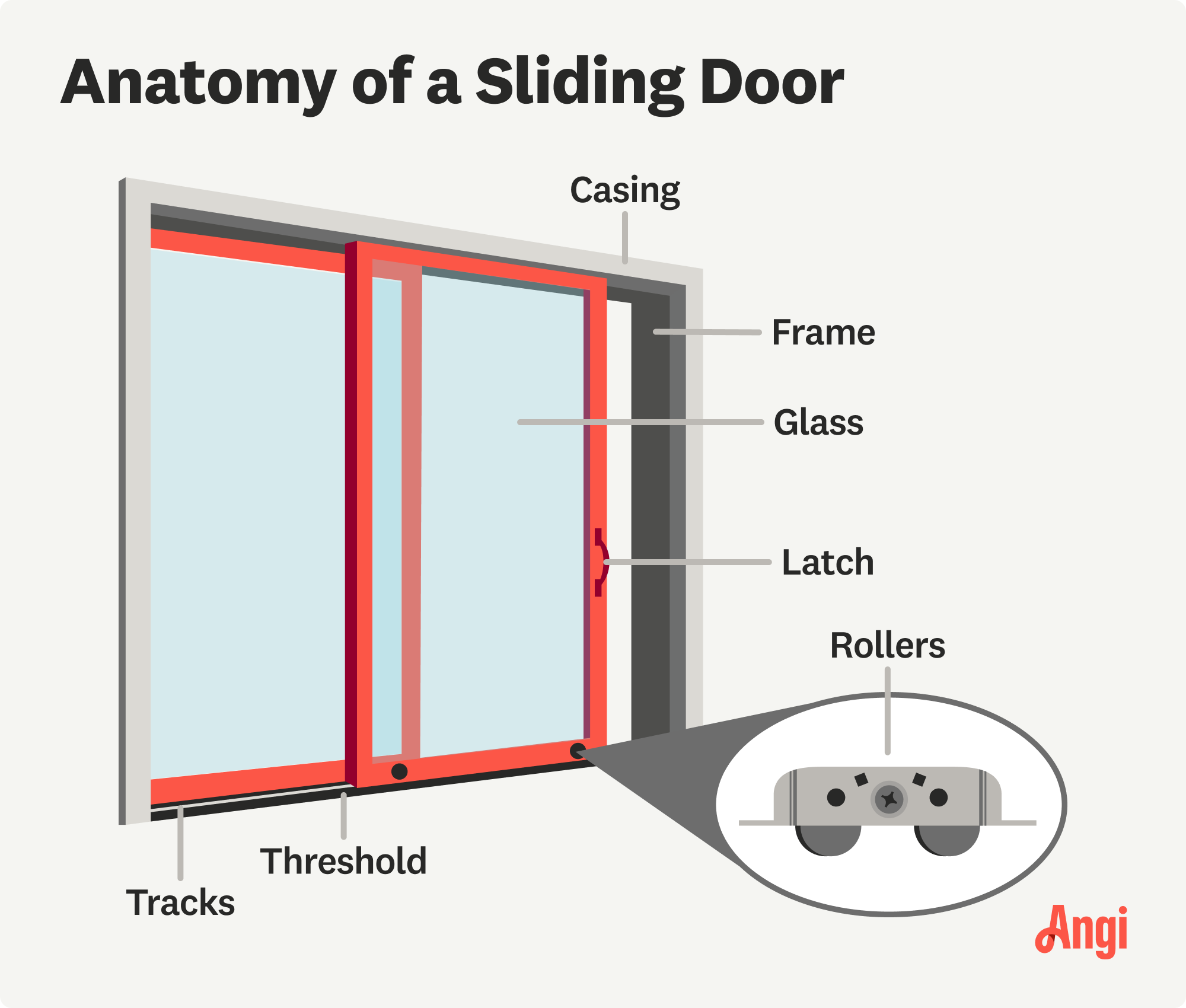
Most sliding doors have two adjustment screws at the bottom corners. They sit under plastic caps or inside small access holes in the frame. Turning these screws raises or lowers the door within the track.
Remove the Door for Full Access
To adjust rollers properly, you typically need to lift the door out.
Step 1: Retract the Rollers
Turn both adjustment screws counterclockwise until the rollers fully retract. The door will sit flush, making removal easier.
Step 2: Remove the Door Stop
At the top of the frame, locate the door stop (a small metal or plastic strip). Unscrew and remove it to free the top edge.
Step 3: Lift the Door Out
Tilt the bottom of the door toward you and lift upward to disengage the top rollers from the track. Place the door on sawhorses, glass-side up, for safe roller access.
Inspect and Replace Rollers When Necessary
Damaged rollers ruin alignment no matter how precisely you adjust them.
Pull Out the Roller Assembly
Use a screwdriver to gently pry the roller unit from the bottom of the door. Note its orientation before removal so you can reinstall correctly.
Assess Roller Condition
- Cracked or wobbly wheels: Replace immediately.
- Rusted or stiff axles: Clean with alcohol, but replacement is usually wiser.
- Smooth but flattened: Even slight wear causes dragging and misalignment.
Install New or Cleaned Rollers
- Align the adjustment screw hole with the access point.
- Tap gently into place using a hammer and wood block to protect the wheel.
- Fully retract rollers (turn counterclockwise) before rehanging the door.
Rehang and Fine-Tune the Door
Getting the door back in line is the most critical phase.
Hang the Door Correctly
- Tilt the door and engage the top rollers into the top track first.
- Swing the bottom into the lower track.
- Replace the door stop and secure with screws to prevent derailment.
Adjust Roller Height in Small Increments
Use the adjustment screws to level the door:
- Turn clockwise to raise the door.
- Turn counterclockwise to lower it.
Adjust only a quarter turn at a time, then slide the door to test. Small changes make a big difference.
Achieve Parallel Alignment
The door must sit parallel to the latch-side jamb.
- If the top gap is larger than the bottom, raise the hinge side.
- If the bottom drags, lower the opposite side slightly.
- For off-square doors, adjust one side more than the other until level.
Test frequently by sliding back and forth.
Fix Locking and Sealing Problems

A well-aligned door still fails if it won’t lock or seal properly.
Test and Adjust the Lock
Engage the latch in the closed position. If it misses the strike plate, adjust roller height slightly. Often just 1/16 inch of movement restores full engagement.
For multi-point locks (3-point or 5-point), verify that all pins extend and seat securely at once.
Replace Damaged Weatherstripping
A broken seal lets in drafts and moisture.
Remove the Old Strip
- Loosen staples with a screwdriver.
- Pry gently with a putty knife.
- Clean off all adhesive residue.
Install New Weatherstripping
- Match the profile to the original.
- Point the flap toward the outside to shed water.
- Secure the flange to the door with screws.
- Glue the jamb-side strip using plastic-compatible adhesive.
- Wipe excess glue immediately.
Replace Faulty Components When Adjustment Isn’t Enough
Sometimes cleaning and adjusting won’t solve the problem.
Swap Out a Broken Lock
If lubricating the latch doesn’t restore engagement:
- Remove the old lock mechanism from the door edge.
- Take it to a hardware store for an exact match.
- Install the new unit following included directions.
- Test the key, handle, and locking action before finishing.
Repair or Replace Torn Screens
- Remove the rubber spline with a flat tool.
- Pull out the old mesh.
- Lay new screen fabric over the frame.
- Press in new spline with a roller tool.
- Trim excess with a utility knife.
Handle Broken Glass Safely
Glass replacement is best left to professionals due to weight and cut risk. If you attempt it yourself:
- Remove trim and dispose of broken glass safely.
- Measure opening height and width.
- Subtract 1/4 inch from both dimensions for proper fit.
- Order tempered glass to size.
- Insert the new pane, caulk edges, replace trim, and clean.
Final Test and Ongoing Maintenance
Never skip verification. Your safety depends on it.
Perform a Full Function Check
Test each action at least three times:
- Sliding: Should glide smoothly with one finger.
- Locking: All points engage without force.
- Sealing: No visible gaps around the perimeter.
- Stacking or pivoting: If applicable, moves without binding.
Tighten any loose screws or stops you find.
Prevent Future Problems
Keep your door working like new with simple habits.
Seasonal Track Inspection
Check for debris every 3 to 4 months, especially after storms or heavy use. Vacuum and wipe tracks as needed.
Annual Lubrication Routine
- Top track and rollers: silicone spray.
- Bottom track: paraffin wax block.
Avoid WD-40 or oil-based sprays. They attract dirt and create residue.
Know When to Call a Professional
Seek expert help if:
- The door sags or won’t stay in the track.
- The frame is warped or separating from the wall.
- Multi-panel systems malfunction.
- Lock or gear mechanisms are internally damaged.
Frequently Asked Questions About Adjusting Sliding Glass Doors
Why is my sliding glass door so hard to open?
Dirt and debris in the track are the most common cause. Clean the track thoroughly with a vacuum and denatured alcohol, then apply paraffin wax to the bottom track. If cleaning doesn’t help, the rollers may be worn or misaligned and need adjustment.
How do I know if my sliding door rollers need replacing?
Inspect the wheels for cracks, flat spots, or rust. Wobble or stiffness when spinning also indicates failure. Even slightly flattened rollers cause dragging and prevent proper alignment.
Can I adjust a sliding glass door without removing it?
Minor height tweaks are possible without removal by turning the adjustment screws while the door is in place. However, for thorough roller inspection, cleaning, or replacement, removing the door gives far better access and results.
What lubricant should I use on sliding glass door tracks?
Use silicone-based spray on the top track and rollers only. For the bottom track, rub a paraffin wax block along the surface. Never use silicone spray on the bottom track, because the door’s weight grinds it into a sticky residue.
How tight should a sliding glass door be in the frame?
The door should sit parallel to the latch-side jamb with even gaps at the top and bottom. It should slide smoothly without dragging and lock without force. If gaps are uneven, adjust the rollers in quarter-turn increments until alignment is correct.
Key Takeaways for Adjusting Your Sliding Glass Door
Learning how to adjust sliding glass door systems saves money and extends your door’s lifespan. Most problems trace back to three causes: dirty tracks, dry rollers, or slight misalignment. Start by cleaning thoroughly with denatured alcohol and lubricating correctly based on track position. Adjust rollers in small increments, aiming for parallel alignment with the jamb. Replace weatherstripping, locks, or rollers only when cleaning and adjustment don’t restore function. With basic tools and about an hour, you can bring your door back to smooth, secure operation and keep it that way with seasonal maintenance.