You step into a restroom, dressing room, or hotel bathroom and glance at the mirror. Something feels off. Is it just your reflection playing tricks on you, or could this mirror be hiding something? A double sided mirror, also known as a two-way mirror, can look identical to a regular mirror but functions very differently. These mirrors are designed to reflect light on one side while allowing people on the other side to see through like a one-way window. They are commonly used in law enforcement interrogation rooms, security observation areas, and sometimes in questionable privacy settings.
Knowing how to tell if a mirror is double sided could protect your privacy. The good news is you do not need special tools or technical knowledge. With simple everyday methods like the fingernail test, flashlight check, or thickness inspection, you can quickly and confidently determine whether a mirror is what it seems. In this guide, you will learn proven techniques to detect a double sided mirror, understand why certain signs matter, and discover what to do if you find one where you should not.
Perform the Fingernail Test
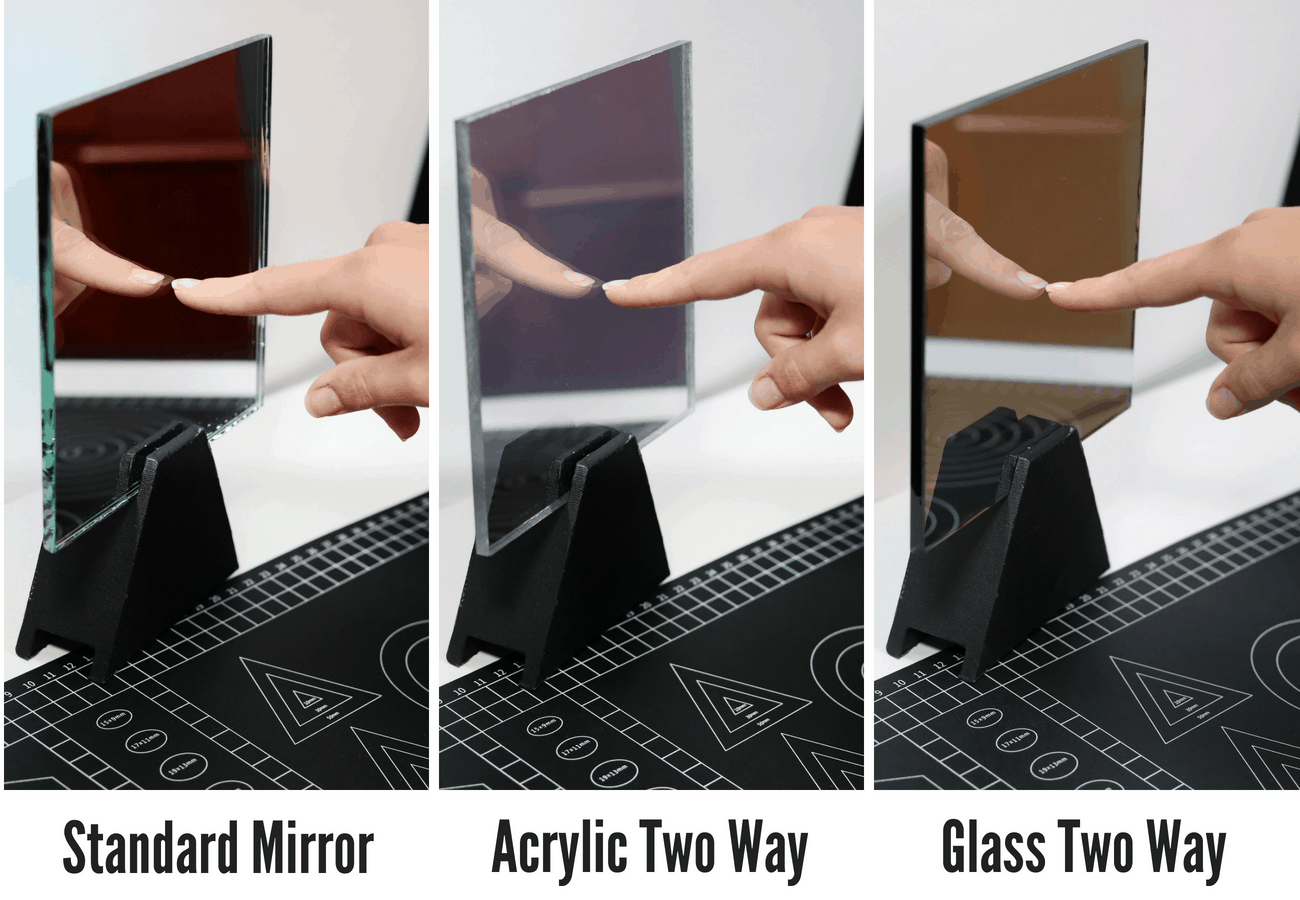
This is the quickest and most reliable method to determine if a mirror is double sided. No tools are required.
Check for a Gap Between Nail and Reflection
Place your fingernail directly against the mirror surface. On a standard mirror, the reflection touches your nail with no gap because the reflective coating is on the back of the glass. But in a double sided mirror, the reflective layer is on the front surface or between two glass layers, so your reflection appears slightly behind the surface.
If you see a small but visible gap between your fingertip and its reflection, it is a strong indicator of a double sided mirror.
Pro Tip: Do this in well-lit conditions. A dim room can make it harder to spot the gap.
Avoid pressing too hard. Just a light touch is enough. Also, avoid textured or framed mirrors where the edge is not accessible. Test the center if needed.
Inspect for Visual Distortion
Double sided mirrors often create subtle visual imperfections that standard mirrors do not.
Look for Wavy or Warped Reflections
Stand back and examine your reflection closely. Move side to side and watch how your image shifts. A double sided mirror may show slight waviness, blurriness, or distortion due to the layered construction and differing refractive indices of the glass.
These distortions are usually more noticeable at the edges or corners of the mirror. Tilt your head or change your viewing angle. Real mirrors maintain consistent clarity while double sided ones may flicker or warp.
Warning: Some low-quality regular mirrors also distort. Use this clue in combination with other tests, not on its own.
Test for Uneven Brightness
Observe whether parts of the reflection appear dimmer or unevenly lit. Because double sided mirrors allow partial light transmission, areas may look less reflective, especially under bright lighting.
If one section of the mirror seems duller than expected, it could indicate a two-way design.
Shine a Flashlight to Test Light Transmission
This method gives near-definitive results if done correctly.
Conduct the Flashlight Test in Darkness
Turn off the lights in the room or wait until it is dark. Hold a flashlight or your phone flashlight close to the mirror’s surface and shine it directly at the glass.
On a regular mirror, all the light reflects back. You will not see any glow passing through.
But if it is a double sided mirror, light will pass through to the other side. If someone is on the opposite side or if that area is dark, you might not see the beam exit. However, you may notice the mirror glowing faintly or the reflection appearing less intense.
Expert Note: This test works best when the other side is dark. If both sides are lit, the mirror will act more like glass, making detection harder.
For extra confirmation, ask someone to stand on the opposite wall if accessible to see if they can spot the light shining through.
Measure the Mirror Thickness
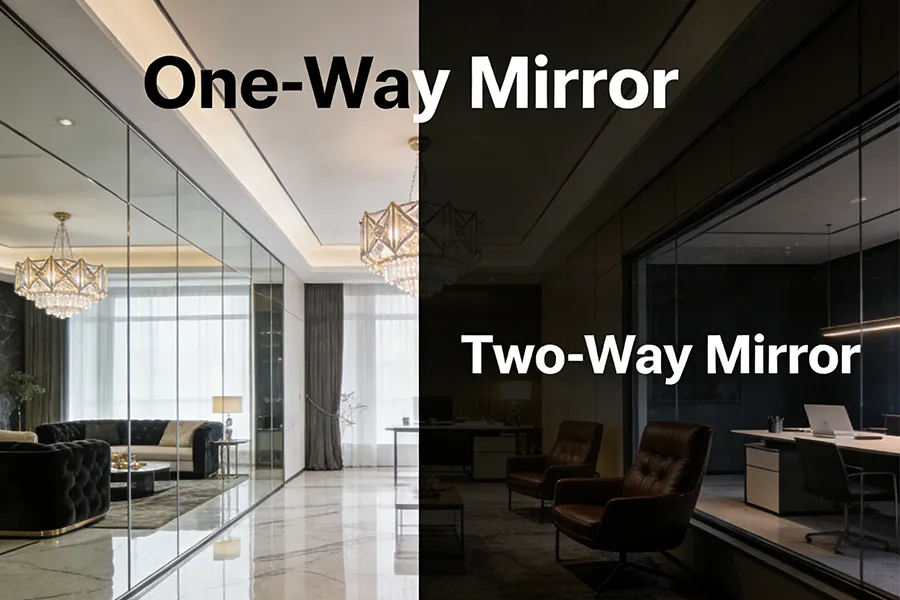
Physical structure can reveal a lot about a mirror type.
Check for Excess Thickness
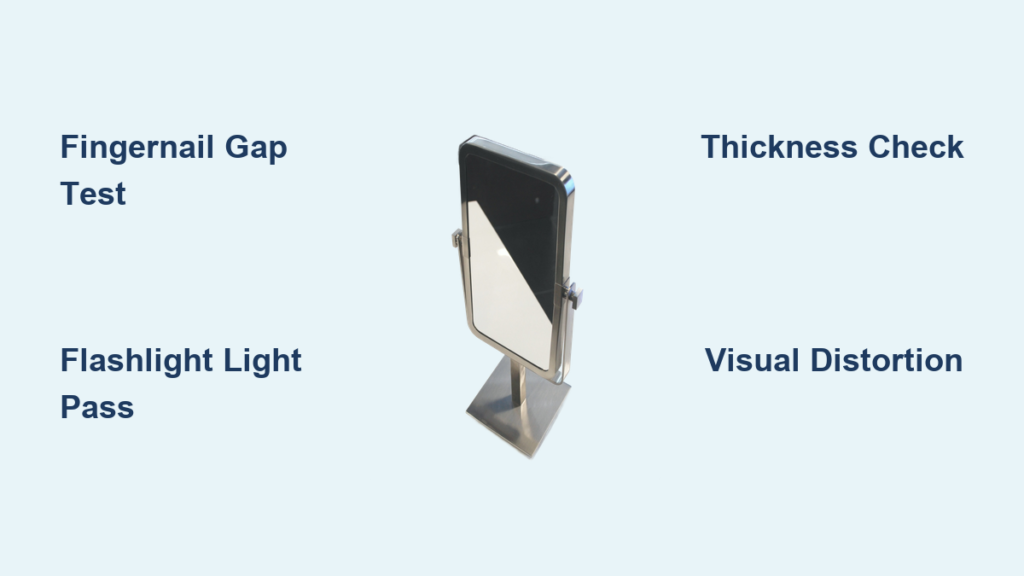
Use a ruler or caliper to measure the mirror edge. Most household mirrors are thin, around 1/8 inch or 3 to 4 mm. Double sided mirrors, however, are typically thicker, often 1/4 inch or 6.35 mm or more, because they consist of two glass layers with a semi-reflective coating in between.
If the mirror feels unusually thick or heavy for its size, especially in a public restroom or fitting room, treat it as suspicious.
Limitation: Some modern single-sided mirrors can also be thick. Use this clue as supporting evidence, not proof alone.
Also, look for signs of mounting. Double sided mirrors are often set into walls like windows, not hung like picture frames.
Listen for Hollow or Flat Sounds
Sometimes, sound can help you detect what sight cannot.
Tap the Surface Gently
Use your knuckle or fingernail to lightly tap the mirror.
A hollow or drum-like sound suggests the mirror is mounted over an empty space, possibly an observation room. A solid, dense thud means the mirror is likely glued directly to a wall, which is typical for standard mirrors.
This is not foolproof. Some regular mirrors are framed with air gaps. But when combined with other red flags, a hollow sound increases suspicion.
Pro Tip: Compare the sound to a known solid surface like a tile or wall. The difference is often noticeable.
Examine the Frame and Mounting Style
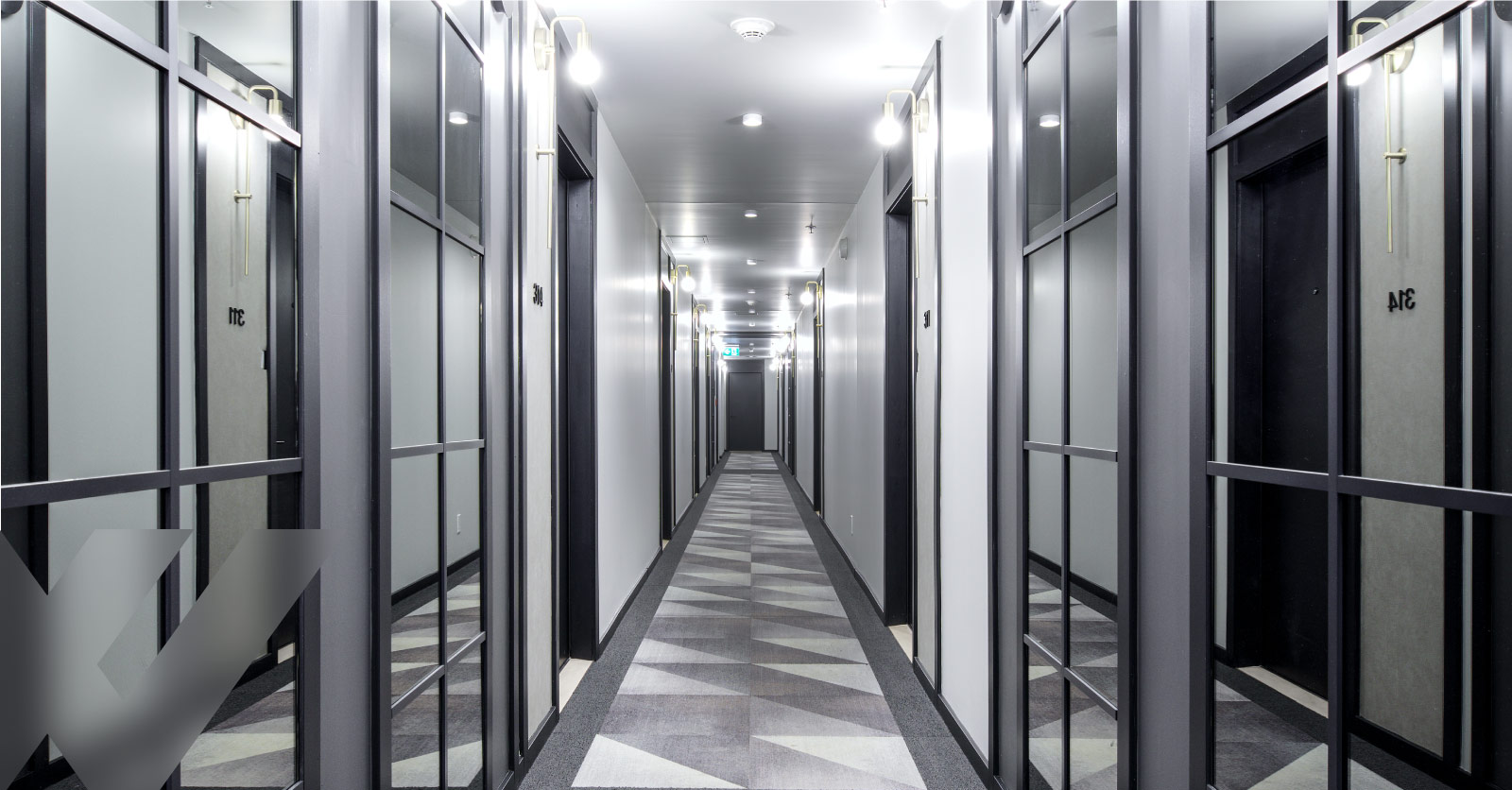
How a mirror is installed can hint at its purpose.
Look for Wall-Integrated Installation
Double sided mirrors are often built into the wall like a window, not hung with brackets or wire. If the mirror seems flush with the wall with no visible gap or hanging mechanism, it may be a permanent installation meant for surveillance.
Also, check for screws around the perimeter, a sealed or caulked edge, or no backing panel or dust cover. These features suggest the mirror is not meant to be removed, which is common in security setups.
Watch for Odd Lighting Conditions
If the room is unusually dark but the mirror still reflects clearly, be cautious. For a double sided mirror to work, the observation side must be darker than the reflective side. If you are in a brightly lit room and the mirror feels suspicious, it could mean someone is watching from a darkened area behind it.
Remember: The brighter your side, the less visible you are to anyone behind the mirror.
Use Your Phone Camera and Flash
Modern tech makes detection easier.
Try the Camera Detection Trick
Turn on your smartphone front or rear camera and enable the flash. Hold the phone close to the mirror and look at the screen.
Because phone cameras are sensitive to light, they may pick up a faint glow or hotspot where light is passing through, something your eye might miss.
If the screen shows a bright white spot or unusual reflection pattern, it could indicate light transmission consistent with a double sided mirror.
Note: This method varies by phone model and lighting. Use it as a supplement, not a standalone test.
Understand Where Double Sided Mirrors Are Likely Installed
Context matters as much as technique.
Know the High-Risk Locations
While not every mirror in these places is two-way, be extra cautious in fitting rooms especially with strange wall panels, public restrooms particularly single-occupancy, hotel rooms near closets or odd wall sections, gym locker rooms, and interview or counseling rooms.
These areas have historically been misused for covert surveillance. If a mirror feels out of place, too large, oddly positioned, or poorly lit, trust your instincts.
Fact: In many countries, installing a two-way mirror in private spaces like bathrooms or changing rooms is illegal without clear signage.
What to Do If You Suspect a Double Sided Mirror
Suspicion alone is not proof, but it is reason to act.
Cover the Mirror Immediately
If privacy is your concern, block the surface with a jacket, towel, or opaque cover. This prevents any possible observation.
You can also apply temporary privacy film or tape over the mirror if you are in a space you control.
Report Suspicious Mirrors
In public or commercial spaces, notify staff or management. Take photos if safe, and file a complaint with local authorities or privacy board.
Many regions have strict laws against hidden surveillance. Reporting helps protect others.
Never Attempt to Remove or Break the Mirror
Tampering with building fixtures, even for privacy, can lead to liability. Leave inspection and removal to professionals.
Frequently Asked Questions About Double Sided Mirrors
What is the key difference between a double sided mirror and a regular mirror?
The primary difference lies in light transmission. Double sided mirrors allow light to pass through one side while reflecting it on the other side, enabling one-way observation. Regular mirrors only reflect light, preventing observation from the other side.
How can I identify a double sided mirror based on its appearance?
Double sided mirrors often exhibit subtle distortions or imperfections in the reflection due to the different refractive indices of the materials used. Additionally, they tend to be thicker than regular mirrors to accommodate the extra layer of material.
Can I use a flashlight to determine if a mirror is double sided?
Yes, you can use a flashlight to test light transmission. Shine the flashlight against the mirror. If light passes through and you can see the beam on the other side, it is likely a double sided mirror.
Are double sided mirrors commonly used in everyday settings?
While double sided mirrors are primarily used in specialized applications like surveillance and interrogation rooms, they can also be found in some public restrooms and dressing rooms to provide a wider field of view for security purposes.
How can I prevent others from seeing me through a double sided mirror?
To block visibility from the observation side, cover the reflective surface with an opaque material such as a curtain, blind, or window film. This will prevent light from passing through the mirror and reflecting your image.
Key Takeaways for Detecting Double Sided Mirrors
Spotting a double sided mirror does not require advanced tools. Just awareness and simple tests. The fingernail test, flashlight check, and thickness inspection are your most reliable tools. Combine them with context: location, lighting, and installation style.
While double sided mirrors have legitimate uses in security and law enforcement, their presence in private areas raises serious privacy concerns. Stay alert, trust your instincts, and take action if something feels wrong.
Your awareness is the first line of defense. If you suspect a mirror in a public or private space is double sided, cover it immediately and report it to the appropriate authorities. Do not attempt to remove it yourself, as this could cause damage or legal complications.