Water damage on bathroom mirrors appears as dark, black, or brown edges—a condition called mirror desilvering or mirror rot. This happens when moisture seeps behind the glass and breaks down the silver reflective coating. The damage is most common along the bottom edge where water pools from sinks and showers. This guide covers every repair option, from quick cosmetic fixes to professional restoration, so you can choose the best solution for your situation.
Conceal Damage with a Frame
Framing is the most popular and cost-effective way to hide water-damaged mirror edges. This method requires minimal tools, avoids handling glass, and often improves the mirror’s appearance.
Choose the Right Frame Type
Prefabricated frame kits like MirrorMate snap together with corner connectors, making them ideal for DIYers. You can also build custom frames from wood or PVC. PVC works best in bathrooms because it resists moisture. A partial bottom frame hides only the damaged strip along the bottom edge, requiring less work. Thin vinyl strips or tape offer a quick fix for minor damage.
Install a MirrorMate-Style Frame
- Identify the shallow slots (external) and deep slots (internal) on frame pieces.
- Apply wood glue to all mating surfaces.
- Insert the small external connector into the shallow slot and tap gently. Do not over-hammer.
- Secure the large internal connector at each corner.
- Let the frame dry for 30 minutes before handling.
Pro Tip: Handle the assembled frame by the longest side. Never lift by a corner.
Mount the Frame to the Mirror
- Attach double-sided tape to the cardboard corner clips.
- Clip them inside the frame on both sides.
- Fold each tape strip inward into a dog-ear configuration.
- Press the frame firmly against the mirror.
- Peel off the backing from all four tapes to secure.
This method completely hides damaged edges while giving the mirror a clean, modern finish.
Best Frame Materials for Bathrooms
PVC trim is waterproof, paintable, and easy to cut. Sealed wood offers a classic look but must be painted or varnished. Metal or composite materials provide durability and a modern appearance.
Warning: Do not use framing if black spots appear in the center of the mirror. This method only works for edge damage.
Repair Edges with Mirror Effect Paint
Rust-Oleum Mirror Effect spray paint can recoat peeled edges and restore a reflective appearance. This DIY method costs only a few dollars.
Prepare the Mirror Back
- Loosen the mounting screws and slide the mirror out carefully.
- Use a straight edge and razor blade to score and cut damaged edges.
- Remove loose backing and paint.
- Wipe with Goo Gone to remove residue.
- Clean with glass cleaner, then wipe with isopropyl alcohol on a lint-free rag.
Apply the Mirror Paint
- Shake the Rust-Oleum can thoroughly.
- Spray light, even coats to avoid drips.
- Wait 10 minutes between coats.
- Apply 2 to 3 coats for full reflectivity.
- Spray from multiple angles in a well-ventilated area.
Reinstall the Mirror
- Slide the top edge into the bracket.
- Align the bottom with support.
- Hand-tighten screws first, then fully tighten. Do not over-tighten.
The dark edges become reflective again, though certain lighting may reveal slight differences from the original.
Limitation: This is not a permanent fix and works best for small edge damage. Do not use if the glass is cracked.
Stop Corrosion with WD-40 Treatment
WD-40 cannot restore reflectivity, but it can displace moisture and slow further oxidation. This is a temporary measure, not a repair.
Apply WD-40 to Affected Edges
- Attach the straw nozzle to the can.
- Insert into the gap between glass and wall, focusing on the bottom edge.
- Spray along the full length of the damaged area.
- Let sit for 10 minutes to penetrate.
- Use an old toothbrush to scrub away surface residue.
- Wipe clean with a sponge.
Note: Combine this with sealing to extend the mirror’s life. WD-40 alone will not stop permanent damage.
Resilver the Mirror Professionally
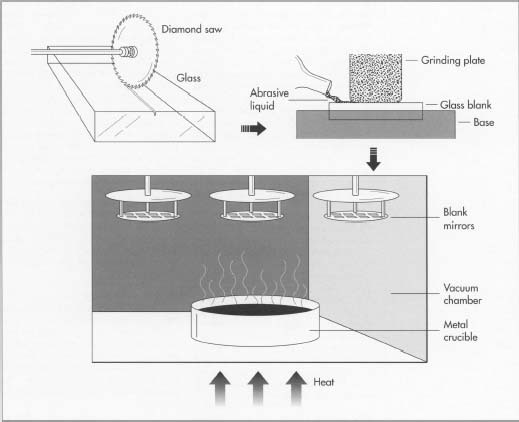
Professional resilvering is the only true restoration method for valuable, antique, or sentimental mirrors.
What Is Resilvering
This chemical process strips the old silver or aluminum coating and reapplies a new reflective layer using silver nitrate. It fully restores the original reflective surface and eliminates black edges.
How Resilvering Works
- Remove backing paint with multi-strip solution.
- Strip metal layers using mirror remover.
- Clean the glass with powdered cleaner for at least 6 minutes.
- Rinse with tap water, then distilled water.
- Apply tin solution as a sensitizer for even silver adhesion.
- Mix and apply silver solution immediately (activator, reducer, and silver).
- Rock the glass for 3 to 5 minutes until reflective.
- Rinse and dry in a dust-free space.
- Repaint the backing with a foam roller and let dry overnight.
- Clean front edges to remove stray silver.
Cost: Professional resilvering averages $182. DIY kits cost $50 to $100 but carry significant risk of failure.
Best for: Heirloom mirrors, beveled or custom-shaped glass, and high-value decorative pieces.
Limitations: Resilvering will not repair cracks or chips. It may even highlight existing flaws. This process requires technical skill and proper ventilation.
Replace the Mirror Panel
When damage is severe, replacement is often the fastest and most durable solution.
Choose a Replacement Option
Custom-cut glass can be ordered to exact dimensions from a glass shop. Standard mirrors are available at Home Depot or Lowe’s. Framed mirrors come pre-assembled for easy installation. Multiple small mirrors create a modern look while hiding damage creatively.
Remove the Old Mirror
- Unscrew all mounting hardware.
- Check for movement after releasing top clips. If it moves, the mirror is not glued. If stuck, it may be mastic-bonded.
- If glued, expect drywall paper to tear. Plan to patch afterward.
Install the New Mirror
- Use spacers to lift the mirror above the backsplash.
- Apply silicone caulk along the bottom back edge to block moisture.
- Mount securely with clips or adhesive.
Pro Tip: Apply silicone caulk below and against the silver backside. This prevents condensation from seeping between the silver and protective paint.
Cost: $20 to $100 for glass. Professional installation adds $100 or more for large mirrors.
Repair Crumbly Wood Frames
If the frame itself is damaged by moisture rather than the glass, stabilize it before refinishing.
Clean with Acetone
- Wipe affected wood with acetone.
- This removes mold, bacteria, and contaminants.
- Acetone evaporates quickly and leaves no residue.
Apply Wood Hardener
- Brush wood hardener into softened areas.
- It penetrates fibers to strengthen crumbly sections.
- Dries clear and rigid.
After hardening, fill gaps with wood filler, sand smooth, and apply primer and paint.
Note: Wood hardener will not restore lost material, but it stops further decay.
Prevent Future Water Damage
Once repaired, protect your mirror from repeating the same issue.
Seal the Edges
Apply silicone caulk along the bottom and side edges behind the mirror. This blocks moisture from entering through gaps.
Improve Ventilation
Run the exhaust fan during and after showers. Open windows to reduce humidity. Wipe down mirror edges after use.
Use Moisture Barriers
Install a backsplash to shield the wall and mirror base. Use spacers to elevate the mirror off the sink ledge.
Apply WD-40 Periodically
Spray along edges every few months. This acts as a water-repellent barrier.
Choose Framed Mirrors in Bathrooms
Frames reduce direct exposure to moisture. PVC or metal frames resist moisture better than wood.
Key Point: The key to preventing mirror desilvering is stopping moisture from penetrating the edge.
Compare Repair Methods
| Method | Cost | Difficulty | Durability | Best For |
|---|---|---|---|---|
| Frame the Mirror | Low to Medium | Low to Medium | Medium | Edge damage, cosmetic upgrade |
| Mirror Effect Paint | Low | Medium | Low to Medium | Small edge repair, budget fix |
| Professional Resilvering | High | High | High | Antique, heirloom, unique mirrors |
| DIY Resilvering | Medium | High | High (if successful) | Skilled DIYers |
| Replace Mirror | Medium to High | Low to Medium | High | Severe damage, long-term fix |
| WD-40 Treatment | Low | Low | Low | Temporary moisture blocking |
| Vinyl Strips or Tape | Low | Low | Low | Minor edge concealment |
Choose the Right Fix for Your Mirror
Standard Bathroom Mirror with Edge Damage
Frame it or replace the glass. These options are fast, affordable, and prevent further decay.
Antique or Heirloom Mirror
Choose professional resilvering. This preserves the mirror’s value and craftsmanship.
Mirror with Damaged Wood Frame
Clean with acetone and apply wood hardener. Then fill, sand, and repaint.
Mirror with No Sentimental Value
Replace the panel or install a new framed unit. New mirrors are inexpensive, making replacement easier than repairs.
All Undamaged Mirrors in Humid Areas
Seal edges and improve ventilation. Prevention costs far less than repair.
Frequently Asked Questions About Fixing Water-Damaged Mirrors
Can water-damaged mirrors be repaired permanently?
Professional resilvering is the only permanent repair method. It strips the old coating and applies a new reflective layer. All other methods are cosmetic or temporary solutions.
Why does mirror water damage always start at the edges?
The bottom edge is closest to sinks and showers where water pools. Moisture seeps through unsealed edges and attacks the silver backing. Continuous humidity exposure causes oxidation that spreads inward.
Does homeowner insurance cover mirror water damage?
Most standard policies cover mirror replacement if caused by a covered peril (like a sudden leak). Damage from gradual humidity is typically not covered. Check your specific policy for details.
Can I use regular spray paint on a mirror?
Regular spray paint will not create a reflective surface. Use Rust-Oleum Mirror Effect spray paint specifically designed to mimic silver backing. Results are not permanent but work for minor repairs.
How long does professional resilvering take?
The process takes 1 to 2 days plus drying time. The chemical application requires 3 to 5 minutes of rocking, but the entire process including preparation and backing paint drying takes longer.
Is it cheaper to repair or replace a water-damaged mirror?
For minor damage, framing costs $20 to $50 and is cheaper than replacement. For severe damage, replacement costs $20 to $100 for the mirror plus installation, which compares favorably to $182 for professional resilvering.
Key Takeaways for Fixing Water-Damaged Mirrors
Mirror water damage cannot be reversed without professional resilvering, but you can effectively hide, slow, or replace it. For most homeowners, framing offers the best balance of cost, ease, and appearance. Mirror paint provides a fun, low-cost DIY experiment for small edge repairs. For long-term durability, replacement wins. For irreplaceable pieces, professional restoration is worth the investment.
Whatever method you choose, seal the edges and control humidity to keep your mirror clear for years to come. The key is stopping moisture from penetrating the edge in the first place.