
Nothing ruins the look of a sleek kitchen faster than a stained glass cooktop. Burnt cheese, sugary spills, and grease splatters seem to bond permanently to the ceramic surface, and one wrong scrub can leave scratches that never come out. If you’ve been avoiding your stovetop because past cleaning attempts made things worse, you’re not alone.
The good news is that cleaning a glass cooktop doesn’t require harsh chemicals or aggressive scrubbing. It requires the right tools, proper timing, and a gentle technique that lifts grime without etching the surface. This guide breaks down exactly how to clean glass cooktop surfaces safely, from daily wipe-downs to tackling years of buildup.
You’ll learn which cleaners actually work, which products to throw away, how to scrape without scratching, and the simple habits that keep your cooktop looking brand new.
Essential Cleaning Supplies
Before touching your cooktop, gather the right materials. Using the wrong tool is the fastest way to permanently damage ceramic glass.
Recommended Cleaners and Tools
- Specialized cooktop cleaner: Non-abrasive formulas like Cerama Bryte or Weiman polish as they clean and leave a protective finish.
- White vinegar: Cuts grease and dissolves mineral deposits when mixed with water.
- Baking soda: Forms a gentle paste that lifts burnt-on food without scratching.
- Dish soap: Perfect for daily wipe-downs when diluted in water.
- Cooktop scraper: A dedicated tool with a razor or nylon blade designed for ceramic glass.
- Microfiber cloths: Lint-free and soft for streak-free wiping and buffing.
- Non-abrasive sponge: Dual-sided sponges with a soft scrubber work best.
- Spray bottle: For applying vinegar solutions evenly.
- Oven mitt: Protects your hand when scraping a warm surface.
Items to Avoid Completely
- Steel wool or metal scouring pads
- Abrasive powder cleansers
- Chlorine bleach or ammonia-based cleaners
- Oven cleaners
- Rough paper towels
- Sharp knives or improper scraping tools
- Excess water near control panels
Using any of these can permanently etch or scratch the glass. Stick to soft materials and cooktop-specific products.
When and How to Scrape Safely
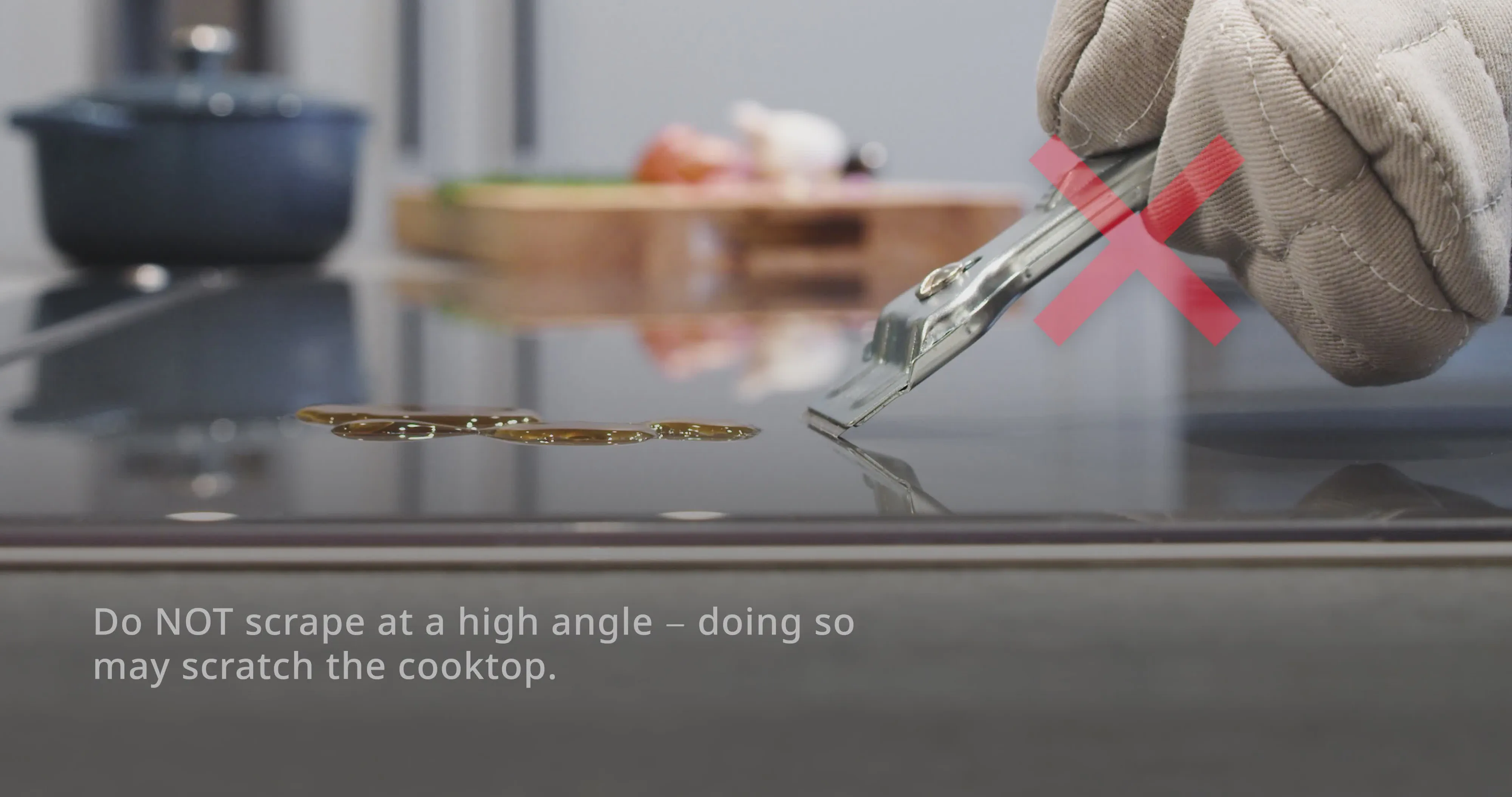
Scraping removes the worst burnt-on residue before you apply any cleaner. Done correctly, it’s the most effective step in the entire process.
Use a Cooktop Scraper at 45 Degrees
Timing matters. Scrape while the surface is warm, not hot or cold. Warmth softens stuck-on debris, making it easier to lift without force.
- Turn off the cooktop and let it cool for 5–10 minutes.
- Put on an oven mitt for hand protection.
- Hold the scraper at a 45-degree angle to the surface.
- Gently glide the blade under burnt spots with light, even strokes.
- Never press down vertically or use excessive force.
Always use a dedicated scraper with a fresh razor blade or nylon blade. Replace blades regularly since dull or chipped edges can scratch the glass.
Handle Sugar Spills Immediately
Sugar-based spills from jam, syrup, or caramelized candy can pit the glass permanently if left to cool and harden. Wipe them while warm with a damp cloth. If residue has already hardened, apply a baking soda paste with a warm towel to soften before scraping.
Best Cleaning Methods by Stain Type
Different stains require different approaches. Matching the method to the mess prevents over-scrubbing and protects the surface.
For Light Residue: Vinegar and Water Spray
This works well after everyday cooking and prevents streaks.
- Mix equal parts white vinegar and water in a spray bottle.
- Add a few drops of dish soap for greasy areas.
- Spray generously over the cool cooktop.
- Let sit for 10–15 minutes.
- Wipe with a soft cloth, then buff dry with a microfiber towel.
Don’t let the solution dry on the surface. Wipe it off before it evaporates to avoid streaks.
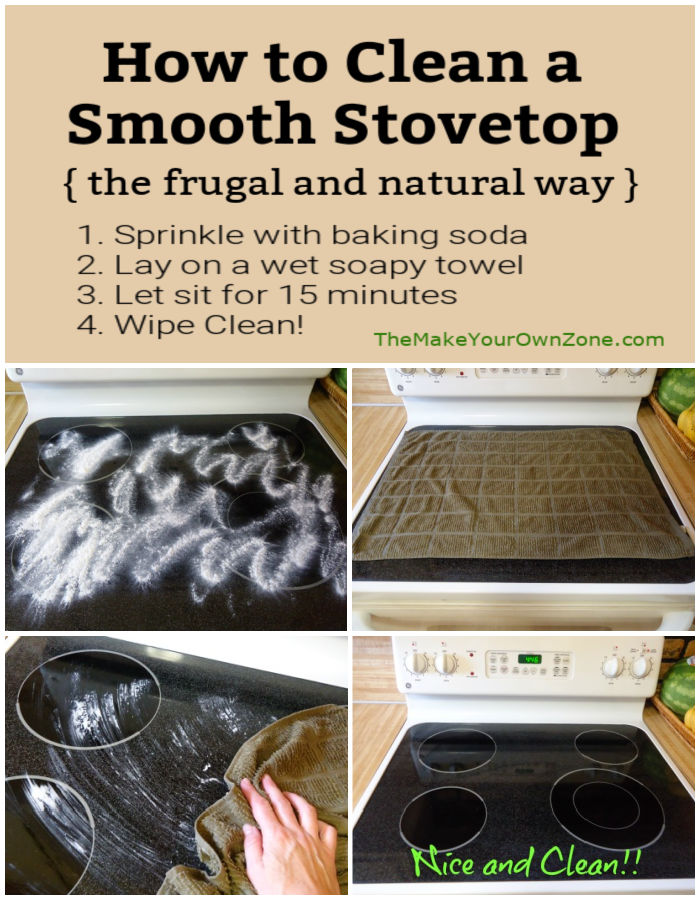
For Tough Stains: Baking Soda Paste
Best for burnt food, coffee spills, or ring marks around burners.
- Mix ½ cup baking soda with 3–4 tablespoons water to form a spreadable paste.
- Apply thickly over stained areas.
- For severe buildup, cover with a warm, damp towel and wait 15–20 minutes.
- Gently scrub with a non-abrasive sponge.
- Wipe clean with a damp cloth.
- Dry and buff to a shine.
The paste lifts stains without scratching. Reapply if needed rather than increasing scrubbing pressure.
For Deep Shine: Specialized Cooktop Cleaner
Use weekly for a polished, protective finish.
- Apply a dime-sized amount of cleaner to the surface.
- Rub in circular motions with a soft pad.
- Let it dry completely into a white haze.
- Buff off with a clean microfiber cloth until shiny.
The haze signals the polish is ready. Buffing removes residue and seals the surface.
For Stubborn Grime: Bar Keepers Friend (BKF)
Only use the Cooktop Cleaner version, never the original powder.
- Scrape off loose debris first.
- Wet a sponge and apply BKF to the surface.
- Rub gently in circles.
- Do not leave on longer than 5 minutes.
- Rinse with a damp cloth and buff dry.
BKF removes discoloration but must be rinsed promptly to avoid residue buildup.
Clean Knobs and Trim Properly
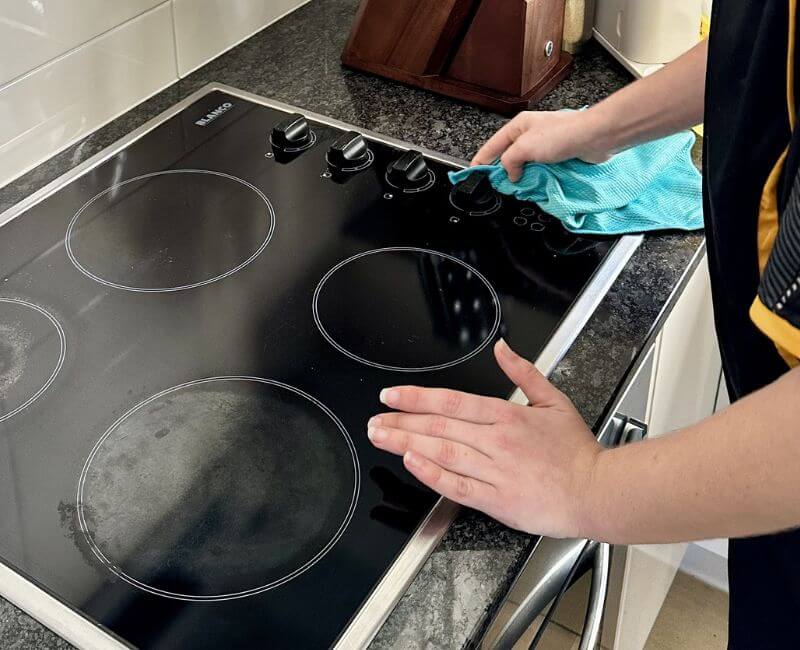
A complete clean includes the parts surrounding the glass.
Remove and Wash Control Knobs
- Pull knobs straight off the control panel.
- Wash in warm, soapy water.
- Do not soak them, since water can damage internal components.
- Dry completely before reattaching.
Wipe the control panel with a slightly damp microfiber cloth. Avoid spraying liquid directly onto electronics.
Care for Stainless Steel Trim
Use a dedicated stainless steel cleaner or a soft sponge with soapy water.
- Wipe in the direction of the grain.
- Dry immediately to prevent water spots.
- Buff lightly for a streak-free finish.
Avoid abrasive pads that leave swirl marks on stainless surfaces.
Fix Common Problems Fast
Even with regular care, issues can arise. Here’s how to address them quickly.
Remove Streaks and Haze
Haze usually indicates leftover cleaner or soap film.
- Spray with the vinegar-water solution.
- Wipe horizontally, then vertically in a cross-hatch pattern.
- Buff vigorously with a dry microfiber cloth.
This ensures even removal and eliminates streaks completely.
Address White Marks and Scratches
- White marks: Often aluminum transfer from cookware. Remove with cooktop cleaner and buffing.
- True scratches: Cannot be repaired with cleaning. Prevention is the only solution. Use flat, clean-bottomed pans and lift rather than slide cookware.
Eliminate Burn Smells
Odors during preheating mean old food is burning off.
- Scrape thoroughly.
- Apply baking soda paste.
- Let sit 15 minutes, then wipe and rinse.
A weekly deep clean prevents this buildup.
Daily and Weekly Maintenance
Prevention always beats deep cleaning. A consistent routine keeps your cooktop looking new.
Wipe After Every Use
- Let the cooktop cool slightly.
- Dampen a microfiber cloth with water or a spritz of vinegar.
- Wipe the surface clean.
- Dry with a second cloth.
This takes under a minute and stops grime from hardening into stubborn stains.
Deep Clean Weekly
- Scrape stuck-on debris.
- Apply baking soda paste or cooktop cleaner.
- Let sit, then scrub gently.
- Buff to a shine.
- Clean knobs and trim.
A weekly routine eliminates the need for harsh restoration work later.
Prevent Damage Before It Starts
Smart habits protect your cooktop from scratches and stains.
Use the Right Cookware
- Choose flat-bottomed pots and pans.
- Avoid cast iron with rough edges or warped cookware.
- Clean pan bottoms before placing them on the stove, since burnt residue transfers to the glass.
Lift, Don’t Slide Pots
Sliding drags debris across the surface and causes scratches. Always lift cookware when repositioning.
Handle Spills Quickly
- Sugar spills: Wipe while warm.
- Starchy spills: Cool slightly, then clean with a damp cloth.
- Grease splatters: Blot with a paper towel, then wipe with soapy water.
The faster you act, the easier cleanup becomes.
Avoid Non-Approved Cooktop Mats
Regular foil or silicone mats can trap heat and damage the surface. Only use manufacturer-approved protective mats if needed.
Troubleshooting Quick Guide
| Problem | Likely Cause | Solution |
|---|---|---|
| Streaks | Leftover cleaner or soap film | Re-wipe with vinegar, buff dry |
| Cloudy surface | Mineral deposits or grease | Use vinegar spray or cooktop cleaner |
| Burn marks | High heat or food spill | Apply baking soda paste, let sit, scrub gently |
| White spots | Aluminum transfer or hard water | Buff with cooktop cleaner |
| Uneven heating | Residue buildup | Deep clean to restore efficiency |
| Scratches | Abrasive tools or cookware | Prevent further damage; true scratches are permanent |
Frequently Asked Questions About Glass Cooktop Cleaning
Can I use Windex on a glass cooktop?
Standard Windex contains ammonia, which can damage ceramic glass over time. Use a cleaner specifically formulated for cooktops, or stick with vinegar and water for safe daily cleaning.
How often should I deep clean my glass cooktop?
A weekly deep clean prevents buildup and keeps the surface looking new. If you cook daily, you may need to deep clean twice a week to maintain a streak-free shine.
What removes tough burnt-on stains from a glass cooktop?
Baking soda paste applied thickly and left for 15–20 minutes works best. Cover with a warm, damp towel to enhance the effect, then gently scrub with a non-abrasive sponge.
Are scratches on a glass cooktop permanent?
Yes, true scratches that gouge the surface cannot be repaired. White marks that look like scratches are often aluminum transfer from cookware and can be buffed out with cooktop cleaner.
Can I clean my glass cooktop with a Magic Eraser?
Magic Erasers are mildly abrasive and can dull the finish over time. They work for occasional spot treatment but should not replace proper cooktop cleaners for regular use.
Why does my glass cooktop look cloudy after cleaning?
Cloudiness usually means leftover cleaner or soap film. Spray with vinegar-water solution, wipe in a cross-hatch pattern, and buff dry with a microfiber cloth.
Final Tips for a Perfect Glass Cooktop Finish
- Buff every time: A dry microfiber cloth is the final step to a streak-free shine.
- Never clean a hot cooktop: Cleaners evaporate too fast and leave residue.
- Replace scraper blades regularly: Dull blades can scratch the surface.
- Check for special coatings: Some models have WipeClean™ or similar finishes. For these, water and a cloth may be enough, and harsh cleaners should be avoided.
A clean glass cooktop isn’t just about appearance. It ensures even heating, prevents odors, and extends the life of your appliance. By using the right tools, avoiding abrasives, and cleaning consistently, you’ll keep your stovetop smooth, shiny, and scratch-free for years. Start with a daily wipe, tackle tough spots with baking soda or a dedicated cleaner, and always scrape at a 45-degree angle. With these simple steps, your glass cooktop will stay as functional as it is beautiful.