Have you ever wondered if time, consciousness, or energy can be shaped using geometry and reflection? That is the idea behind the Kozyrev mirror, a speculative device inspired by Russian astrophysicist Nikolai Kozyrev is theories about torsion fields, subtle energies linked to rotation, time, and awareness. While not recognized by mainstream science, DIY builders, metaphysical researchers, and artists have created working models using simple materials like copper wire and mylar film. These spirals are said to alter perception, deepen meditation, and even warp light. You will not need a lab or advanced tools. Just a few hours, basic supplies, and a willingness to experiment are all it takes to get started.
In this guide, you will learn how to build your own Kozyrev mirror step by step, from selecting materials to safe testing and use. You will discover the exact materials needed, how to lay out a Fibonacci spiral without special tools, and the best practices for meditation and experimentation. Each section includes actionable steps, safety considerations, and tips to help you create an effective and personalized mirror.
Choose Your Materials
Selecting the right materials is the foundation of a successful Kozyrev mirror build. The components work together to create the geometric form and reflective properties that define the device. Quality materials ensure durability and optimal performance during testing.
Copper Wire or Metal Hangers
Start with a conductive, flexible core for your spiral. Copper wire is ideal due to its malleability and electromagnetic properties. Use 1/8-inch diameter wire, at least 10 feet long, which you can shape by hand. If copper is not available, metal coat hangers can be straightened and bent into a spiral. Just ensure they are smooth and free of kinks. The goal is a continuous, flowing coil that maintains consistent spacing between loops.
Mylar Film for Reflective Layer
Cover the spiral with mylar BoPET film, the same material used in emergency thermal blankets. A 25-foot roll, about 4 feet wide, provides enough coverage for most builds. Mylar reflects body heat and electromagnetic radiation, which some believe amplifies torsion field effects. Cut strips to fit the spiral frame, ensuring full coverage without gaps. Avoid wrinkling. Smooth application preserves the mirror is theoretical field integrity.
Aluminum Frame for Large Builds
For floor or wall-mounted versions, use aluminum sheets or strips to reinforce the structure. One documented build used half of a 50-foot aluminum roll on an 8 ft × 8 ft board. This setup supports heavier mylar layers and allows precise Fibonacci layout. Attach with screws or clips, ensuring the surface remains flat and stable.
String, Clamps, and Fasteners
You will need strong string or nylon cord to suspend the spiral from a ceiling hook or frame. Attach at three or four equidistant points for balance. Use plastic clamps or binder clips to secure mylar to the wire or aluminum frame. These prevent slippage and maintain tension across the reflective surface.
Design the Fibonacci Spiral

The Fibonacci spiral is the defining geometric feature of a Kozyrev mirror. This mathematical pattern, based on the golden ratio, creates the logarithmic curve that channels the device is theoretical energy flow. Precision in layout ensures consistent field concentration.
Lay Out the Grid
For accuracy, work on a large surface, ideally an 8 ft × 8 ft board. Use masking tape to mark a 1-inch grid across the entire area. This grid lets you scale the Fibonacci spiral precisely. Each square in the sequence corresponds to a dimension in inches: 1, 1, 2, 3, 5, 8, 13, 21, 34, 55. Begin at the center and draw each square clockwise, aligning edges with the grid lines.
Draw the Spiral Manually
Since no compass fits an 8-foot board, use a manual drawing method. Place a thick marker at each square is corner, rotating it in quarter-circle arcs to connect the spiral. Insert aluminum screws along the expected path as alignment guides. These act as visual checkpoints to maintain curvature. For better visibility, use colored markers on dark tape.
Verify Spiral Accuracy
Check consistency by measuring the distance between adjacent loops. In a true logarithmic spiral, this gap increases by the golden ratio, approximately 1.618, with each turn. Use a ruler or flexible tape to confirm gradual expansion from center to outer edge. Adjust any kinks or uneven bends before adding the reflective layer.
Assemble the Mirror
With your materials prepared and spiral laid out, it is time to bring the components together. This assembly phase transforms your design into a functional device ready for testing.
Shape the Copper Spiral
Begin at the center point and wind the copper wire outward, following the drawn Fibonacci path. Keep tension steady to avoid collapsing loops. Use gloves to prevent fingerprints and maintain shape. If using hangers, twist ends together with pliers for a seamless connection. The final coil should stand freely or hang evenly when suspended.
Attach the Mylar Layer
Cut mylar into strips matching the spiral is width. Starting from the center, stretch each piece over the wire frame and secure with clamps every 6 to 8 inches. Overlap edges slightly but avoid folding or creasing. A taut, smooth surface enhances reflectivity and minimizes interference with theoretical energy flow.
Suspend or Mount the Assembly
For hanging models, tie three or four strings to the outer loop and attach to a ceiling hook or wooden frame. Ensure the spiral hangs flat and can rotate slightly. For stationary use, lay the spiral on the floor or mount it vertically on a wall. Position a meditation cushion or chair directly under the center point for experiential use.
Test Light and Field Effects
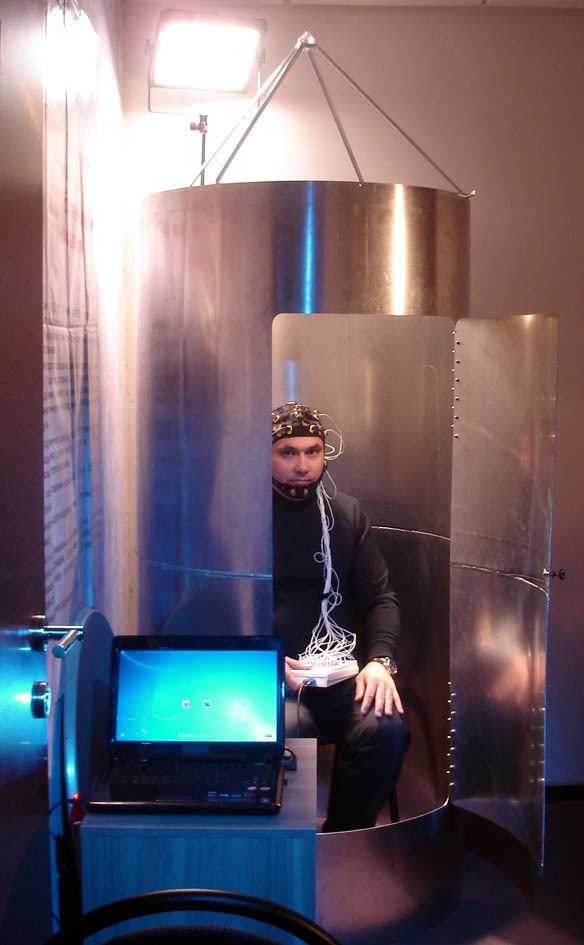
Before using the mirror for meditation or experimentation, conduct basic tests to understand its physical properties. These observations help you document any anomalies and refine your understanding of the device.
Conduct the Flashlight Test
Shine a bright flashlight at the spiral from different angles in a dark room. Observe for light bending, diffraction, or shimmering effects. Some users report visible distortions, possibly due to curved reflection or electromagnetic interactions. Record any anomalies with photos or video to track changes over time.
Document Visual Anomalies
Note whether light appears to curve around the spiral or create lens-like distortions. These effects may stem from the mylar is reflective curvature rather than torsion fields, but they offer insight into the device is interaction with electromagnetic waves. Try different light sources, LED, incandescent, and UV, to compare results.
Optimize Orientation and Direction
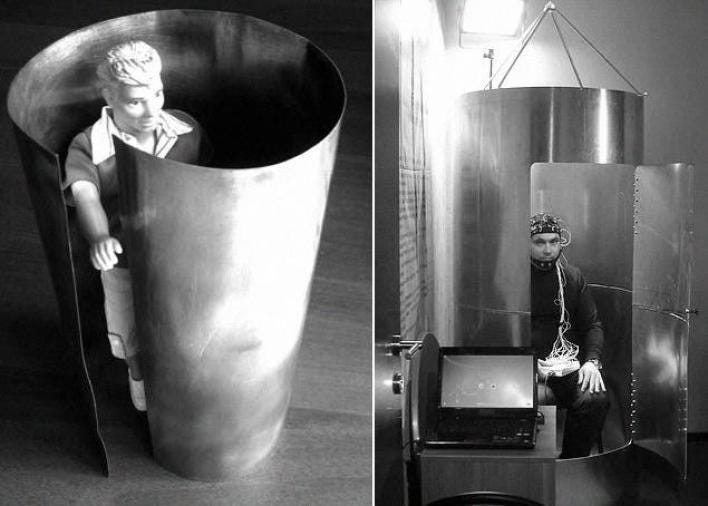
The orientation and winding direction of your Kozyrev mirror may influence subjective experiences. Testing different configurations helps you find the setup that works best for your goals.
Clockwise vs. Counterclockwise Spiral
The winding direction may influence subjective effects. Some builders report stronger sensations with one orientation over the other, though no scientific evidence supports this. Test both versions and log differences in mood, focus, or physical sensation. This distinction is rooted in man-made conventions, but personal experimentation is encouraged.
Center Alignment for Use
Place yourself at the origin point of the spiral during testing. Sit or lie directly beneath the center when suspended, or in front when mounted vertically. This position is believed to maximize exposure to concentrated torsion energy. Use a yoga mat or cushion for comfort during extended sessions.
Use Safely and Responsibly
Safety should always come first when experimenting with any unconventional device. Understanding potential risks helps you enjoy the experience without adverse effects.
Limit Exposure Time
Start with 10-minute sessions to assess your response. Some users describe a three-beers-deep feeling, a relaxed, slightly detached state. If you experience dizziness, nausea, or anxiety, stop immediately. Gradually increase to 30 to 60 minutes only if well tolerated.
Ensure Proper Ventilation
Mylar traps heat like a space blanket. In enclosed spaces, this can lead to overheating. Always use the mirror in a well-ventilated room and avoid covering your body with additional insulation. Take breaks between sessions to cool down and rehydrate.
Avoid High-Risk Use
Do not use if you have epilepsy, anxiety disorders, or heat sensitivity. The combination of visual stimulation, heat retention, and altered states may trigger adverse reactions. Never operate alone during first-time tests. Have someone nearby to monitor your condition.
Apply in Meditation and Research
Once your mirror is built and tested safely, you can explore its potential applications. Many builders use these devices for meditation, consciousness research, and personal exploration.
Enhance Meditation with Binaural Beats
Combine the Kozyrev mirror with theta or delta binaural beats, 4 to 8 Hz, to deepen relaxation. Sit at the center, close your eyes, and focus on breath or intention. Users report intensified meditative states, vivid imagery, or time distortion after repeated use.
Track Subjective Effects
Keep a research journal noting the date, time, and duration of each session. Record spiral orientation, clockwise or counterclockwise, and any physical sensations such as warmth, tingling, or pressure. Note mental or emotional changes and any dreams or synchronicities afterward. This helps identify patterns and rule out placebo effects over time.
Explore Consciousness and Time Perception
Some believe Kozyrev mirrors interact with non-local consciousness or subtle time fields. Use the device as a focus for intention-setting, lucid dreaming, or remote viewing experiments. While unproven, anecdotal reports suggest enhanced intuition or precognitive dreams with regular use.
Maintain and Improve Your Build
Regular maintenance ensures your Kozyrev mirror remains functional and effective over time. Simple care routines preserve the materials and optimize performance.
Clean and Preserve Materials
Over time, copper may tarnish or oxidize. Restore shine with a vinegar and salt solution. Mix 1/4 cup vinegar with 1 teaspoon salt, apply with a cloth, then rinse and dry. Replace mylar if torn or permanently creased. Aluminum frames can be wiped with a damp cloth and reused.
Store Properly
For suspended models, leave hanging if space allows. For flat builds, store horizontally to prevent warping. Disassemble portable versions and keep components in labeled bags for future reassembly.
Upgrade for Better Performance
Future builds can include thicker markers for clearer spiral drawing. Use stronger fasteners like spring clips or Velcro straps. Consider motorized rotation for dynamic field effects. Add EMF meters to detect environmental changes during use.
Final Thoughts on Building Your Kozyrev Mirror
Building a Kozyrev mirror is less about proving physics and more about engaging with mystery. Whether you seek deeper meditation, artistic expression, or a conversation starter, this project blends geometry, material science, and human curiosity. The most successful builders start with small, manageable versions before scaling up to larger installations. Document every session, stay mindful of safety, and approach the experience with both skepticism and curiosity. Construct it with care, test it with awareness, and let your experience guide your understanding.
Frequently Asked Questions About Making a Kozyrev Mirror
What materials do I need to build a Kozyrev mirror?
You will need copper wire or metal hangers for the spiral core, mylar film for the reflective layer, aluminum sheets or strips for large builds, string for suspension, and clamps or fasteners to hold everything together. An 8-foot by 8-foot board is recommended for full-scale Fibonacci layouts.
How do I draw a Fibonacci spiral without special tools?
Create a 1-inch grid on a large board using masking tape. Mark squares using the Fibonacci sequence dimensions in inches: 1, 1, 2, 3, 5, 8, 13, 21, 34, 55. Draw quarter-circle arcs through each square clockwise from the center. Use a thick marker as a pivot point and insert screws along the path for alignment.
Does a Kozyrev mirror really affect time or consciousness?
No scientific evidence confirms that Kozyrev mirrors affect time or consciousness. The device is based on unproven theories about torsion fields. Reported effects may stem from psychological priming, heat retention from mylar, or visual stimulation during meditation.
How long should I use a Kozyrev mirror during meditation?
Start with 10-minute sessions to assess your response. If well tolerated, you can gradually extend to 30 or 60 minutes. Monitor for dizziness, nausea, or discomfort, and stop immediately if any adverse reactions occur.
Can I build a small Kozyrev mirror instead of a large one?
Yes, you can start with a handheld or ceiling-hung spiral of 12 to 24 inch radius. Smaller models let you test materials and effects with minimal cost and effort before attempting larger board-mounted versions.
Is it safe to use a Kozyrev mirror if I have anxiety or epilepsy?
No, you should avoid using a Kozyrev mirror if you have epilepsy, anxiety disorders, or heat sensitivity. The combination of visual stimulation, heat retention, and potential altered states may trigger adverse reactions. Always have someone present during first-time use.